

You may already have your heart set on a particular finca, or perhaps you are still exploring venues across Mallorca. Either way, once you start planning a wedding on the island from the UK, some surprisingly practical questions arise. How do you fly with your wedding dress? Is it worth bringing your photographer over? And what happens to the boxes of decorations you’ve been collecting at home?
Mallorca is an appealingly accessible destination from Britain, with relatively short flights and a well-established wedding industry. But there are additional considerations when you are travelling with valuable clothing, wedding goods or suppliers carrying professional equipment, particularly since Brexit changed the customs and working arrangements between the UK and Spain.
Much of the planning becomes easier once you establish which things genuinely need to travel with you and which can be organised on the island. As a general rule, personal and irreplaceable items are worth bringing from home, while larger or readily available items are often better sourced locally. If you intend to employ UK-based professionals, investigate their work arrangements and equipment requirements before booking their flights.
We have organised this guide around the questions couples most often encounter, from transporting and caring for a wedding dress to choosing suppliers, understanding travel expenses and navigating customs, Spanish IVA and contracts. It draws on the experience of Mallorca-based wedding planner and celebrant Magdalena Dybiec, alongside official guidance on the regulatory questions. Links to the relevant authorities are included where rules may depend on your individual circumstances or change over time.

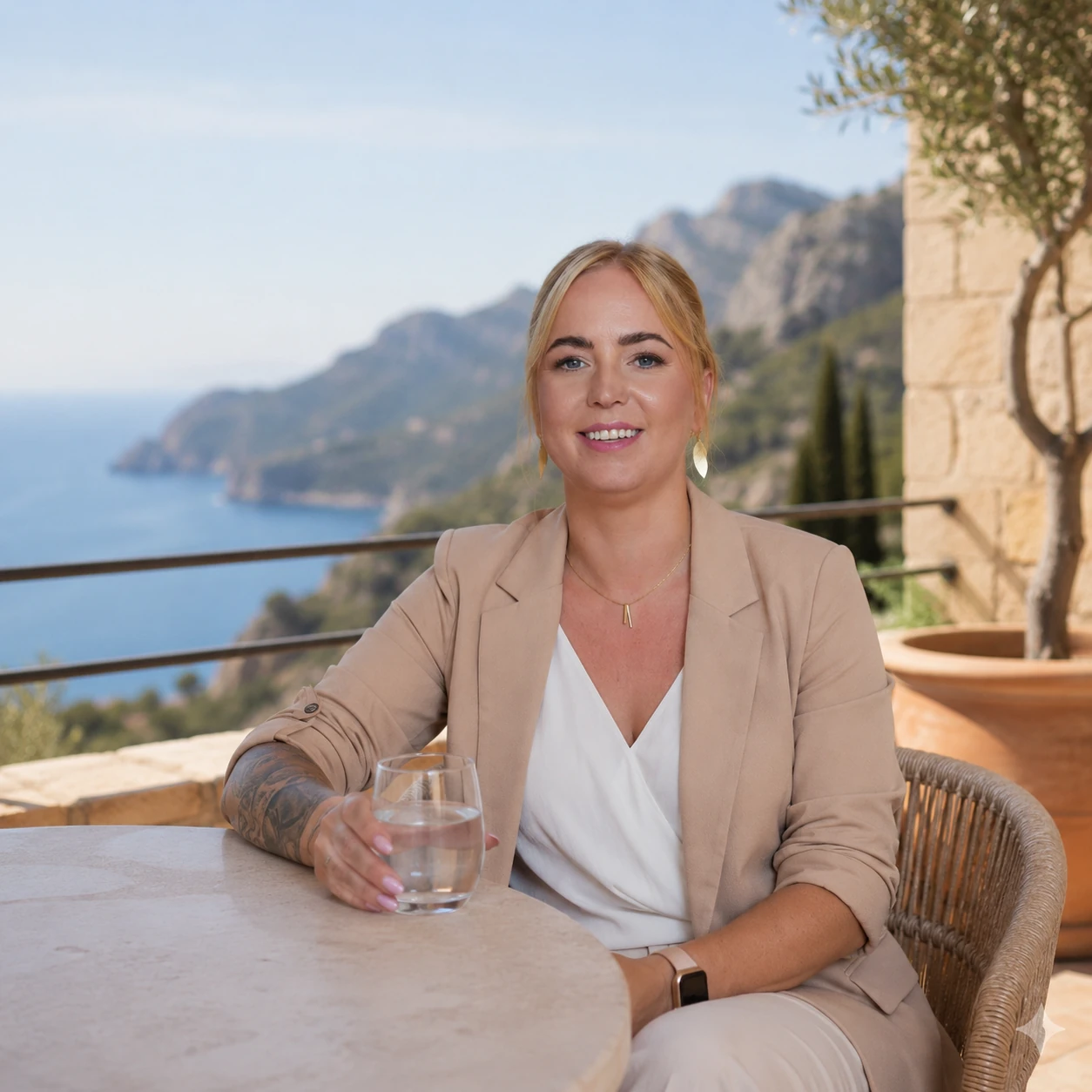
Magdalena
Founder, DYBIEC WEDDING
Dybiec Wedding is a boutique wedding planning business founded and personally led by Magdalena Dybiec, who has lived in Mallorca since 2014 and planned over 100 wedding celebrations for couples from the UK, USA and across Europe. She specialises in three-day weddings, giving couples and their guests time to settle in, celebrate and enjoy the island together.
Magdalena accepts a limited number of weddings each year and remains each couple’s main point of contact throughout. Working in English, Spanish, German and Polish, she brings together her local knowledge and trusted network of suppliers to organise celebrations around each couple’s wishes.
She is also a certified Master of Ceremonies and can lead symbolic ceremonies herself, offering couples the familiarity of someone who has been part of their plans from the beginning.
Contents of Advice
Click any subject line below to jump straight to that section.
- What should travel from the UK and what should stay in Mallorca?
- How should you take a wedding dress to Mallorca?
- What should happen to the dress after landing in Mallorca?
- Should you bring wedding suppliers from the UK or book locally in Mallorca?
- What does it really cost to bring a UK wedding supplier to Mallorca?
- What are the customs rules for bringing wedding items from the UK to Mallorca?
- Can a UK wedding supplier legally work in Spain?
- Where do IVA, VAT and contracts affect a Mallorca wedding?
- Practical Mallorca wedding details couples often discover too late
- How Magdalena takes the logistics off your plate
- Frequently asked questions
1. What should travel from the UK and what can stay in Mallorca
Before committing to shipping or carrying anything over, consider whether it is personal, sentimental or difficult to replace. Your dress, rings and family heirlooms will probably travel with you, whereas furniture, flowers and large quantities of décor are usually easier to arrange in Mallorca. Professional equipment needs separate attention because different customs rules may apply. Sorting these questions early can spare you unnecessary baggage charges, freight costs and handling.
| Item | Usual starting point | Confirm before booking |
| 1 Wedding dress and tailored outfits | Carry in the cabin when permitted | Airline allowance, packaging, insurance and local steaming |
| 2. Rings, personal jewellery and essential documents | Keep in personal hand luggage | Insurance limits and secure storage |
| 3. Photographer or filmmaker | Choose by trust, style and compliance | Work permission, equipment customs, insurance and total travel cost |
| 4. Hair and make-up team | Compare trusted UK artists with experienced local teams | Trial, heat experience, schedule, travel days and replacement plan |
| 5. Florals, candles, furniture and large décor | Source locally in most cases | Availability, minimum orders, collection and venue restrictions |
| 6. Printed stationery and small keepsakes | Bring only after checking quantity and use | Baggage, customs treatment and whether items remain in Spain |
| 7. Sound, lighting and staging | Hire locally in most cases | Venue compatibility, power, sound limits and collection times |
There are exceptions, of course. A handful of handwritten place cards will be treated very differently from cartons of unused wedding favours, just as an heirloom veil needs different care from hired candelabra. Think about the nature and quantity of each item rather than assuming everything can travel in the same way.
It is worth making an inventory before your supplier bookings are finalised, recording what is being transported, who owns and carries it and whether it will come back to Britain, remain in Spain or be used during the wedding. That information will also help when you speak to couriers, customs advisers and your venue.
2. How should you take a wedding dress to Mallorca?
If the airline permits it, carrying your dress in the cabin is usually preferable to checking it into the hold. You will be able to keep it with you throughout the journey and avoid some of the risks associated with checked baggage, although you should expect it to travel carefully folded rather than hanging in an aircraft wardrobe.
Check the airline before you buy the fare
Cabin allowances vary according to the airline, fare and aircraft, so find out how your dress will be treated before buying your tickets. Ask whether the packed gown counts as your main cabin bag, confirm the permitted weight and dimensions in writing and check again shortly before departure in case the arrangements have changed.
British Airways, for example, allows wedding outfits within its usual hand baggage allowance but advises that short-haul aircraft do not provide wardrobe space. Your gown must therefore fit safely into an accepted bag or box. Its wedding outfit packing guidance is a useful reference when deciding how to transport it.
For a gown that cannot fit within the standard allowance, ask the airline whether there are alternatives, including additional baggage arrangements or purchasing an extra seat. Do not assume that booking another seat means the dress can travel without protective packaging; confirm the conditions first.
Let your bridal boutique pack the gown
Your bridal boutique is likely to be the best place to start when deciding how to pack the dress, particularly if it has elaborate construction or delicate embellishments. Ask the team to prepare it after your final fitting and take photographs of the folding process so that you or your dresser can unpack it properly on arrival.
Depending on the dress and the airline’s requirements, a breathable garment bag or an approved rigid box may be appropriate. Acid-free tissue can protect embellishments and reduce hard creases, but coloured tissue, plastic and sharp metal hangers should be kept away from delicate fabrics.
A clean cotton sheet can provide a suitable surface if airport security needs to inspect the gown. Include your name, mobile number, venue and your planner’s local contact details with the inner packaging in case it becomes separated from you.
Keep liquids, make-up and shoes in separate luggage. Jewellery, detachable sleeves and sentimental accessories can go in a smaller personal bag, while a photograph of the finished bridal look may be helpful for anyone assisting you on the wedding morning.
If the dress has to go in the hold
For particularly large or structured gowns, checked baggage may be unavoidable. If that is the case, use a rigid suitcase with waterproof protection inside and avoid packing toiletries or coloured clothing alongside the dress.
Before checking the case in, photograph the gown, its labels and the packed luggage, then retain the purchase receipts and alteration records with your insurance documents. Confirm that your cover includes specialist garments and provides adequate protection against delay, loss and damage.
Whatever the travel arrangements, arriving at least two days before the wedding allows time to deal with wrinkles, minor repairs or a delayed suitcase. A heavily embellished or couture gown may warrant an earlier arrival, particularly if a specialist needs time to prepare it.

3. What should happen to the dress after landing in Mallorca?
Unpack the gown soon after reaching Mallorca and inspect it carefully in clean, natural light. Many dresses will need professional steaming after the journey, but until that happens they should be stored in a cool, dry, private space. Avoid using a hotel iron or hanging the dress in a steamy bathroom, as neither is suitable for every fabric or construction.
Know your fabric before anyone steams it
Silk, lace, tulle, pleats, bonded details and adhesive-backed embellishments do not all respond to heat in the same way. Before leaving the UK, ask your designer or boutique for written care instructions that can be passed directly to the person preparing your dress in Mallorca.
Ideally, arrange for a bridal dresser, seamstress or garment specialist with experience of similar gowns. Send photographs, details of the fabric and the designer’s instructions beforehand, and ask whether they provide their own steamer, rail, clean protective sheets and basic repair equipment.
An experienced specialist will usually test an inconspicuous area first and avoid direct heat on beading or structured sections. Some hotel laundry departments offer excellent garment care, but it is worth finding out whether they regularly handle bridalwear rather than assuming their usual service will be suitable.
Take a look at your preparation room
The room where you get ready should be practical as well as pleasant to spend time in. Check for air conditioning, good lighting, sufficient height to hang the gown, accessible sockets and mirrors, and a floor that can be kept clean while everyone prepares.
Protect the gown from food, hairspray, open windows and people constantly passing through the room. Humidity may affect how quickly the fabric relaxes after unpacking, while an open window can introduce dust and pollen.
If possible, arrange steaming before the room becomes busy, then give the fabric time to cool and settle. It also helps to have one person responsible for the gown until you are ready to put it on.
Pack a small recovery kit
A small kit, put together with your particular dress in mind, can be useful if anything needs attention on the morning. Depending on the fabric and construction, consider packing:
- a clean white sheet;
- white cotton gloves;
- matching thread and needles;
- a small sewing kit without prohibited cabin items;
- fashion tape and safety pins;
- a crochet hook for covered buttons;
- stain cloths approved by the boutique;
- spare closures and bustle instructions.
If the dress has a bustle, ask your bridesmaid or bridal dresser to practise fastening it before you travel. A short video taken at your final fitting can be especially helpful when everyone is getting ready on the day.
An experienced local planner can help with finding someone qualified to care for your dress. Magdalena works with international couples and a network of island-based specialists, and can advise on appropriate support before you arrive. Meet Magdalena and see how she works.
4. Should you bring wedding suppliers from the UK or book locally in Mallorca?
Deciding whether to bring suppliers from the UK depends far more on the individual professional than on where they live. You might have an established relationship with someone whose work you particularly admire, or you may find that a Mallorca-based supplier offers considerable advantages in terms of local knowledge, language, equipment and contingency planning.
Whatever you decide, UK professionals travelling to Spain must have the appropriate basis to carry out their work there.
Photographer and filmmaker
If your photographer has already worked with you, they may know what puts you at ease and how you prefer to be photographed. Their particular style might also be an important part of the wedding you have imagined, which makes bringing them from the UK worth considering.
A Mallorca-based photographer offers other advantages, including familiarity with the island’s light, venues and travelling times. Their equipment is already in the EU and they are more likely to have local colleagues available if an unexpected problem arises.
Before committing to a UK photographer or filmmaker, establish how they are permitted to work in Spain and how their cameras, lenses, lighting and other equipment will be handled at customs. Drones require additional consideration because aviation rules and individual venues may restrict their use.
Hair and make-up artists
Mallorca-based hair and make-up artists work regularly in the island’s heat, humidity and strong Mediterranean light, and you may be able to arrange a trial during a planning visit. Hiring locally also removes the risk of your artist being delayed by an international flight.
There may nevertheless be good reasons to bring someone from the UK, particularly if they know your skin and hair well or have experience with particular cultural requirements. Allow at least one full day between their arrival and any booked service to accommodate possible travel disruption.
Whichever option you choose, agree the number of people to be styled, the start and finish times, the assistants involved and who is responsible for products, electrical equipment, adapters and suitable power supplies.
Florists, stylists and rental companies
Flowers, furniture, candles, vases and other substantial decorative pieces are generally best sourced on Mallorca, where local suppliers can also manage storage, installation and collection.
These teams are familiar with venue access arrangements, collection hours and the materials best suited to the climate. They are also better placed to find a replacement quickly should something be damaged or become unavailable.
If there is a particular item you want to bring from Britain, send its measurements and photographs to the planner and venue before arranging transport. Agree who will receive and store it, as venues may not be able to take responsibility for deliveries that arrive without prior arrangements.
Musicians, DJs and technical production
It is sensible to consider the performers separately from the equipment they require. A musician travelling with a small instrument may be relatively straightforward to accommodate, whereas a full band bringing lighting, microphones, backline and multiple flight cases involves considerably more planning.
Hiring sound and lighting equipment locally can reduce customs complications and make it easier to comply with the venue’s power and sound restrictions. If you are booking a performer from the UK, ask whether they could use a suitable local production team.
Six questions to ask before flying anyone in
Before agreeing to bring a professional from the UK, work through these questions with them and, where possible, your Mallorca planner:
- Is this person or style genuinely difficult to find locally?
- Can the supplier legally perform this work in Spain?
- What equipment or products must cross the border?
- What is the complete cost after travel and accommodation?
- Who replaces them after illness, cancellation or flight disruption?
- Who coordinates them with the venue and local team?
A planner with local experience can help resolve these issues before contracts are signed. Magdalena’s view is that nationality should not determine the choice: ‘I would never decide this by nationality alone. Start with what is genuinely personal or difficult to replace.’ The aim is to bring over the people whose work is important to you while building a dependable team around them on the island.
5. What does it really cost to bring a UK wedding supplier to Mallorca?
When comparing a UK supplier with someone based in Mallorca, remember that the quoted creative fee may account for only part of the expense. Flights, baggage, accommodation, transfers, meals, paid travel days, insurance and administration can all affect the final amount, with additional customs costs for some equipment. Ask for an itemised total from the UK supplier so you can compare it fairly with a local proposal.
| Cost line | Questions to ask |
| Flights | Which airport, fare type, change terms and arrival day are required? |
| Baggage | How many cabin, checked or specialist cases will travel? |
| Accommodation | How many nights, rooms and breakfast arrangements are included? |
| Ground transport | Who covers airport transfers, venue travel, parking and late-night return? |
| Meals and expenses | Is there a daily allowance or contracted meal requirement? |
| Travel time | Does the supplier charge travel days or lost working days? |
| Compliance | Who pays for visas, permits, certificates or professional advice? |
| Equipment | Are carnet, customs agent, rental and excess baggage costs included? |
| Insurance | Does professional cover apply in Spain and during travel? |
| Currency | Which exchange rate and bank charges affect the final payment? |
Ideally, request a single written total or an estimate with clearly defined limits on additional expenses. Your contract should explain which costs require approval and who is responsible if airfares or other travel arrangements change.
Arrival times deserve particular attention. A supplier arriving on the wedding morning could miss the event because of one delayed or cancelled flight, so the previous day should be regarded as the minimum sensible arrival time.
Accommodation does not necessarily need to be at the same hotel as your guests. A nearby alternative may be more practical and affordable, provided it works with the supplier’s hours and offers appropriate security for equipment.
Remember to budget for food and water for anyone working through the reception, and make sure their meal breaks can be accommodated within the event schedule.
Our Mallorca wedding cost guide explores how these expenses fit into the overall budget for a celebration on the island.
6.What are the customs rules for bringing wedding items from the UK to Mallorca?
Since Brexit, items travelling from Great Britain into Spain cross an EU customs border, which means that personal possessions, wedding goods and professional equipment may be treated differently. Their purpose, ownership, quantity and whether they return to Britain will help determine which rules apply.
Your personal wedding belongings
Your own wedding dress, jewellery and clothing will usually be personal travel belongings. Pack valuable items securely, arrange suitable insurance and keep purchase information available in case customs officials ask questions about an expensive piece.
Large quantities of new goods may receive different treatment. Boxes of favours, candles, signage and decorations can be considered commercial goods rather than ordinary personal possessions, even if you are carrying them in a suitcase.
Decorations that stay in Spain
Goods that are given away, consumed or left behind in Spain do not qualify as temporary exports simply because they are intended for a wedding. Depending on their value, origin and how they are transported, customs declarations, import VAT or duty may apply.
If you intend to post boxes to your venue, establish who will act as the importer and whether the courier needs a Spanish recipient’s tax information. Not every venue is willing or able to accept that responsibility.
Confirm the importer, delivery address and recipient before dispatching anything, and allow sufficient time for customs clearance or inspection. Do not send essential decorations to a hotel or venue until someone there has agreed to receive them.
Fresh plants, food, alcohol and certain animal products are subject to additional restrictions, while airlines and couriers may have their own rules on candles, aerosols and batteries. Consult Spain’s customs guidance for travellers and your carrier’s dangerous goods information before packing or posting these items.
Rented items and professional equipment
Professional equipment and hired items that will return to Britain may qualify for temporary export or import procedures. Cameras, lighting, instruments and reusable display pieces are examples, and an ATA Carnet may simplify the paperwork in some circumstances.
HMRC explains that some temporarily exported goods require declarations and specifically includes film, sound and musical equipment among its examples. The GOV.UK guidance on taking goods out of Great Britain temporarily is a useful starting point.
An ATA Carnet cannot be used for every type of item. Consumables and anything remaining in Spain are treated differently, and customs officials may require serial numbers, declared values and evidence that equipment has been returned.
Responsibility for professional equipment and its paperwork should sit with the supplier who owns or transports it. Ask for written confirmation of the arrangements, because equipment held at customs could have consequences for the wedding schedule.
For unusual, high-value or mixed shipments, seek advice from a customs broker before committing to non-refundable freight. The arrangements may also differ for goods travelling from Northern Ireland, so the origin and route need to be clear.
7. Can a UK wedding supplier legally work in Spain?
UK suppliers cannot assume that permission to enter Spain without a visa also permits them to carry out paid wedding work. The requirements depend on the nature of the work, the contract, the supplier’s nationality and the length of the visit, and may involve a visa, permit or an applicable exemption.
GOV.UK identifies self-employed work and certain services provided to Spanish clients as activities requiring particular checks, while some audiovisual work may fall under specific exemptions. Suppliers should consult the current GOV.UK guidance on travel to Spain for work and, where necessary, obtain confirmation from the Spanish Consulate before making non-refundable bookings.
Rather than trying to interpret immigration rules yourself, ask each professional travelling from the UK to provide written confirmation of the following:
- the immigration or work basis for the assignment;
- any visa, permit or exemption evidence;
- social security documentation where required;
- professional and public liability cover in Spain;
- cover for equipment, travel and cancellation;
- the customs route for every professional item.
The correct arrangements must be checked for each supplier’s role and contract. A photographer should not assume that an audiovisual exemption covers their assignment, and a make-up artist should not rely on visitor status as permission to carry out paid work.
Where there is uncertainty, ask the supplier to obtain written advice from the Spanish authorities or a qualified immigration adviser and keep it with the contract.
8. Where do IVA, VAT and contracts affect a Mallorca wedding?
When reviewing quotes from Mallorca suppliers, check whether Spanish IVA is included in the price. The general rate is 21 per cent, although reduced rates apply to certain goods and services, and a single wedding package can include elements subject to different treatment.
Spain’s Tax Agency publishes the official IVA rates. Rather than assuming one percentage applies to an entire package, check how each service has been invoiced and seek Spanish tax advice for unusual or mixed arrangements.
Compare totals rather than headline prices
A price described as ‘plus IVA’ is not the final amount payable. Ask suppliers to show the tax rate, taxable amount and full total in euros, then compare quotes on the same basis.
For most private couples, IVA is simply part of the overall wedding cost and should not be treated as recoverable when setting the budget. Sponsorship, business arrangements, cross-border invoices or questions about a UK supplier’s VAT position require specialist advice.
Put travel and compliance inside the contract
Contracts should identify the legal business providing the service, its tax number, the location of the wedding and the payment currency, with clear wording about whether quoted fees include the applicable taxes. This protects both parties and makes the total commitment easier to understand.
- Before signing, also check that the contract addresses:
- the named supplier and any assistants;
- deliverables, hours and overtime rates;
- travel days, baggage, hotels, meals and transfers;
- responsibility for work permission and social security;
- responsibility for customs documents and equipment;
- cancellation, postponement and replacement;
- weather changes and revised locations;
- equipment failure and backup plans;
- insurance and liability;
- image use and publication rights;
- governing law and dispute procedure.
Terms such as ‘reasonable travel expenses’ are too open-ended for an international booking. Agree any spending limits, approval requirements and receipts in advance, including how additional expenses will be handled if travel plans change.
Pay deposits only to the legal entity named in the contract and confirm changes to bank details by telephone using an independently verified number. With so many international payments involved in a destination wedding, this simple check can help prevent invoice fraud.
9. Practical Mallorca wedding details couples often discover too late
Many of the practical problems associated with destination weddings arise where one supplier’s responsibilities end and another’s begin. It helps to establish who is handling each delivery, access arrangement or collection before the final schedule is agreed.
Delivery and storage
Some venues cannot store boxes in advance, while others allow access only within agreed event hours. Check when deliveries can arrive, what storage is available and who will sign for them.
Keep a register of boxes, ideally with photographs, noting where each belongs on site, whether it needs to be returned and who is responsible for its collection.
Supplier access
A finca may be approached along a narrow lane or gravel track with limited parking, which can be difficult for larger delivery vehicles. Production teams may need a separate entrance or access at times that do not match the guest schedule.
Provide suppliers with clear directions, map pins, access videos and loading instructions, and confirm vehicle dimensions rather than assuming that an entrance suitable for a car will also accommodate a production van.
Collection after the wedding
Hire arrangements continue after the celebration ends. Furniture, glassware and technical equipment may need to remain secure overnight, and the earliest collection slot could fall on a Sunday or local holiday.
Agree who holds the keys, when the team can return to dismantle the setup and how damage checks and collection signatures will be recorded. Your family should not be left to supervise all of this the morning after the wedding.
Heat, humidity and wind
Mallorca’s weather affects much more than the ceremony itself. Heat and humidity can influence clothes, make-up, flowers and equipment, while wind can cause difficulties with veils, candles, paper decorations and outdoor sound. Shade and air conditioning are particularly valuable during preparations.
Ask each supplier about their contingency arrangements, including what they would change in difficult weather, when a decision needs to be made and whether alternatives would incur extra costs.
Power, charging and data
UK plugs require adapters for Spanish sockets, and it is worth checking the suitability of high-powered styling tools. Batteries and power banks must also comply with the airline’s transport rules.
Photographers and filmmakers need somewhere secure to charge equipment and make backups, so discuss how and where image files will be copied and stored. Agree an alternative means of communicating with the team rather than relying entirely on mobile reception.
The journey home
Consider the return journey while making the original packing plan, particularly for your dress, valuable gifts and personal decorations. Keep the relevant customs paperwork with the goods and retain any temporary import documentation until the items have been exported again.
Arrange gown cleaning in accordance with the fabric’s care requirements and the time available before travelling home. Ensure keepsakes are completely dry before packing and allocate valuable belongings to a specific person responsible for carrying them.al details work for you before committing to a place you’ve fallen in love with in photographs.
10. How Magdalena takes the logistics off your plate
Planning a wedding in Mallorca does not mean transporting everything you would have used for a celebration in Britain. Bring the people and possessions that are personally important to you, then work with the venue and local suppliers to arrange what can be provided on the island.
Magdalena approaches these decisions as parts of the same logistical plan. A wedding dress needs an appropriate preparation room and someone who can care for it, a visiting photographer may need work permission and customs documentation, and hired décor requires delivery access, time for installation and an agreed collection date. Considering these arrangements together helps prevent details being overlooked.
When you are organising the wedding from Britain, a planner based on Mallorca can check venue restrictions, coordinate deliveries and arrange suitable local alternatives if a problem arises. Magdalena can also advise when bringing something from home would create unnecessary expense or complications.
As Magdalena explains: ‘Bring the people who add unique value. Build everything else around a reliable local plan.’
This allows couples to remain closely involved in the decisions they care about, from the design of the celebration to the people taking part, without personally overseeing every customs document, delivery and transport arrangement. You can also read what couples say about planning their Mallorca wedding with Magdalena.
11. Frequently asked questions
Can I take my wedding dress as hand luggage to Mallorca?
Usually, provided the packed gown falls within your airline’s hand baggage allowance. Check the dimensions, weight and number of permitted bags before booking, and remember that short-haul aircraft generally have no wardrobe, so the dress will need to fit into approved cabin storage.
Should I put my wedding dress in checked baggage?
Cabin baggage is preferable where permitted because you can keep the gown with you. If its size or structure means it must be checked in, use a protective rigid case, arrange appropriate insurance and arrive at least two days before the wedding in case the baggage is delayed.
Can a Mallorca hotel steam my wedding dress?
Some hotels provide garment care, although not all have experience with specialist bridal fabrics and construction. Ask your boutique for instructions and, where possible, book a bridal dresser or garment specialist familiar with your particular gown.
Is it better to bring a UK photographer to Mallorca?
The decision depends on your relationship with the photographer, their creative approach, legal requirements and overall cost. Someone from the UK may know you and your preferences well, while a local photographer will be familiar with Mallorca and will not need to transport equipment across the border. Compare both options carefully.
Can a UK photographer work at a wedding in Spain after Brexit?
Not automatically. Visa-free entry does not necessarily authorise paid work, so the photographer should confirm the rules applying to the particular assignment and provide details of any required social security arrangements, insurance and equipment customs documentation.
Do we need an ATA Carnet for wedding decorations?
An ATA Carnet may be appropriate for certain valuable items temporarily brought into Spain and then returned, but not for consumables or decorations that will stay there. A customs broker can advise on the goods, their values and the planned route.
Will Mallorca wedding suppliers charge IVA?
Mallorca suppliers may charge Spanish IVA at the rate applicable to their services. The general rate is 21 per cent, although some categories qualify for reduced rates. Request written quotes showing the full total, including tax.
Who pays a UK supplier’s flights and hotel?
The contract should make clear who is responsible for flights, baggage, accommodation, transfers, meals and travel time, with approval limits for any subsequent changes in price.
Decide what must travel before you book it
Before booking flights, couriers or visiting suppliers, make a considered decision about what genuinely needs to come from Britain. Protect the irreplaceable items, use experienced Mallorca suppliers for anything better arranged locally and confirm the legal and practical requirements for professionals travelling over. With those arrangements made in advance, you can spend far less of your wedding week dealing with logistics.
For more help with your early decisions about suppliers, budgets and arrangements on the island, Get the free Mallorca Wedding Guide and have it sent directly to your inbox.
Connect with Dybiec Wedding
Email Magdalena on [email protected]
Follow Dybiec Wedding at @dybiec.wedding