


If the terms ‘nofollow’ and ‘dofollow’ mean nothing to you, you’re probably doing just fine. You may even have spared yourself the pain of researching how best to advertise your business online, and avoided falling down the SEO rabbit hole along the way.
But if they do mean something to you, there’s a good chance they’ve cropped up while researching how to promote your business online, particularly in relation to directories. You may also have come across the idea of backlinks, and whether something is considered worth it from an SEO point of view.
This is often where things start to feel unnecessarily complicated. SEO language can be academic, technical, confusing, overwhelming, contradictory and let’s be frank, incredibly dull. But it’s also unavoidably really important. And if you do decide to self-educate when it comes to SEO, it’s easy to come away thinking that a single detail carries far more weight than it actually does. This has been the case for years, with the idea of a nofollow or dofollow link to your website.
After seeing the same misunderstandings crop up repeatedly, I wanted to write about this topic in simple terms; what nofollow and dofollow really mean, how they relate to online advertising and directory listings, and why understanding the difference matters for your business.
So, grab a cup of tea and let’s get this straightened out.
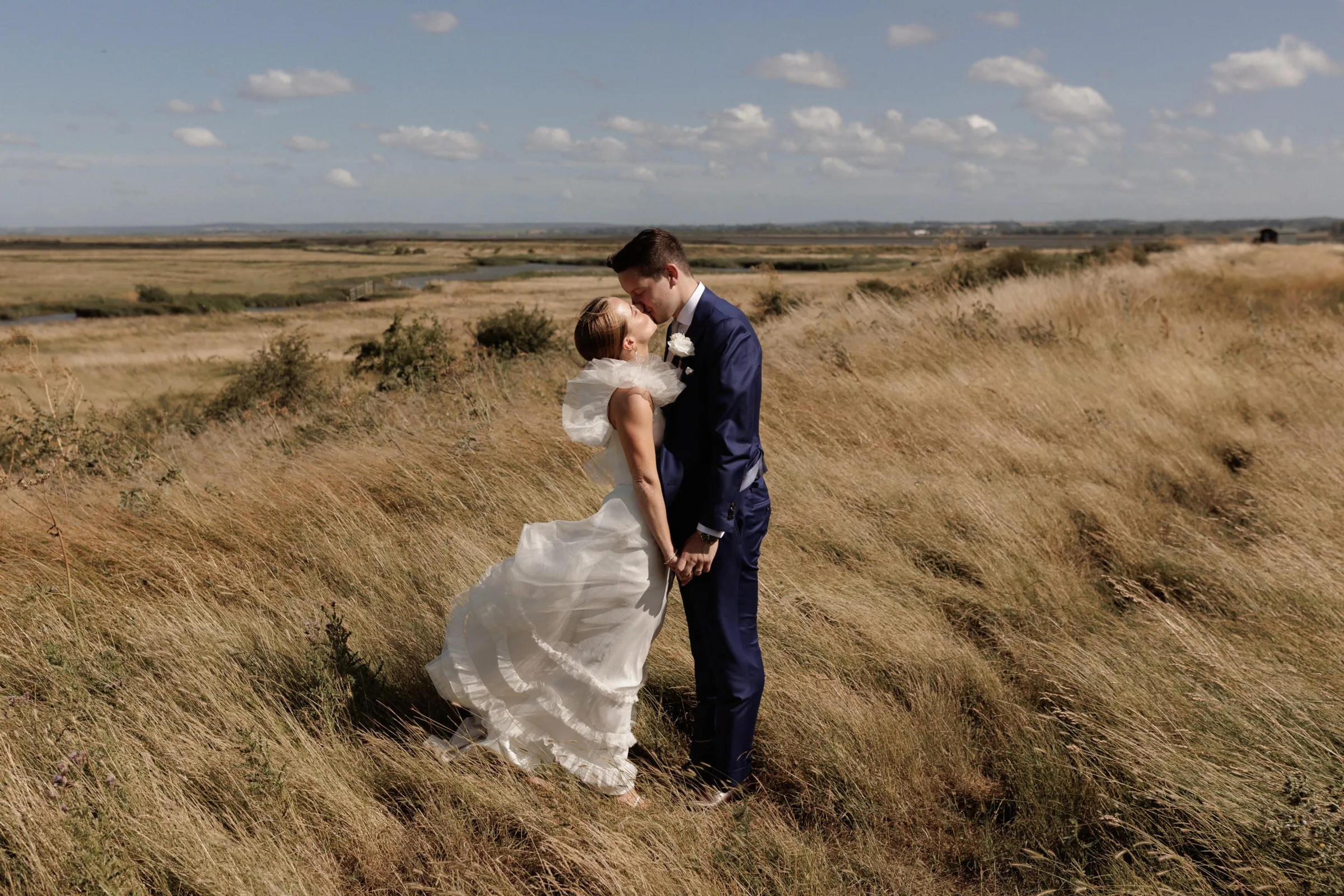
Main image above by the wonderfully talented Lucy Ferguson Photography
What People Usually Mean When They Ask About Backlinks
When someone asks about backlinks, what they’re really asking is quite simple: will this help people find my business online?
A backlink, in basic terms, is just a link from one website to another. If your business appears in a wedding directory and that listing links through to your own website, you have a backlink, which is the case with all Love My Dress directory listings.
Where it becomes confusing is that not all links are treated the same way behind the scenes.
What Is a Dofollow Link?
A dofollow link is a standard link. It tells search engines that one website is editorially recommending another, and some ranking value (often referred to as PageRank) is passed along with it. That part of how the web works hasn’t really changed.
What has changed is how much weight the SEO industry places on counting these links. For a long time, SEO conversations focused almost entirely on collecting as many dofollow links as possible, often at the expense of considering where those links lived, what surrounded them, or whether the platforms hosting them carried any real credibility. That approach has aged badly.
What Is a Nofollow or Sponsored Link?
A nofollow or sponsored link is still a real, visible link, but it carries an attribute telling search engines that the link exists as part of a paid placement, such as advertising or a directory listing.
Google introduced the original nofollow attribute back in 2005, initially to help publishers tag user-generated content and combat blog comment spam. In 2019, Google added two more specific attributes, sponsored (for paid placements) and ugc (for user-generated content), giving publishers a more precise set of tools for proper disclosure. Reputable sites use a combination of these to mark paid or user-generated links today.
None of this means the link is hidden or ignored. It simply means it is being disclosed properly.

Why Paid Wedding Directory Listings Use Nofollow Links
This isn’t a policy we’ve invented at Love My Dress – it’s actually how search engines expect paid links to be handled.
Google has been clear for many years that paid links must be marked as such. This protects the integrity of the blog/website publishing the links and ensures it remains trusted and visible over the long term.
If a publisher were to treat paid listings as if they were unpaid editorial endorsements, that would eventually undermine the authority of the platform itself. In the long run, that helps no one.
Handled properly, disclosure keeps a site healthy, credible and stable, which is exactly what businesses want when they are choosing where to be listed.

Does a Nofollow Link Still Help With SEO?
The short answer is yes, but not in the simplistic way SEO advice has often suggested.
In September 2019, Google formally announced that nofollow, sponsored and ugc would be treated as hints rather than strict directives for both crawling and ranking. In plain terms, this means Google may still use these links as ranking signals when it makes sense to. Nofollow stopped being the absolute dead end it was once described as some years ago, even if the industry hasn’t fully caught up.
In practice, this usually means links from well-established, trusted sources that the wider web already recognises as credible. Wikipedia is a great example here; every external link on Wikipedia is technically nofollow, but Google still treats being cited on Wikipedia as a meaningful signal of trust, simply because Wikipedia itself is so widely trusted. The same principle applies more broadly: a nofollow link from a long-established editorial source within a specific industry carries different weight to a nofollow link from a random, low-quality site, even though the attribute on the link is the same. Context, credibility and the reputation of the linking source all factor in.
Even leaving that aside, a healthy backlink profile is rarely made up entirely of dofollow links. In the real world, brands naturally acquire a mixture of editorial links, sponsored links, directory listings, citations, social mentions and unlinked brand references. This kind of varied profile is generally considered more natural than one built solely around a single type of link.
Search engines now look at a much wider picture, including:
- Where your brand appears online
- How consistently it appears in relevant places
- The quality and trust of the websites mentioning you
- The context in which your business is being presented
- How often your brand is associated with your industry
Nofollow and sponsored links contribute to all of these signals. They help search engines discover, understand and associate your business with a particular space. They also support wider online visibility, brand recognition and credibility, particularly when they sit within a trusted editorial environment.
And there is a simpler benefit underneath all of this. A nofollow link is still a real link. When a couple researching their wedding clicks through from a directory listing to a supplier’s website, they arrive there exactly the same way they would via a dofollow link. Referral traffic doesn’t care about link attributes. People do.
Why Context and Credibility Matter More Than One Link Setting
A directory listing is not just a link sitting on its own. On Love My Dress, listings exist alongside real weddings, long-form editorial, expert writing and carefully curated recommendations. That surrounding context is super duper important.
Being present on a well-established, regularly indexed platform with strong domain authority helps reinforce who you are, what you do and who you serve.
That kind of signal cannot be replicated by chasing individual links without considering where they live.

Not All Directories are the Same & the Quality of the Directory Matters
Not all directories are equal, and this is an important point. The value of a directory listing depends heavily on the quality of the platform itself, how long it has been established, how it is maintained, and the context in which businesses are presented.
Love My Dress has been publishing real weddings and long-form editorial content for over sixteen years. Our directory listings sit alongside carefully curated features, trusted recommendations and genuine storytelling, not mass-produced content or link pages created purely for SEO.
The site is well indexed, regularly crawled and has strong domain authority built through years of consistent publishing and genuine editorial backlinks. For businesses listed with us, that means visibility within an environment that search engines and, increasingly, AI-driven search systems already trust. That kind of exposure supports recognition and confidence in a way a standalone link simply cannot.
Just as importantly, it means being seen by couples who are actively researching and shortlisting suppliers, often long before they are ready to enquire.
Why Clicks Alone Don’t Tell the Full Story
It is completely natural to look at clicks and enquiries when assessing value. They feel concrete and measurable.
But directory listings often work earlier in the decision-making process. Couples may see your name several times across trusted platforms before they ever click through or get in touch. By the time they do, familiarity and confidence are already in place.
That influence does not always show up neatly in analytics, but it absolutely shows up in real-world booking behaviour.
How AI Search Makes This Even More Relevant
As AI-driven search tools become more widely used, visibility and credibility matter even more.
Everything we’re seeing suggests these systems rely on far more than individual links alone, drawing on broader patterns of trust, authority, repetition and topical relevance across the web. Businesses that consistently appear in credible, well-established industry spaces are likely to be in a stronger position than those with little recognised presence.
This is one of the reasons why reducing everything to “is the link dofollow?” misses the bigger picture.
So, Are Wedding Directory Listings Still Worth It?
A more useful question than “is the link dofollow?” is: where does my business show up, and how does it show up?
A strong directory listing provides:
- A backlink to your website
- Long-term brand visibility
- Placement within a trusted editorial environment
- Association with your industry and peers
- Exposure to couples actively planning their wedding
These benefits build over time. They are about presence, credibility and consistency, not quick wins.
Final Thoughts
If this area has ever felt confusing, you are not alone. The language around SEO has not always helped, and simplified advice can easily become misleading.
Directory listings aren’t about buying links alone. They are about being visible, credible and present in the places that matter, for both people and search systems.
When you look at them through that lens, their value becomes much clearer.
If you share my geek level obsession with this subject, you can read more using the links below:
If you would like to explore this topic further, the resources below explain how search engines treat paid links and why context and credibility matter just as much as link type.
These are widely referenced, authoritative sources within the search industry.
> Google Search Central: Qualifying outbound links
Google’s own documentation explaining how paid and sponsored links should be marked, and why disclosure matters for long-term trust and visibility.
> Google Search Central Blog: Evolving nofollow and link attributes
An official explanation of how Google treats nofollow, sponsored and UGC links as signals rather than absolute rules, and how context is interpreted.
> Conductor: What is a nofollow link and why does it matter?
A clear, plain-English guide that explains nofollow links without technical jargon, useful for business owners who want clarity rather than complexity.
> Elementor: Dofollow vs nofollow links explained
A practical overview of the difference between link types, including why paid links should be disclosed and how this protects websites from penalties.
> SEO Discovery: Do nofollow links help SEO?
A helpful discussion of the indirect value of nofollow links, including referral traffic, brand visibility and maintaining a natural link profile.