

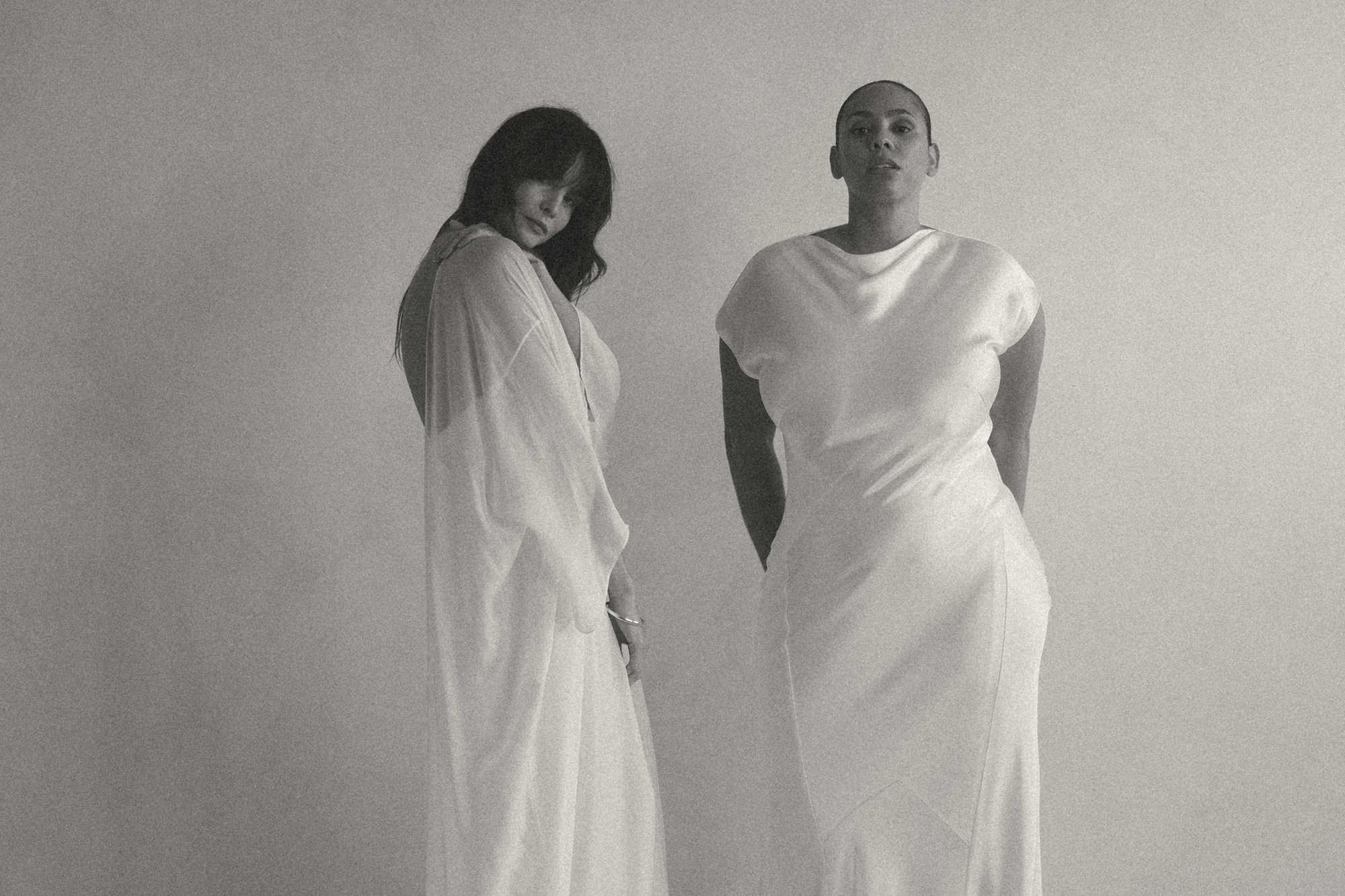
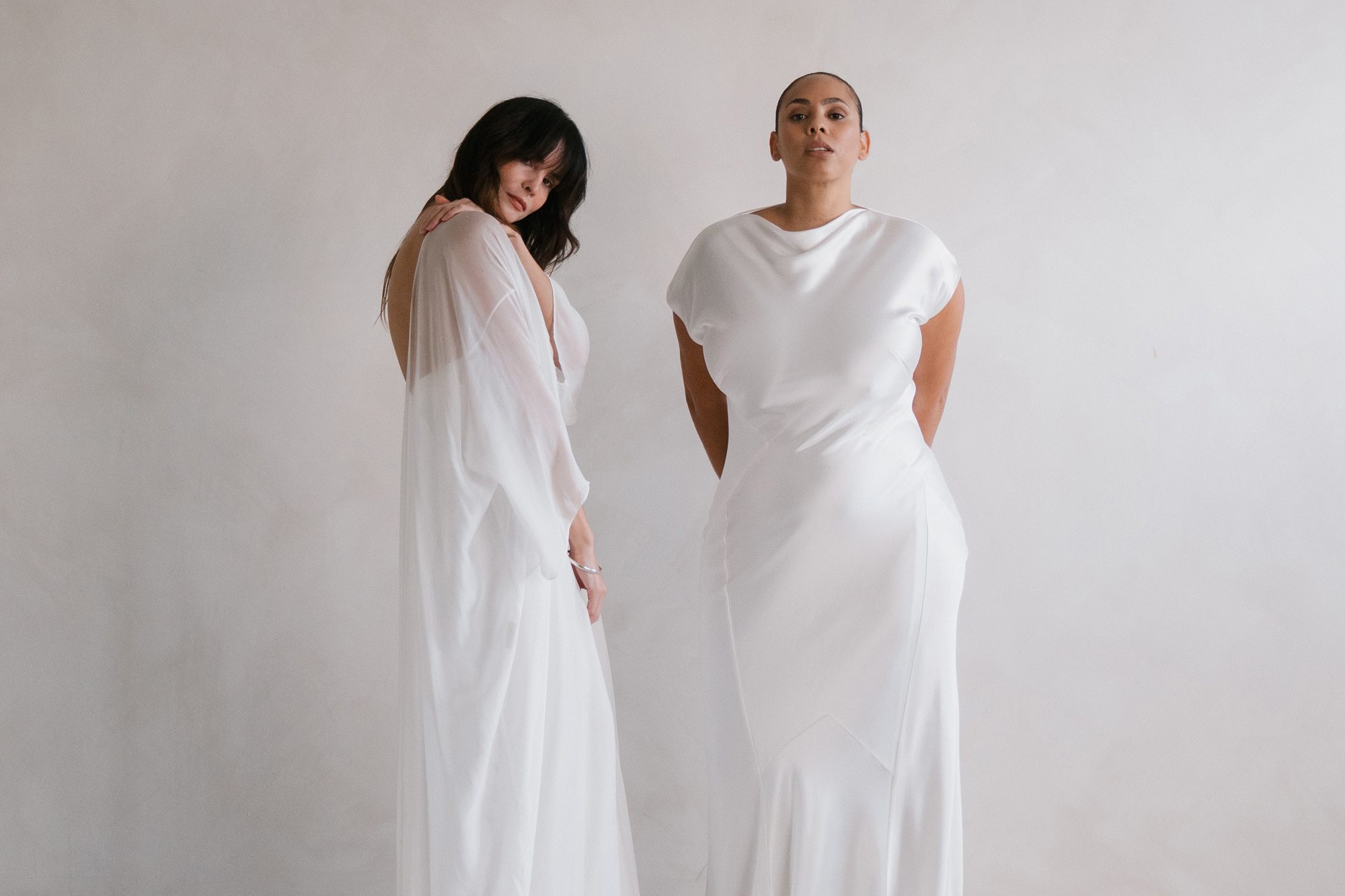
Rolling in Roses is an independent bridal fashion brand based in York, founded by designer Hayley Neil. The studio designs and makes wedding dresses in a full and considered size range, with ethical production and sustainable fabrics at the centre of every decision.
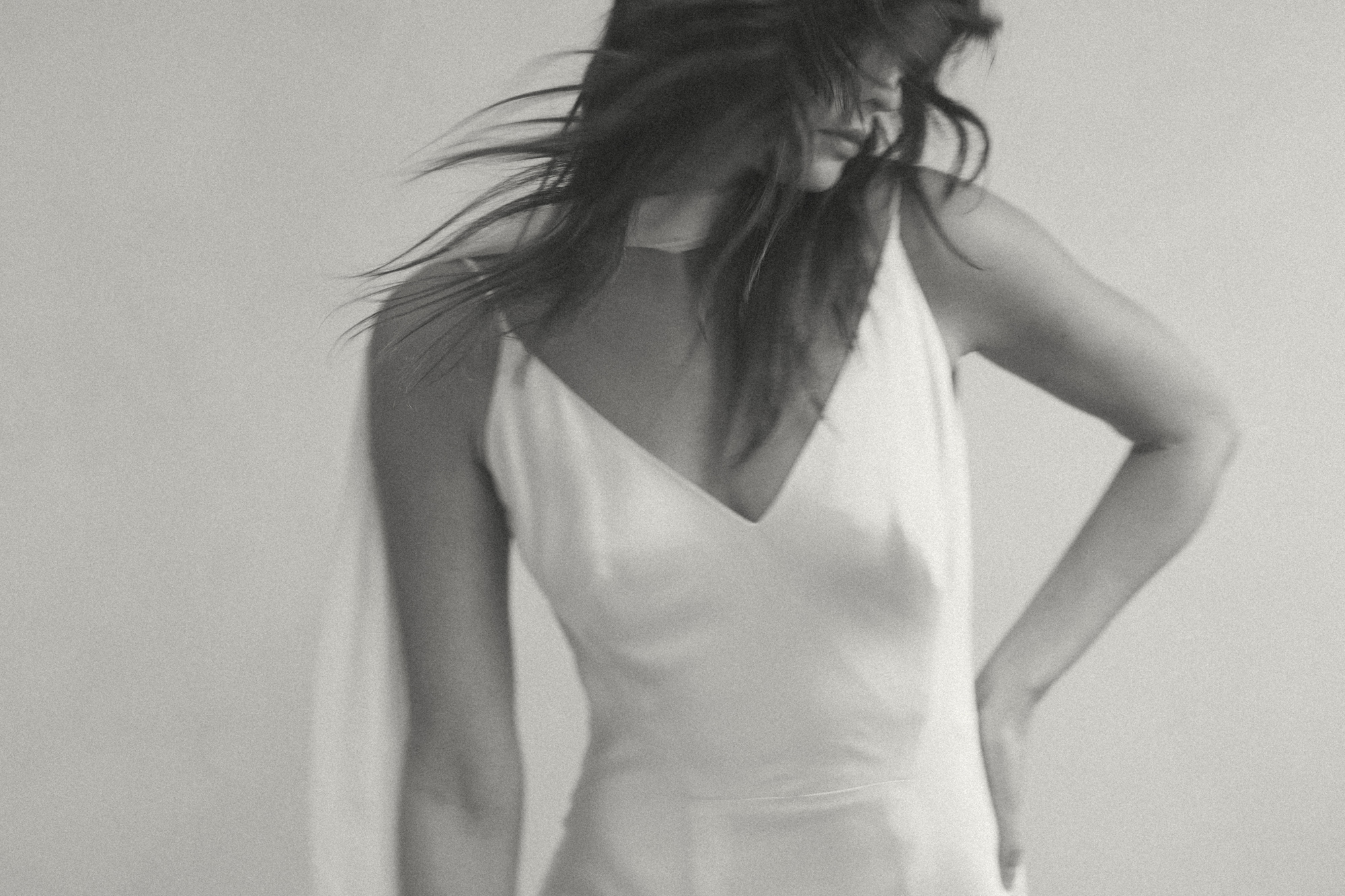
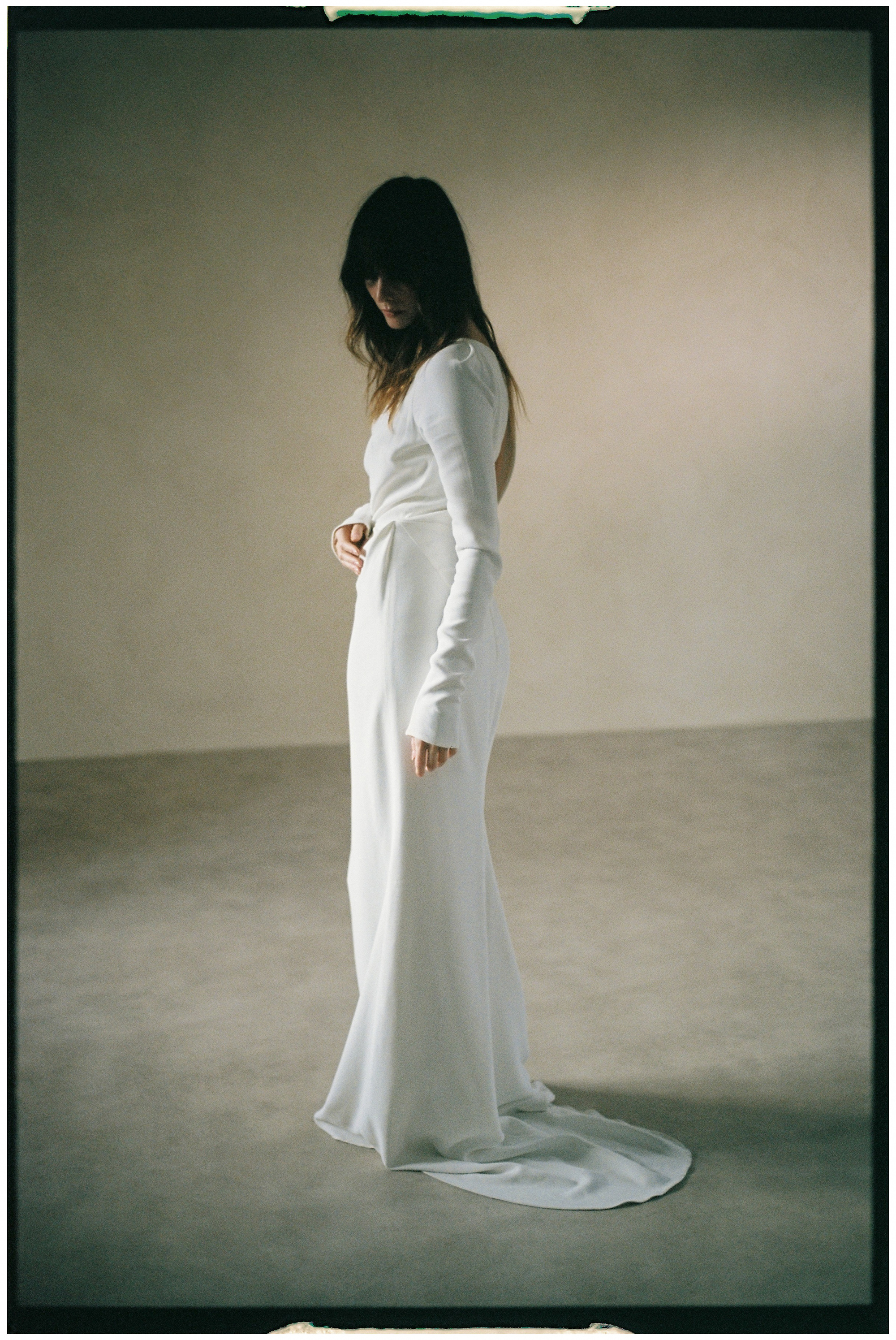
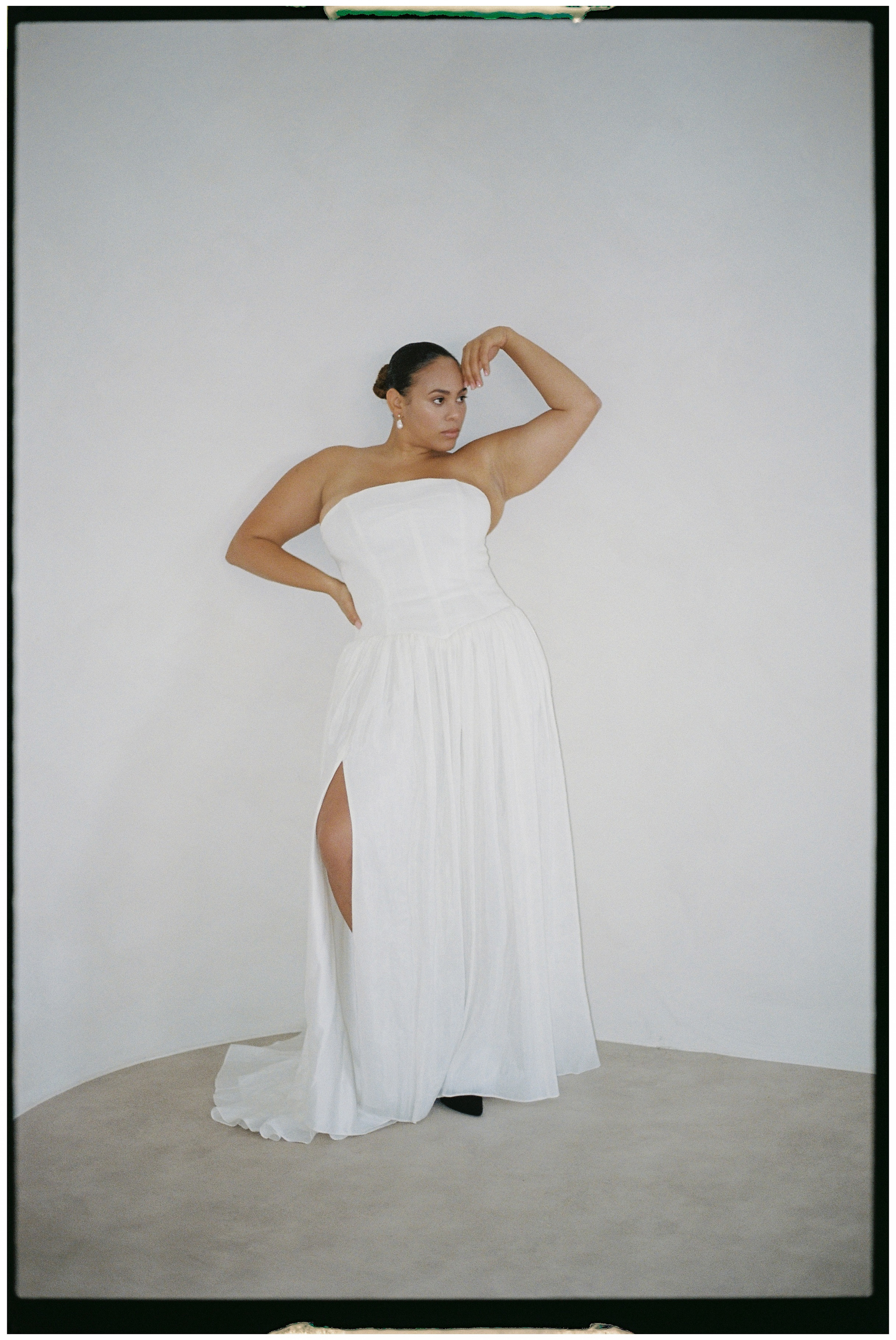
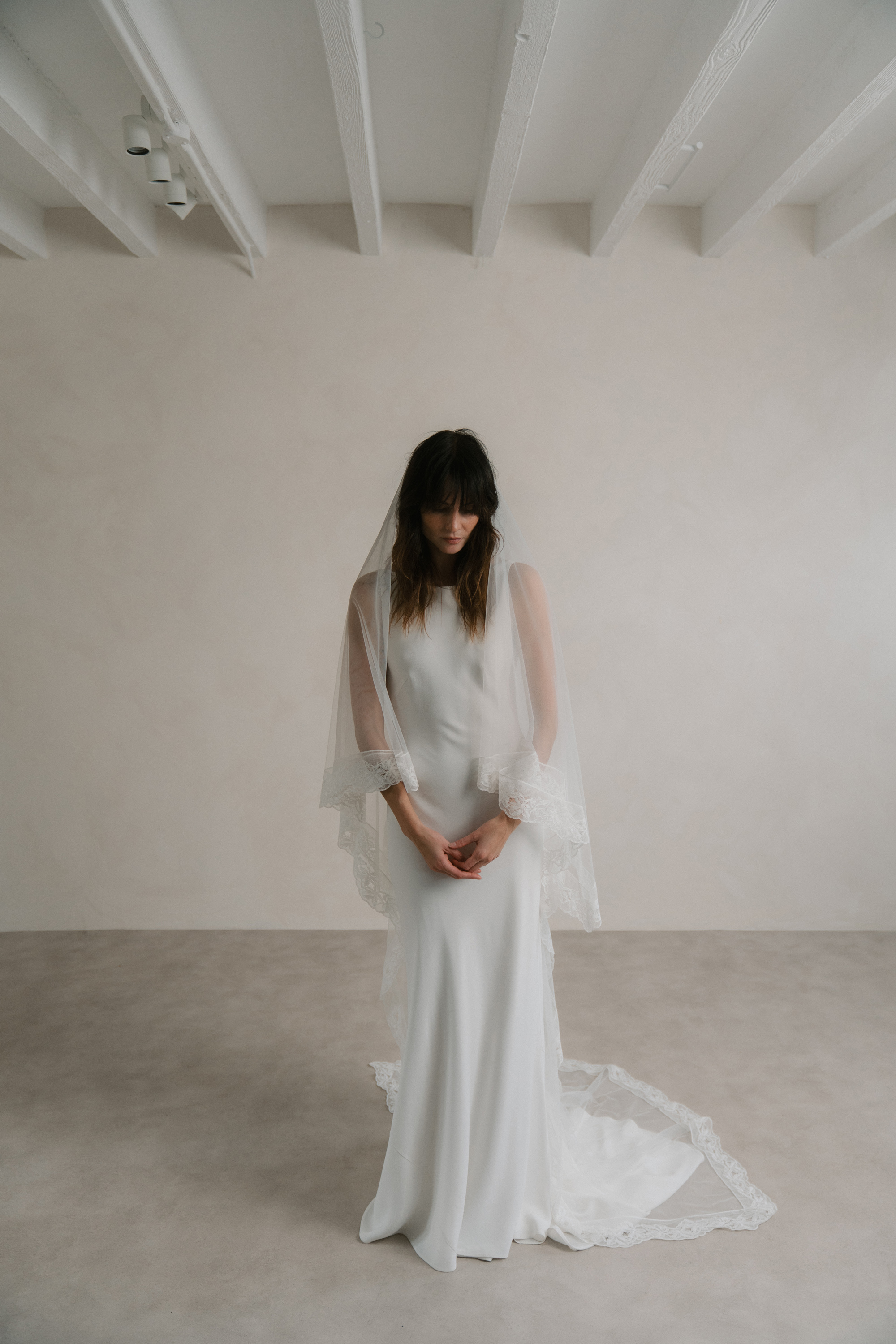
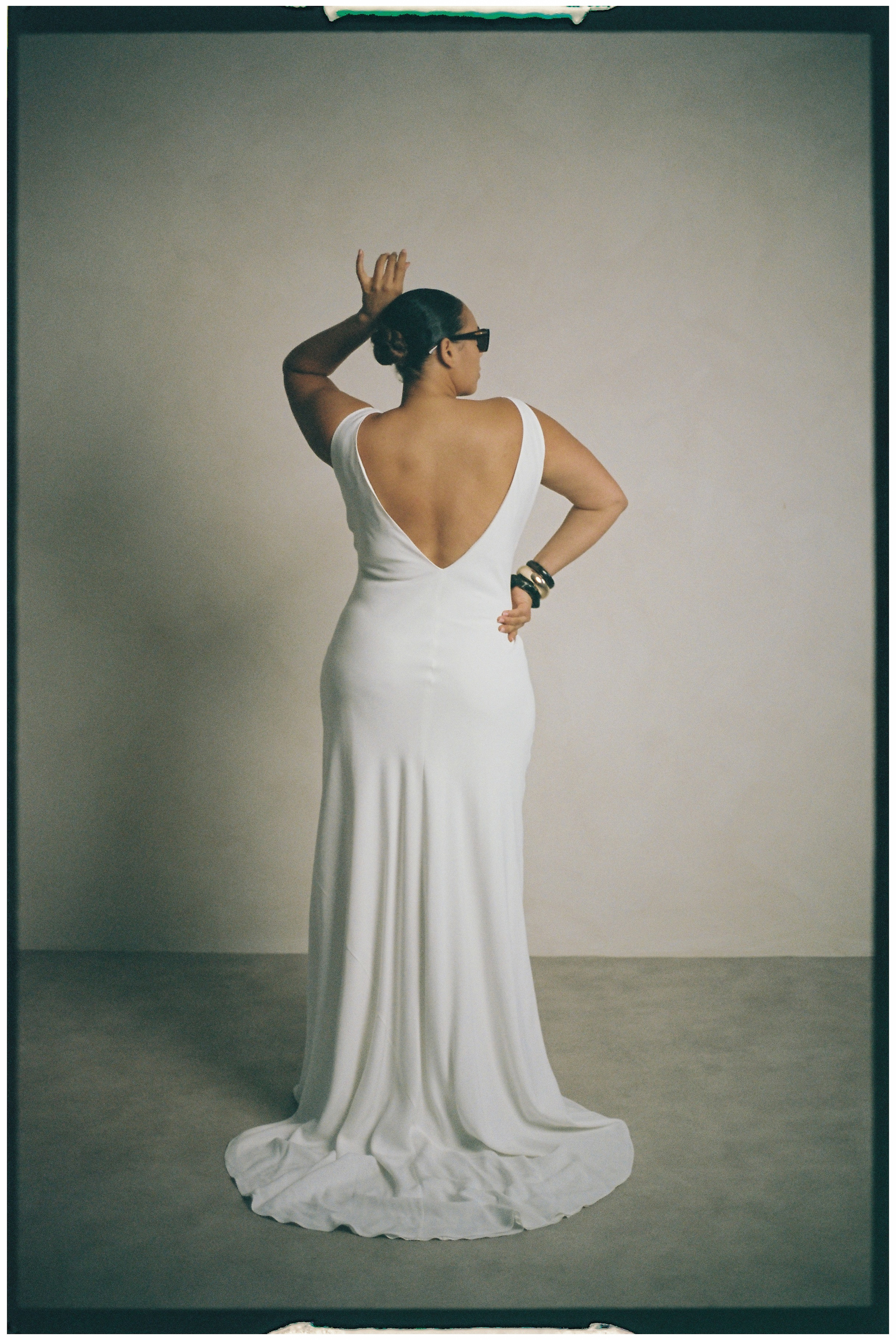
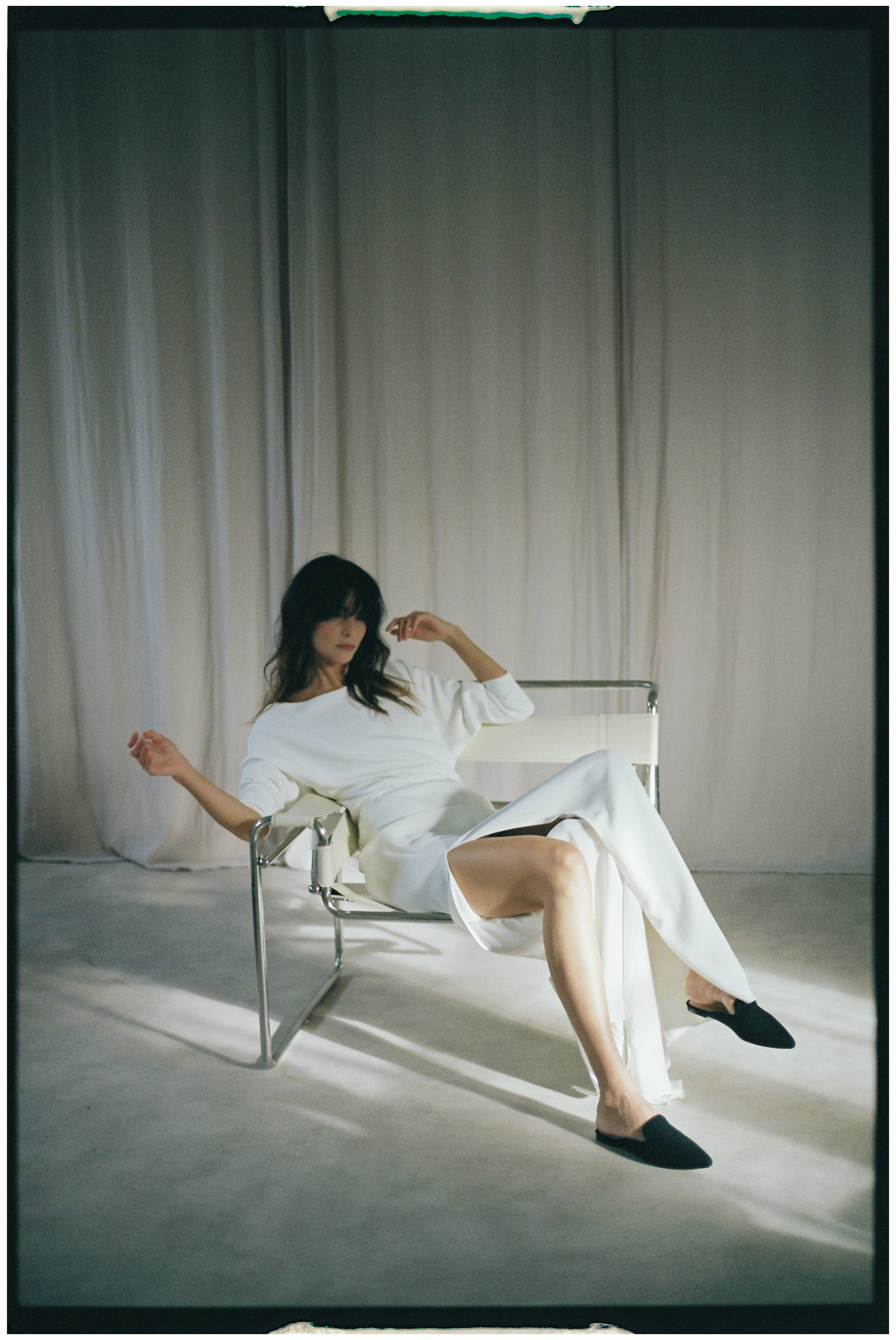
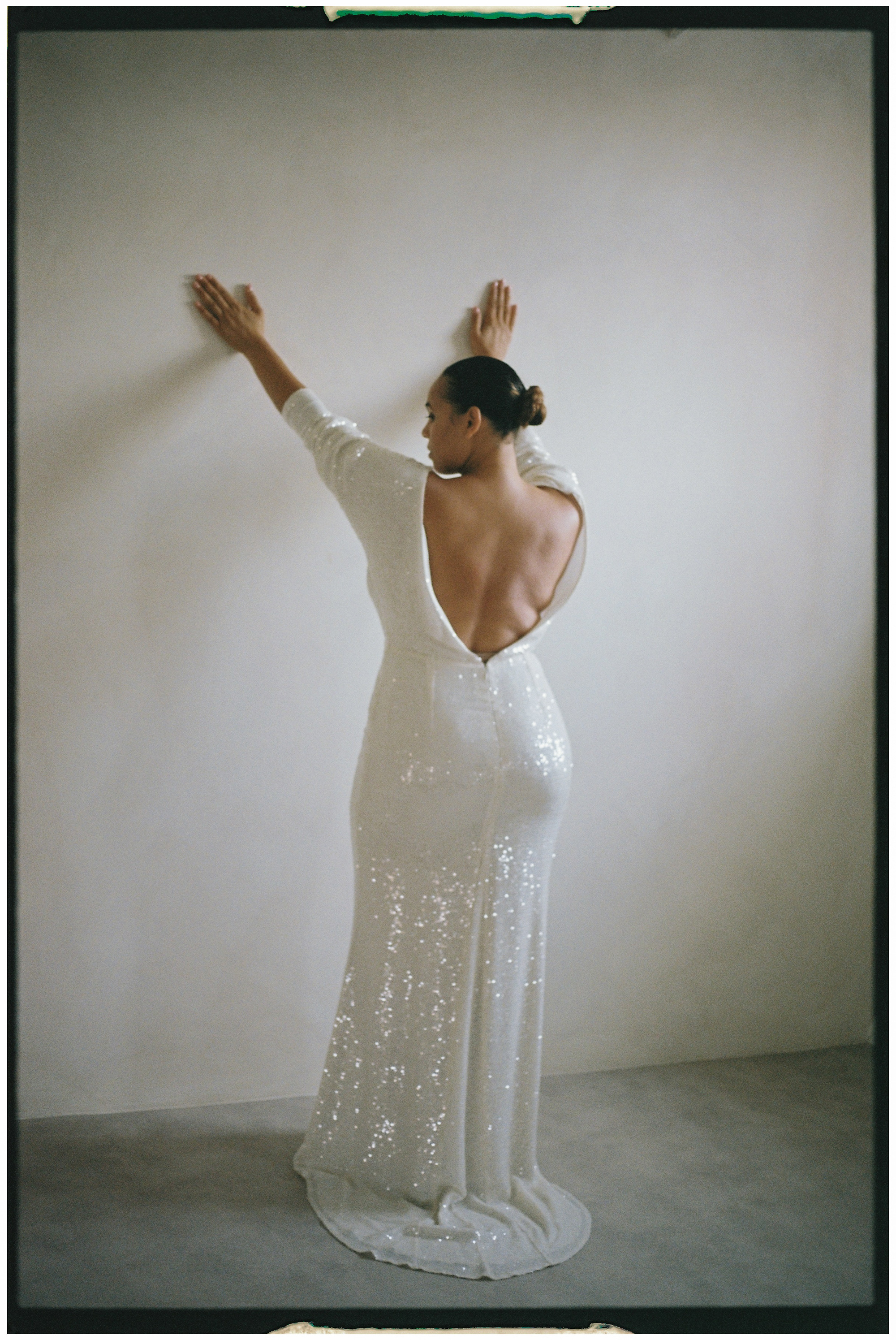
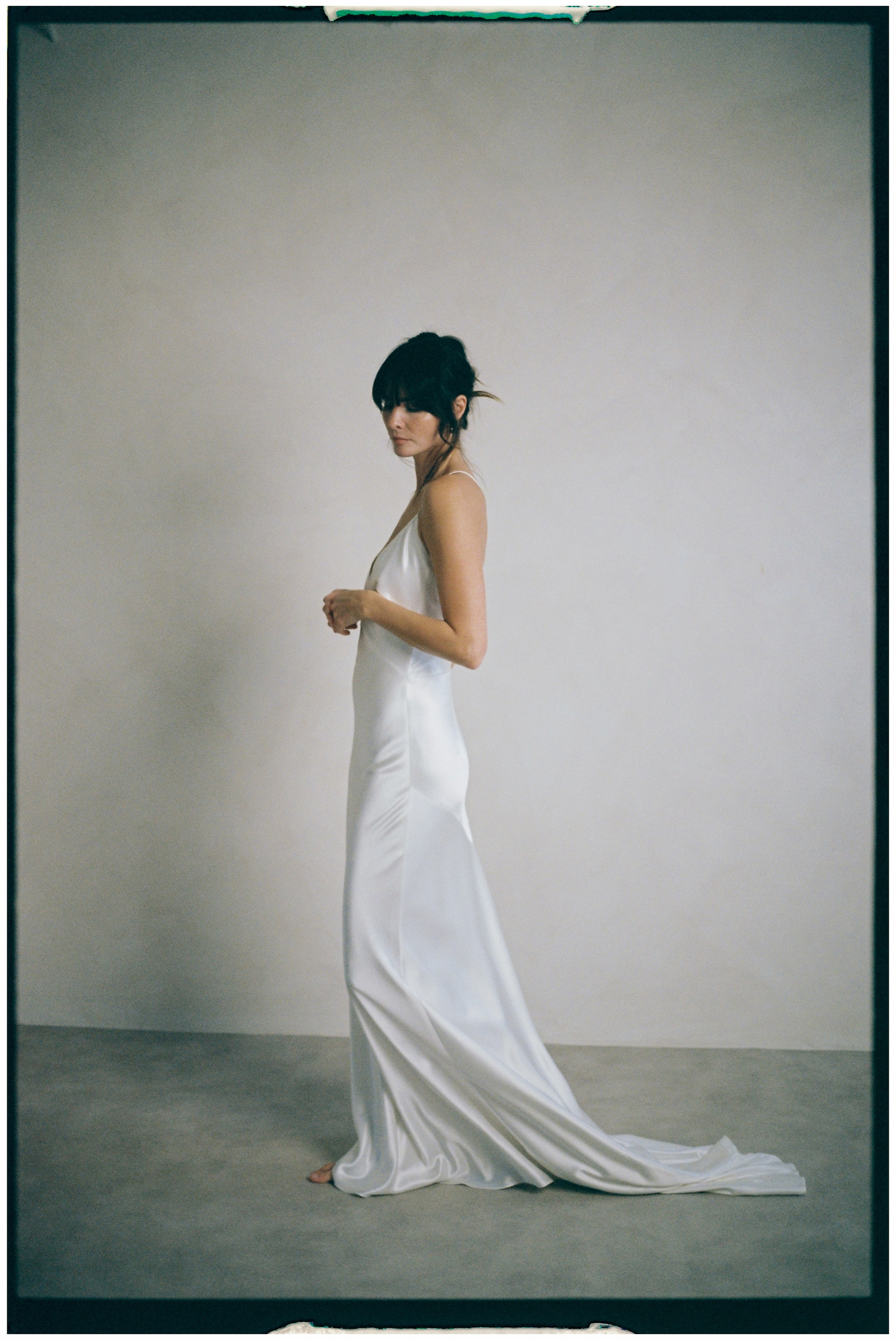
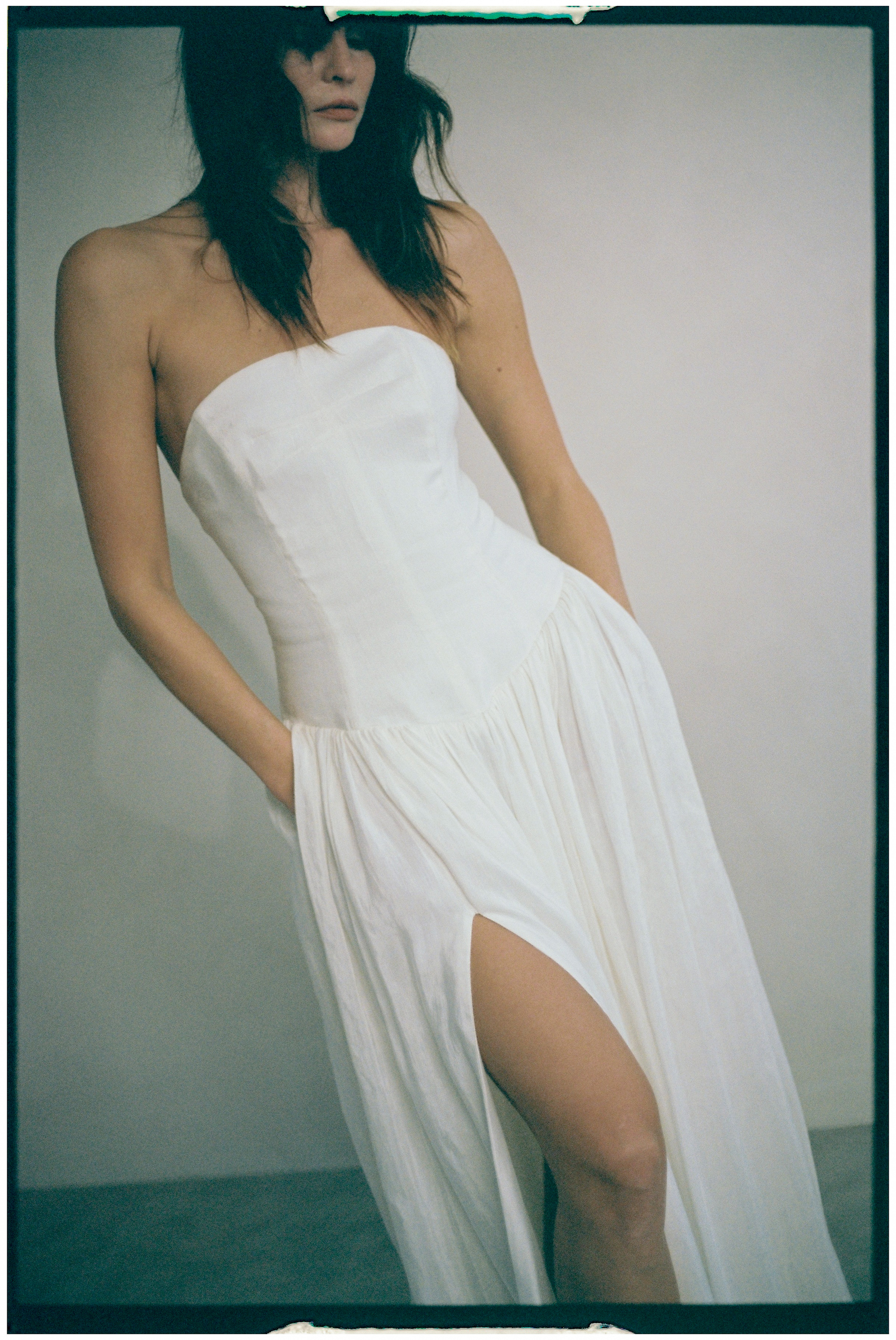
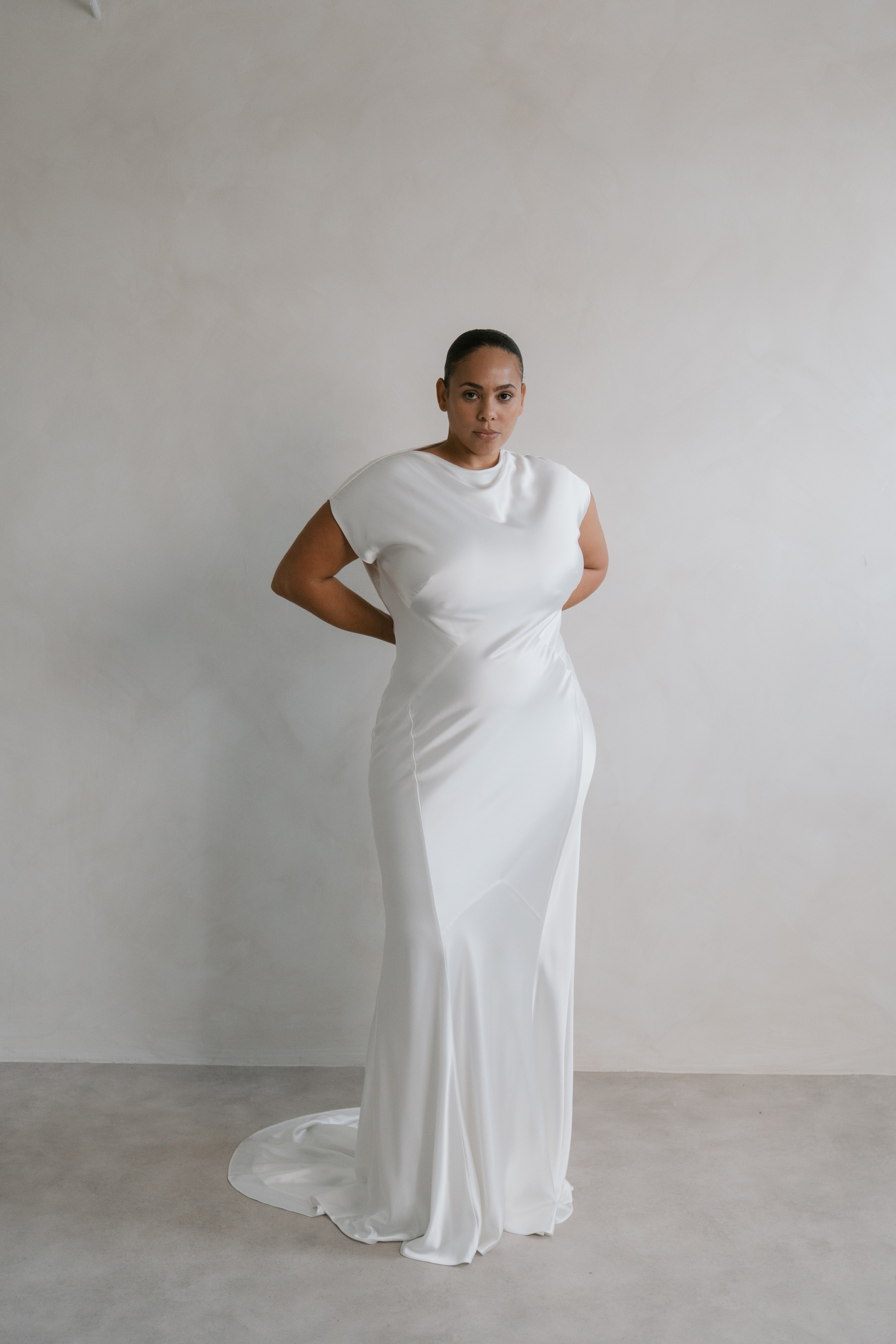
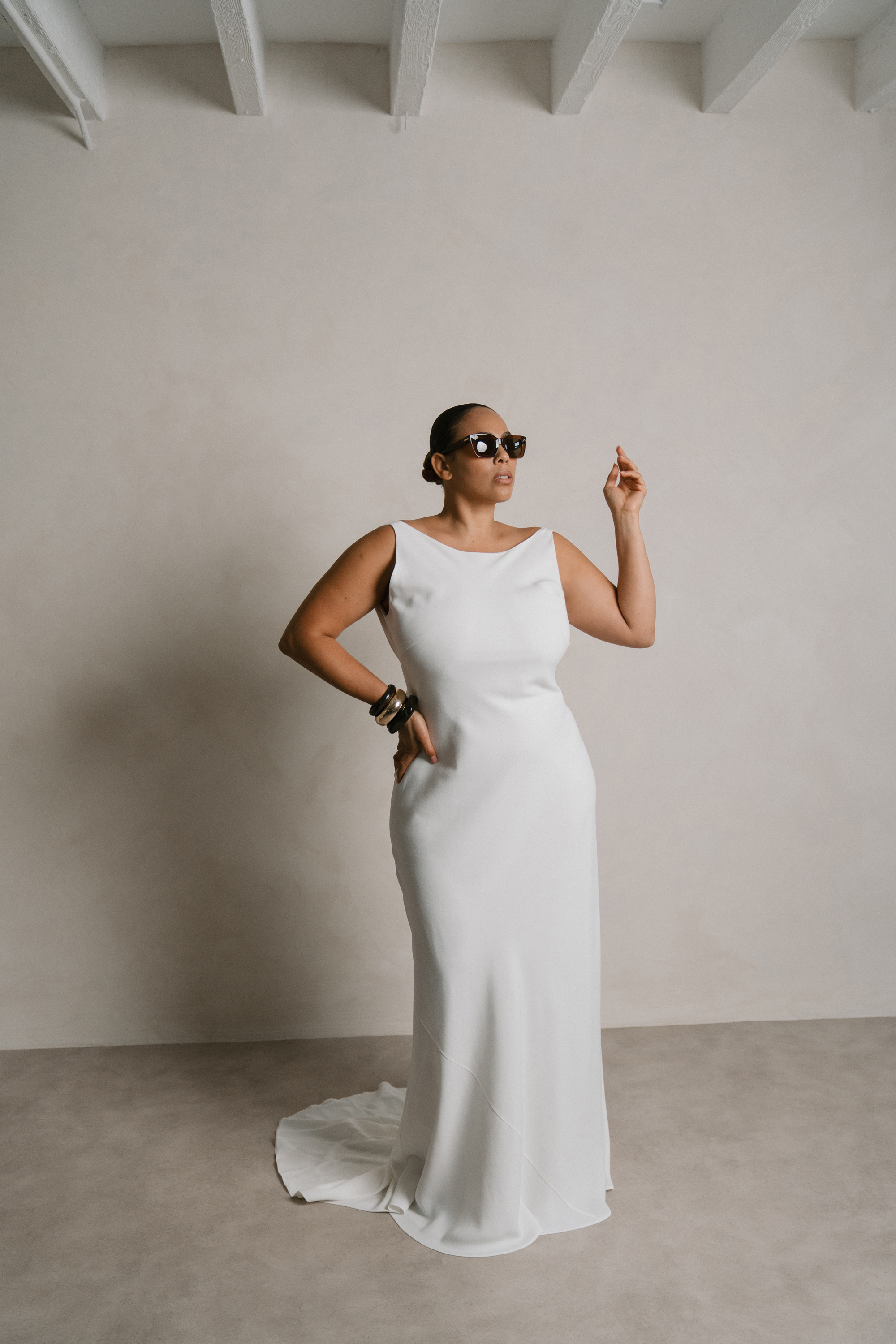
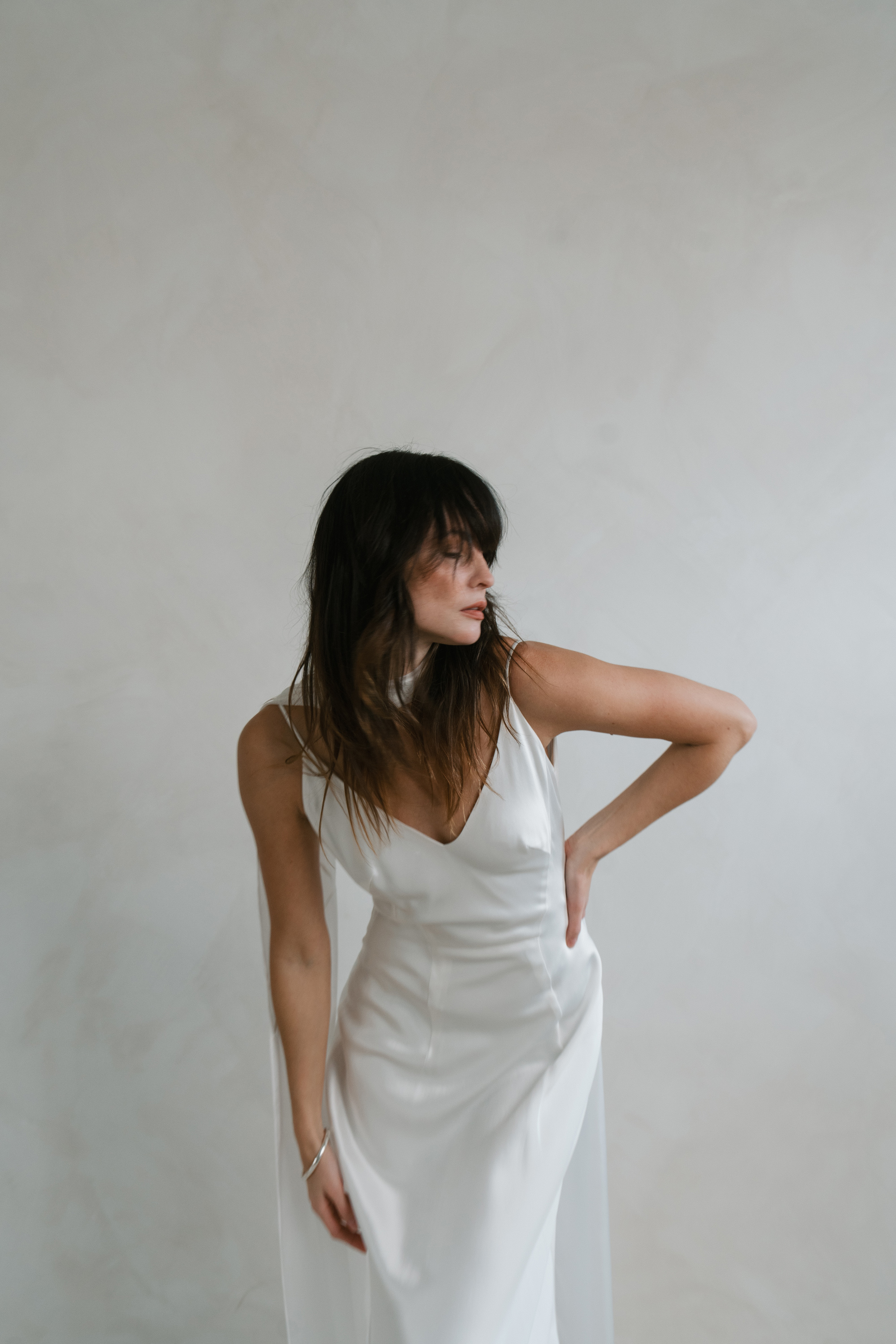
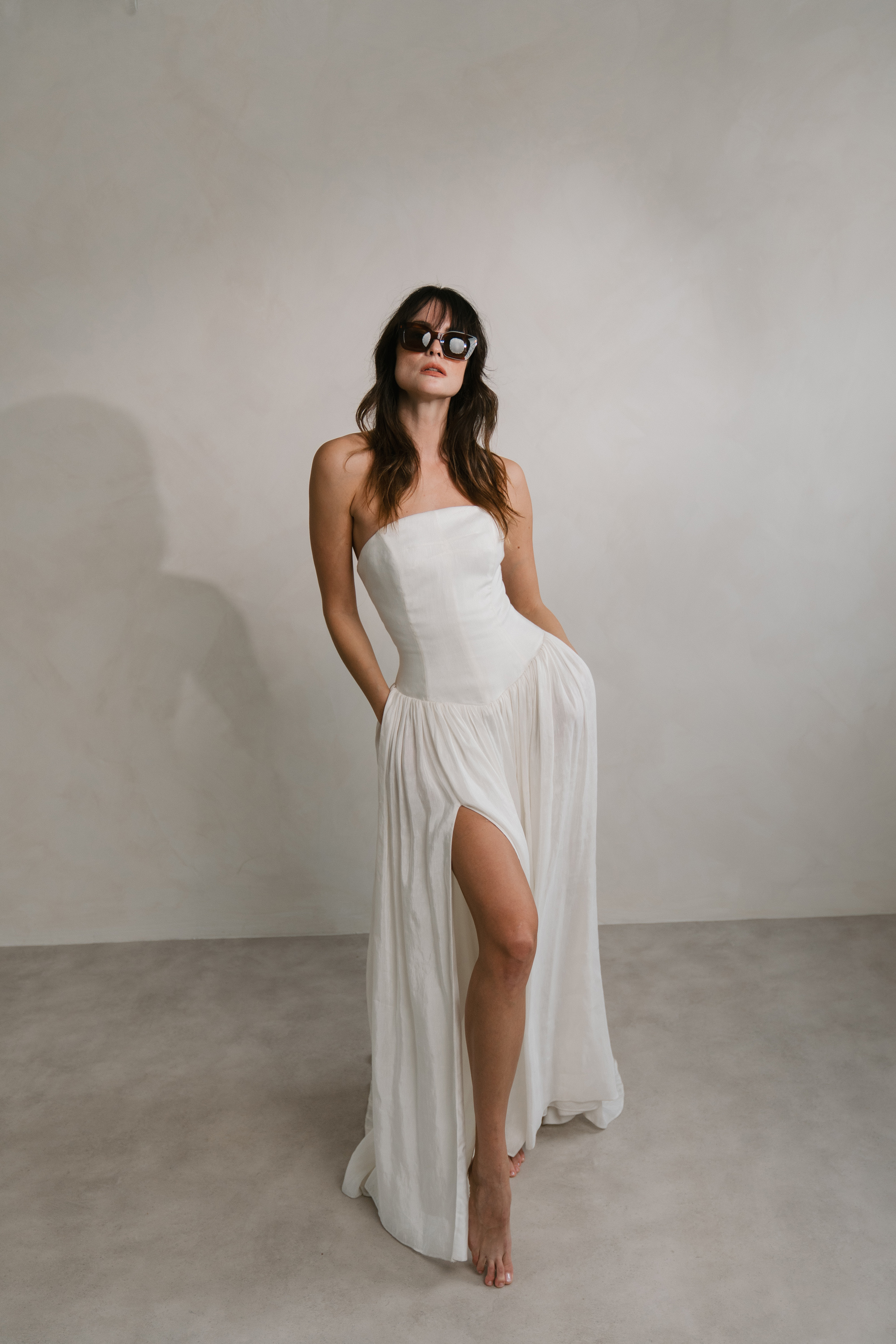
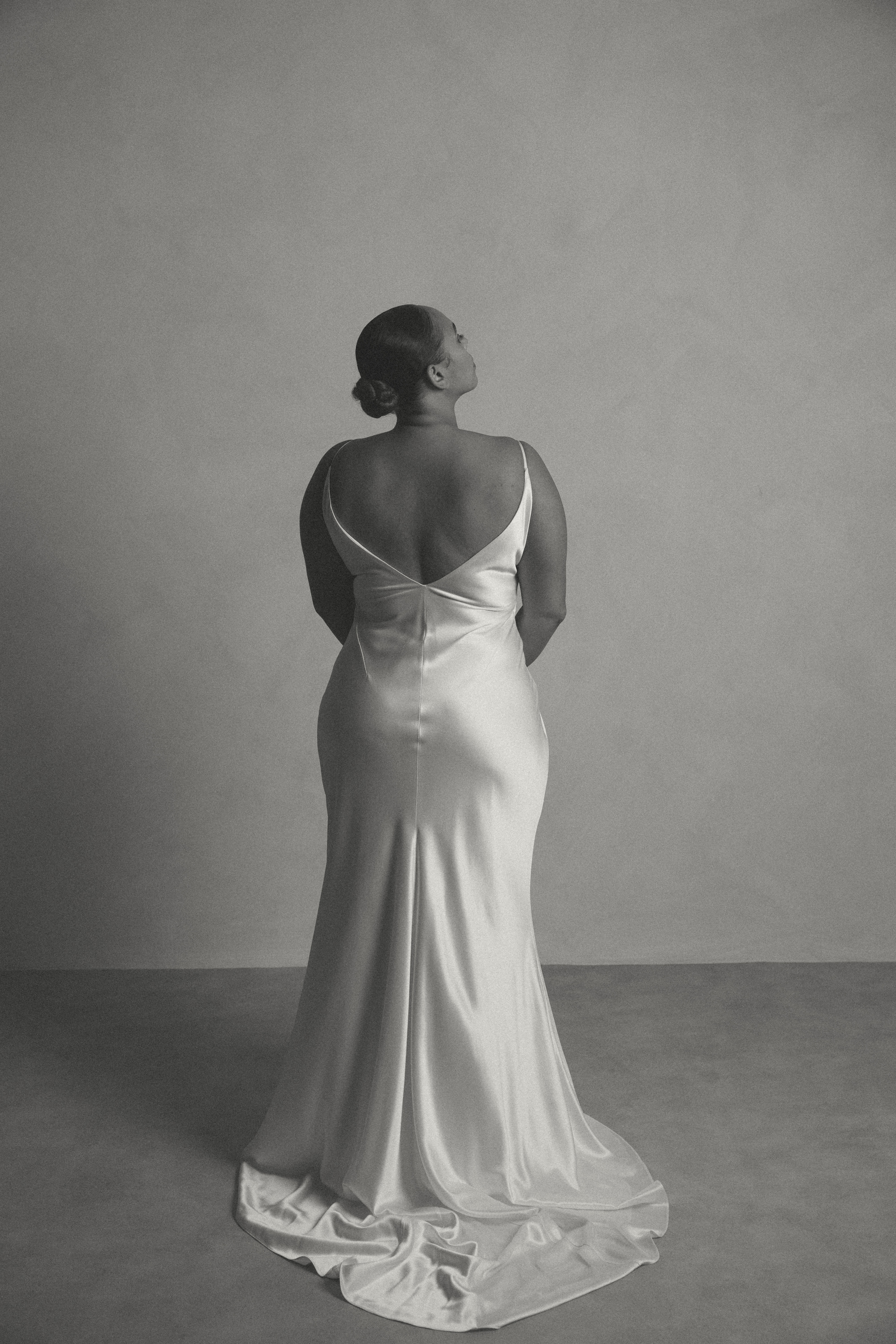
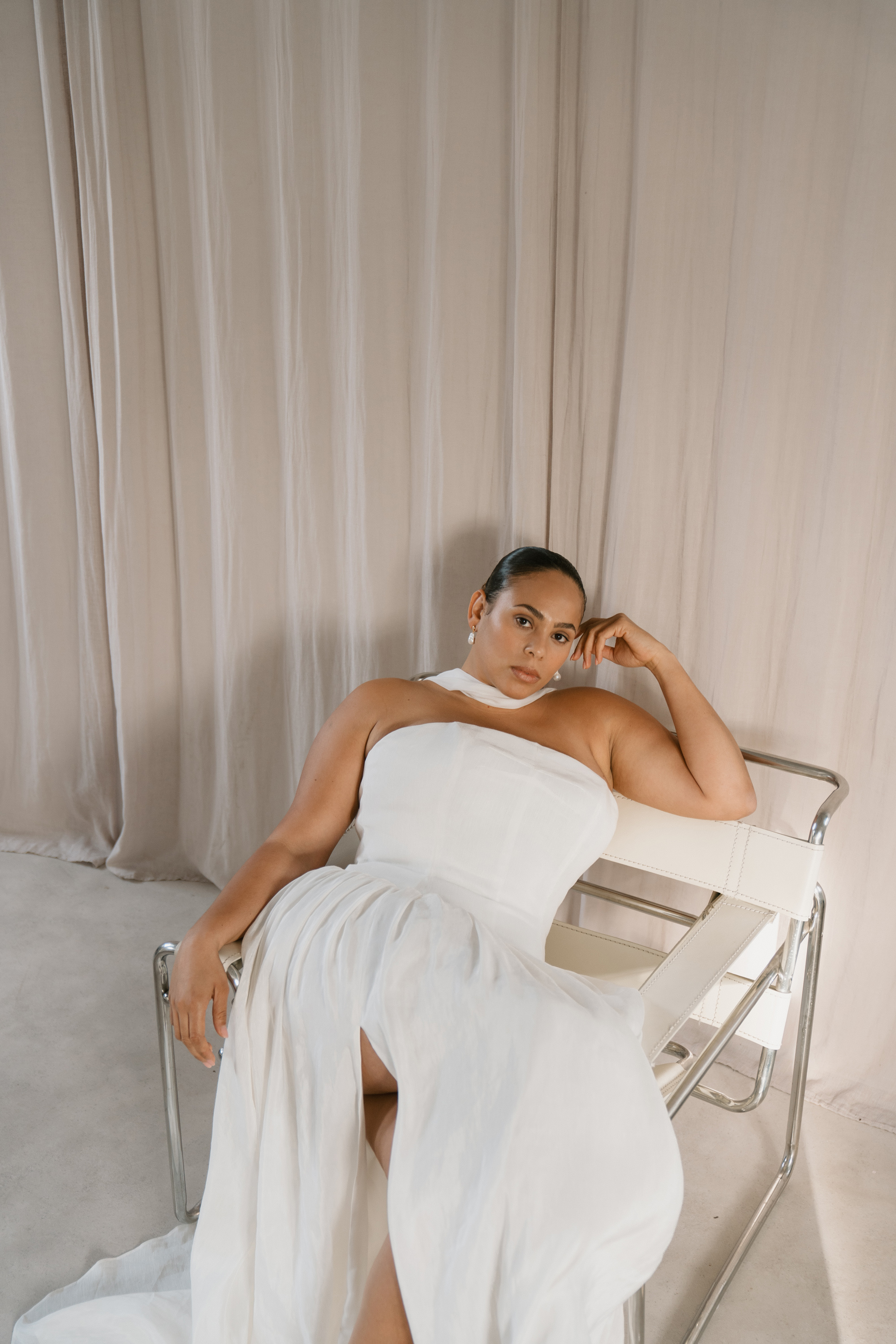
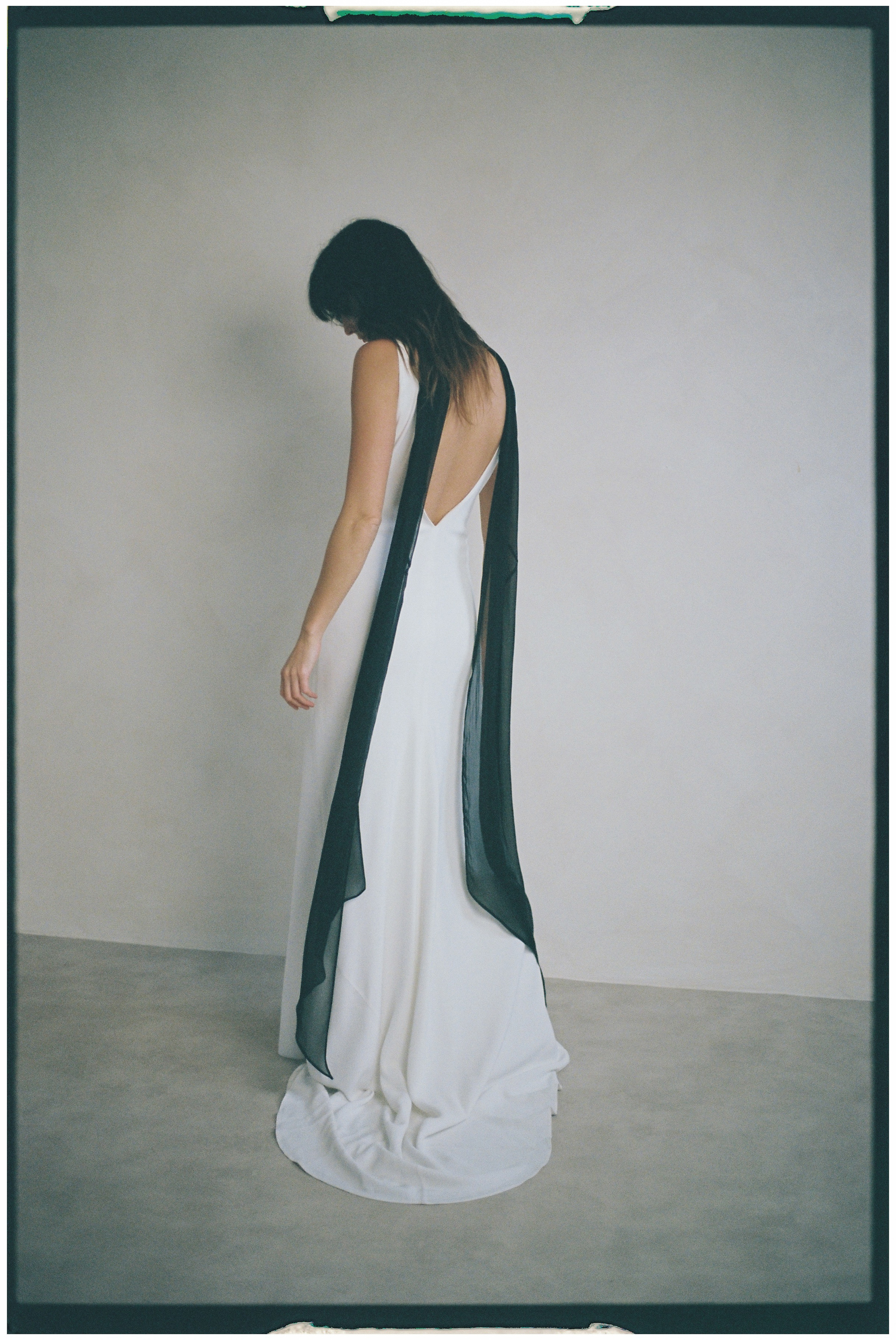
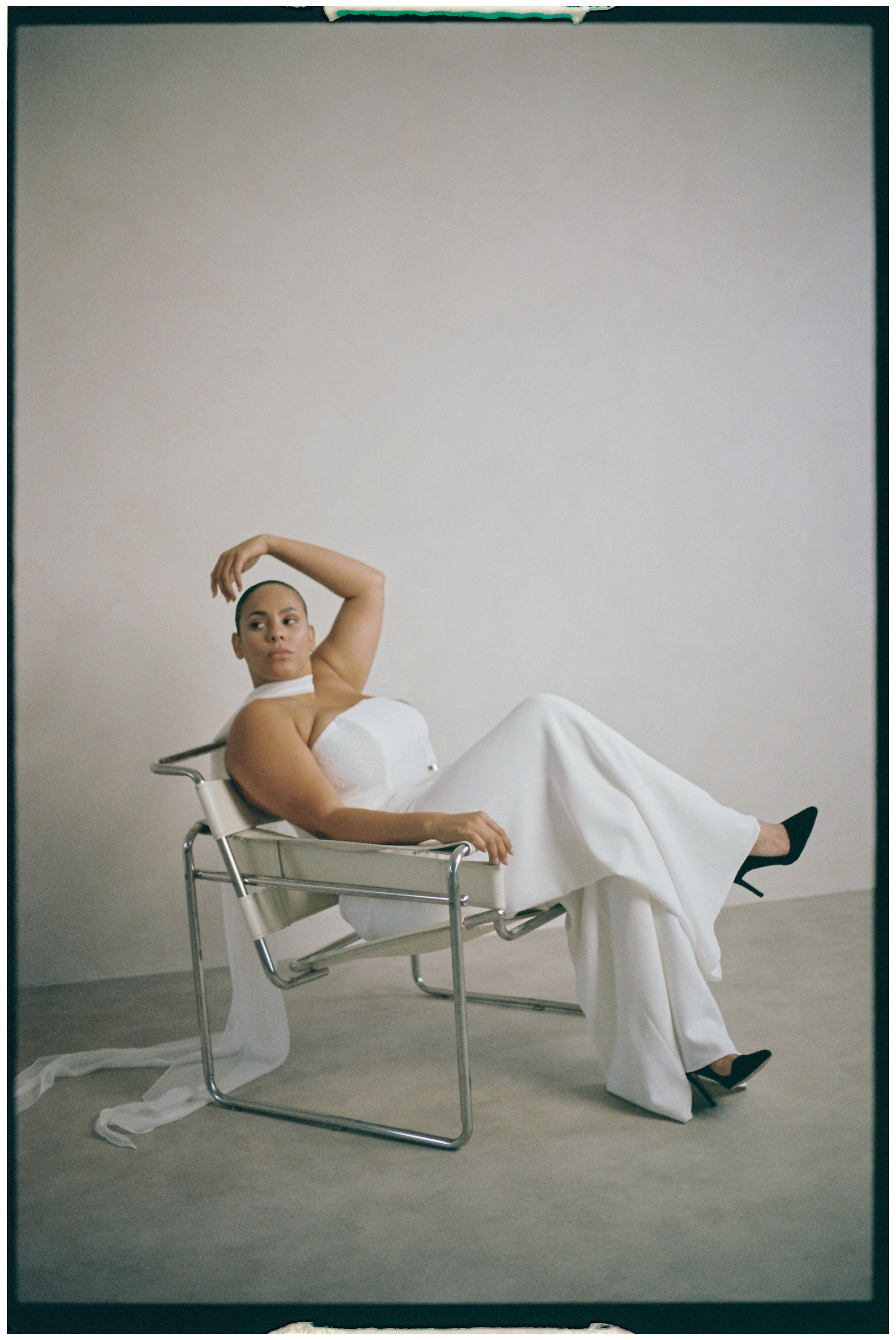
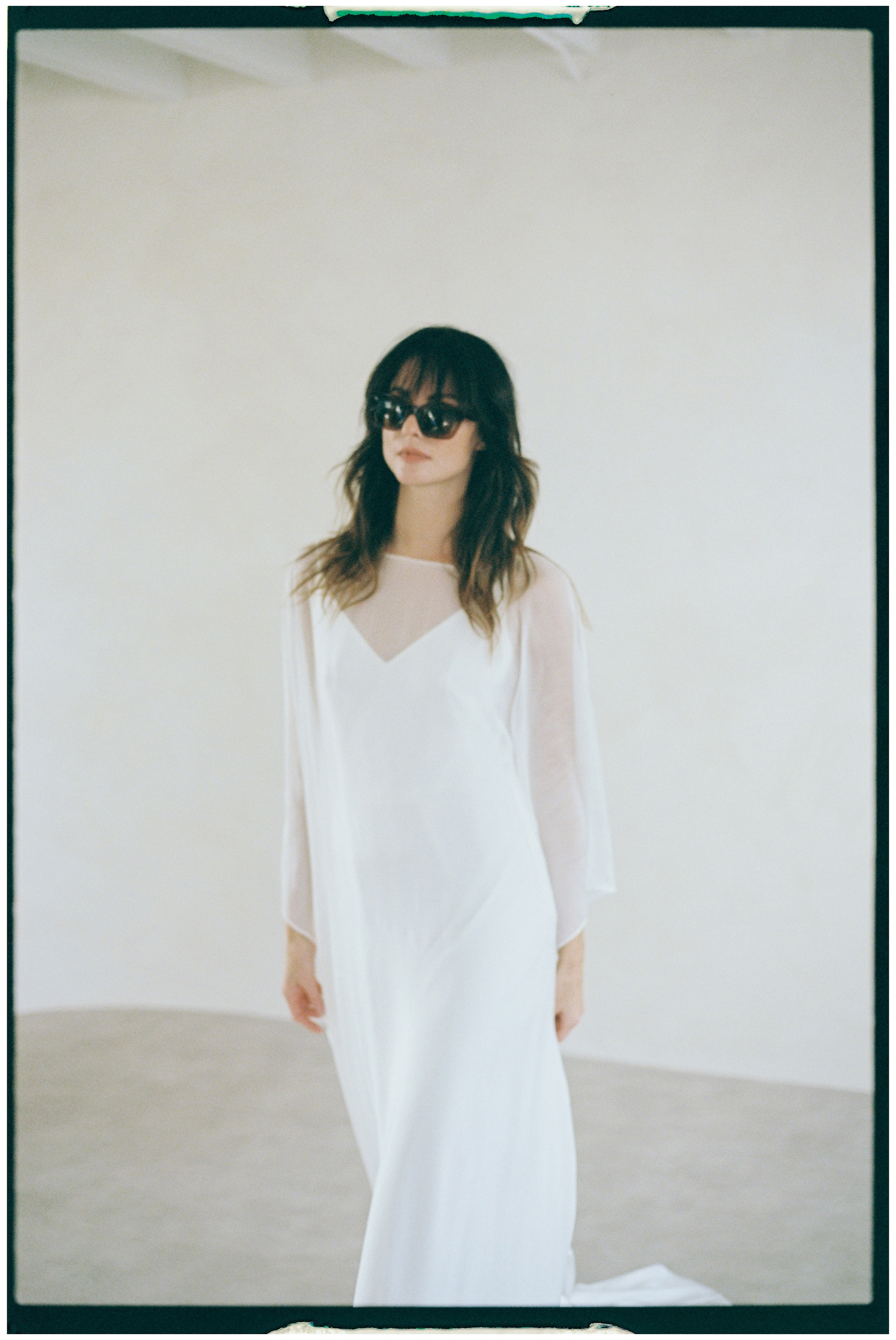
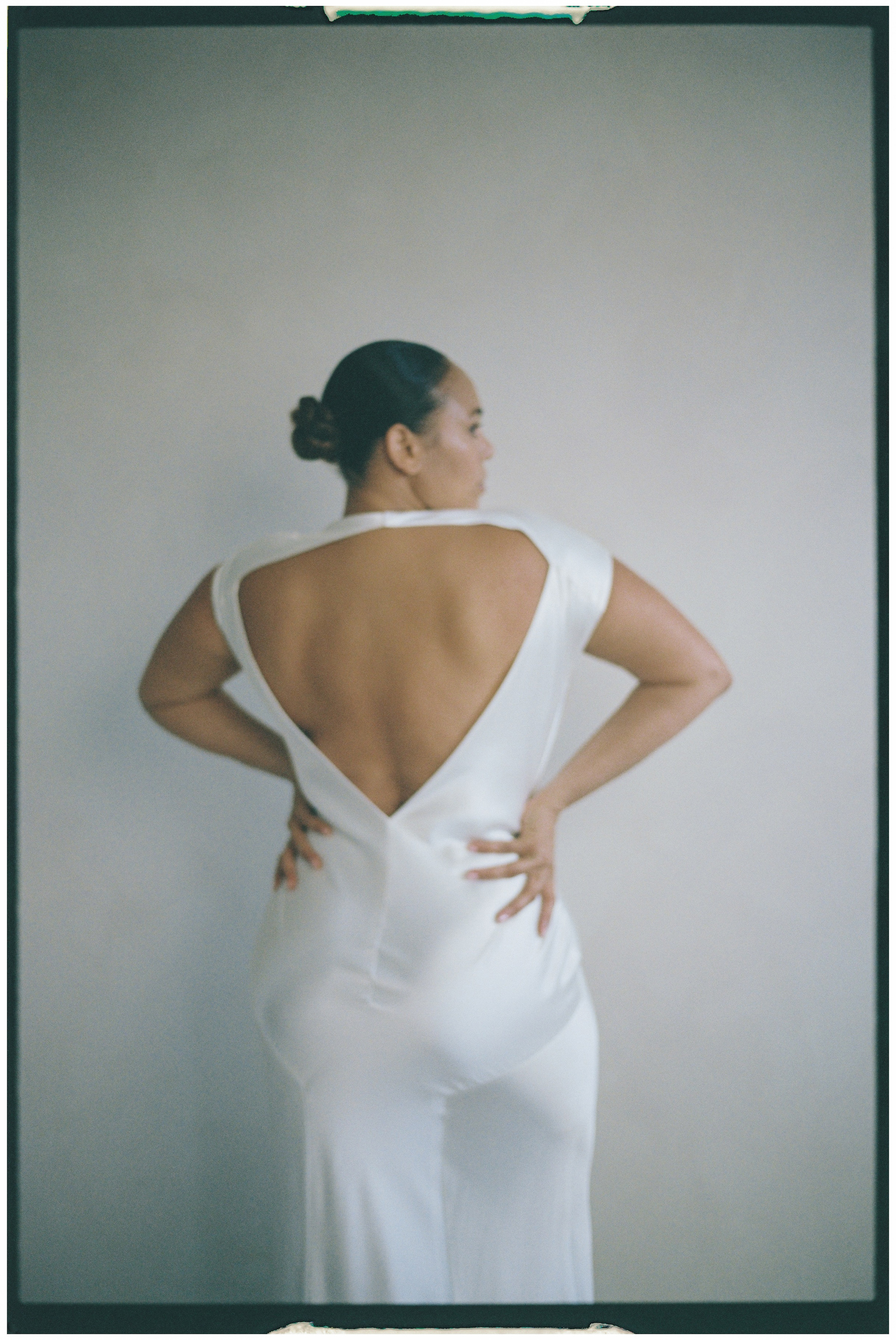
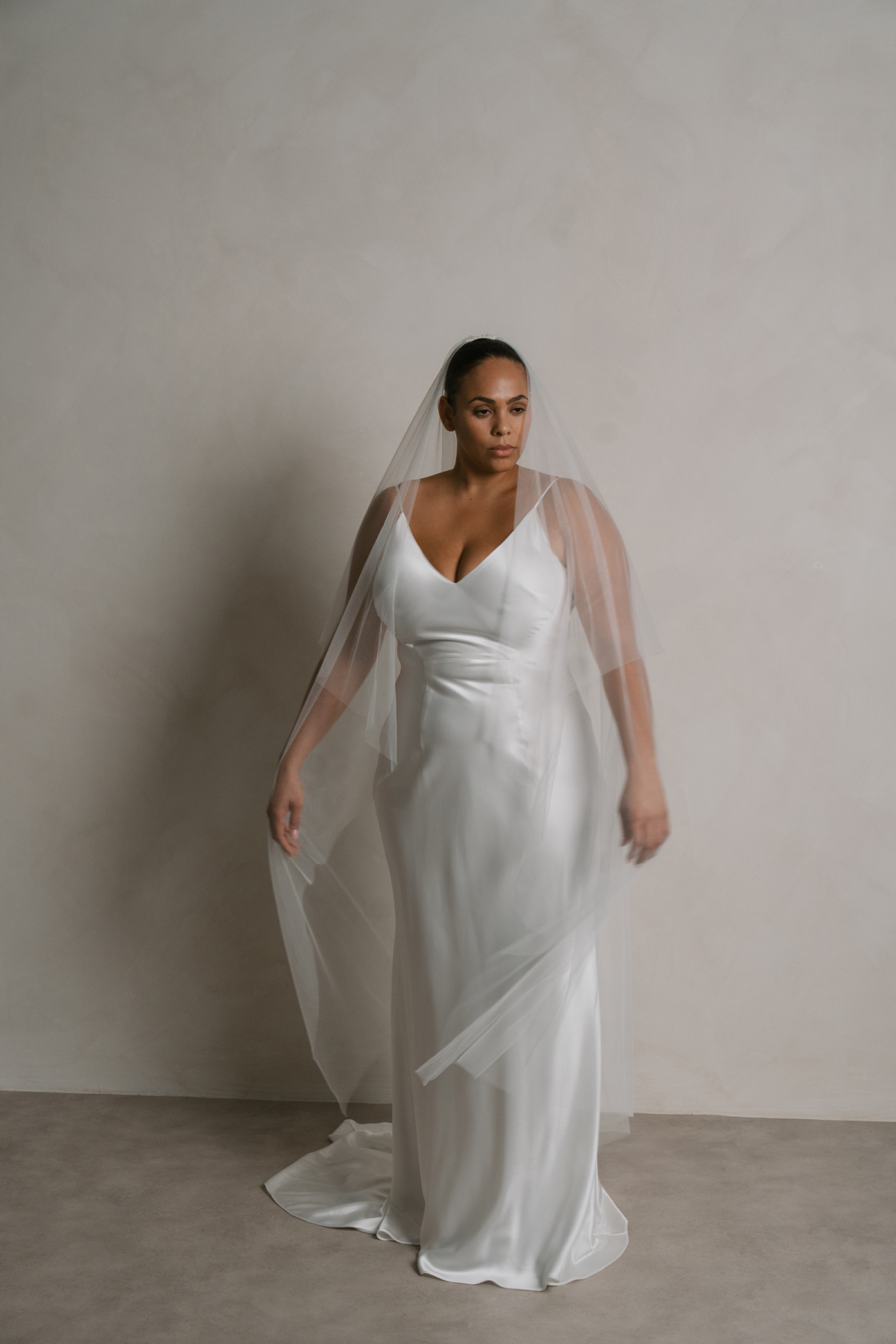
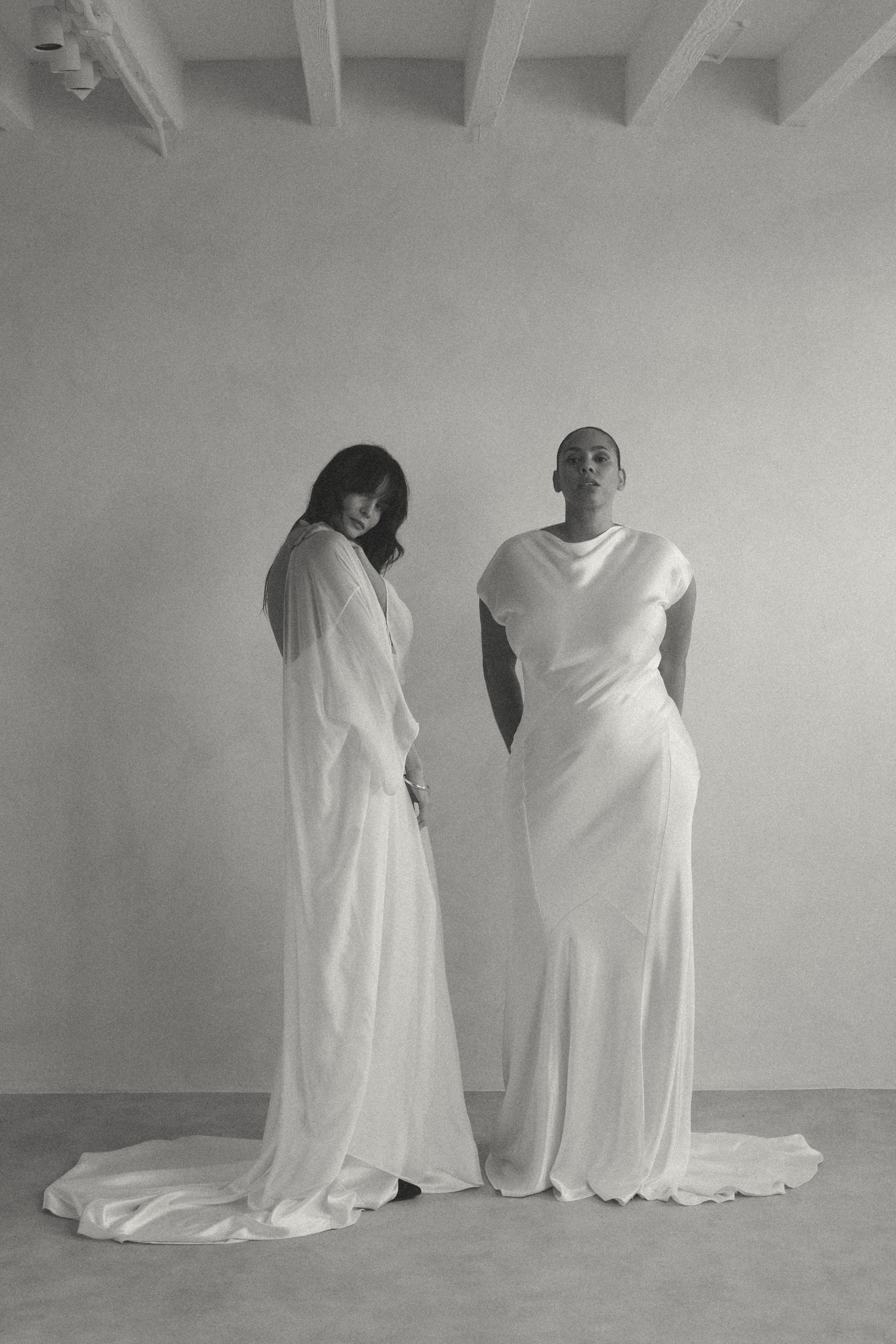
I sat down with Hayley earlier this week to chat about her latest editorial – a shoot created to show how Rolling in Roses collection wears across different body sizes. Hayley designs every gown with size diversity in mind from the pattern drafting stage, using digital methods that allow her to check proportion and structure across multiple sizes rather than adapting designs after the fact.
This conscious, compassionate and sustainable British bridal brand operates without seasonal pressure or trend driven output. Dresses are designed and released when they are ready and made bespoke to fit every single client. Each piece is made in the UK by a small team, with transparency around materials, labour and process.
I’m beyond proud to support and recommend this wonderful brand to you, if you’re planning your own wedding and looking to support a trully excellent small business who really care.
Hayley, your latest shoot feels intentionally simple and considered. When someone sees these images for the first time, what do you most hope they notice or feel?
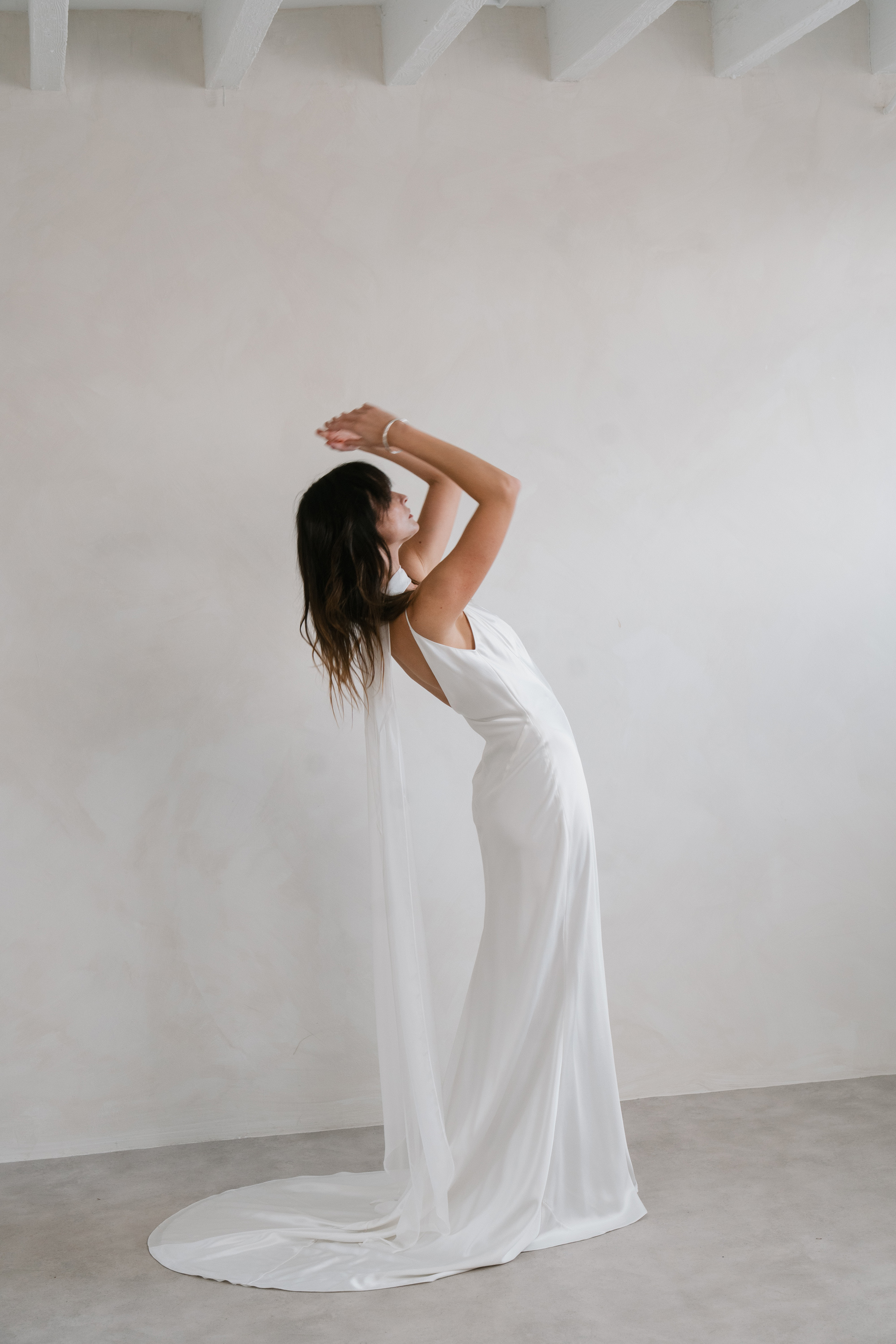
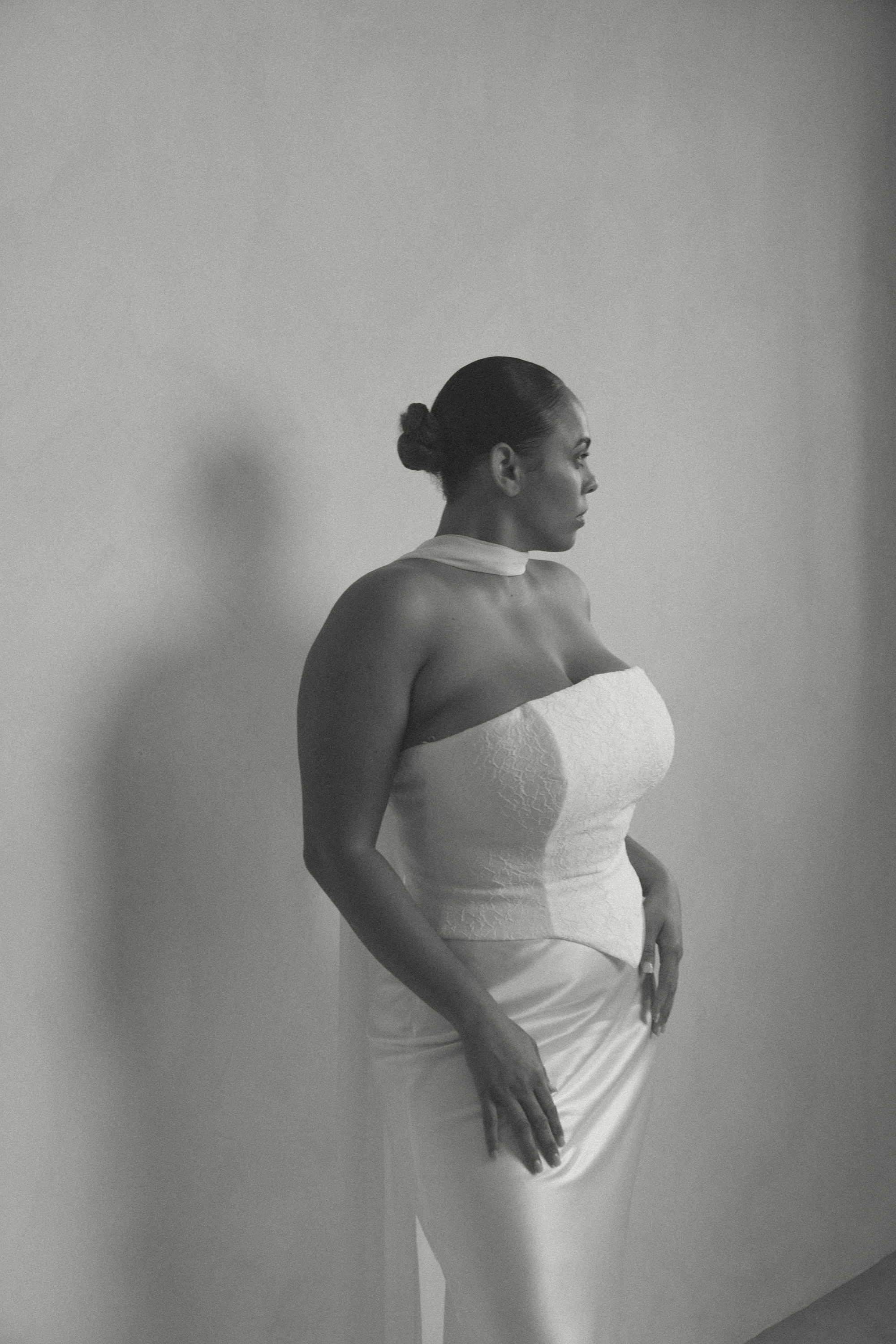
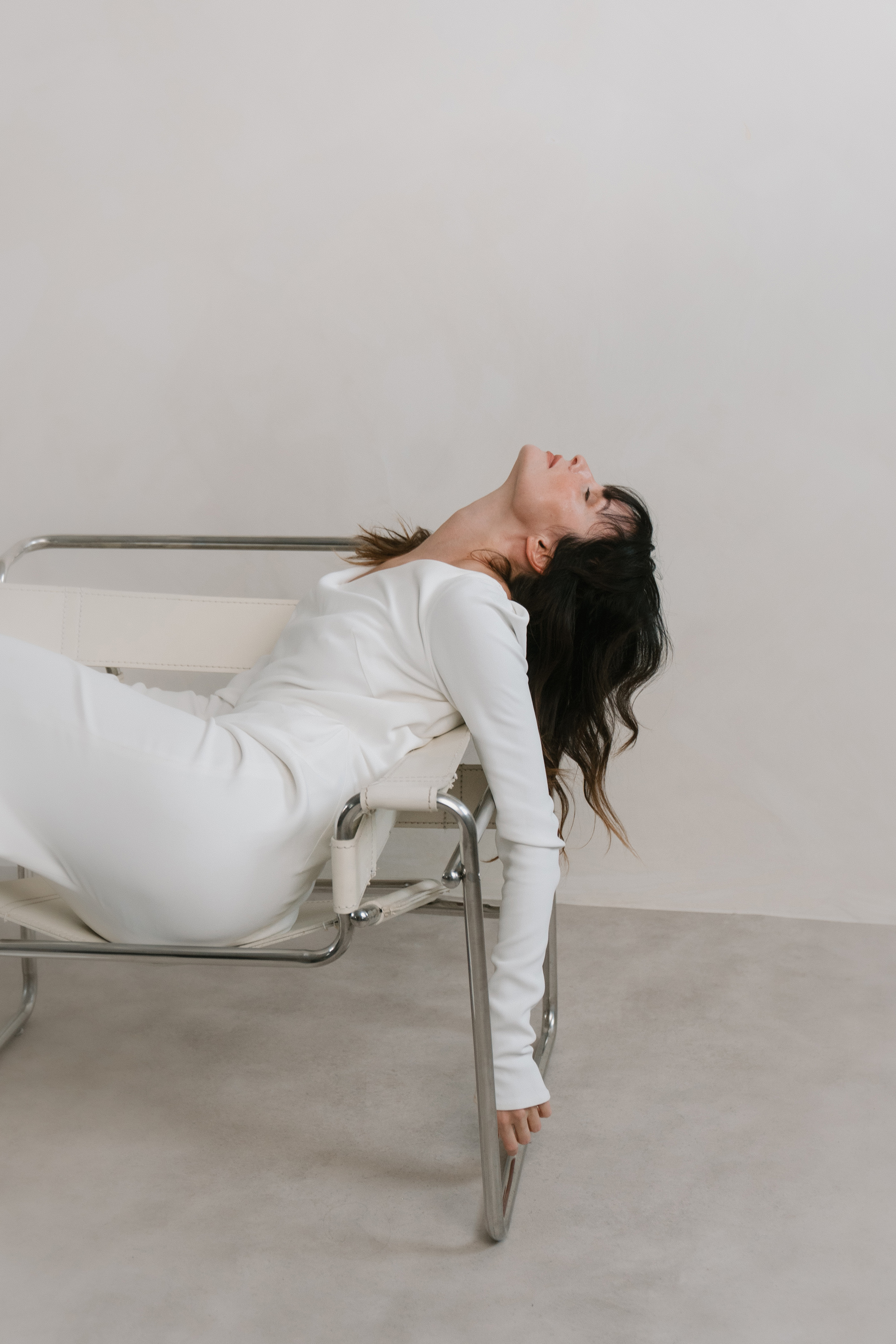
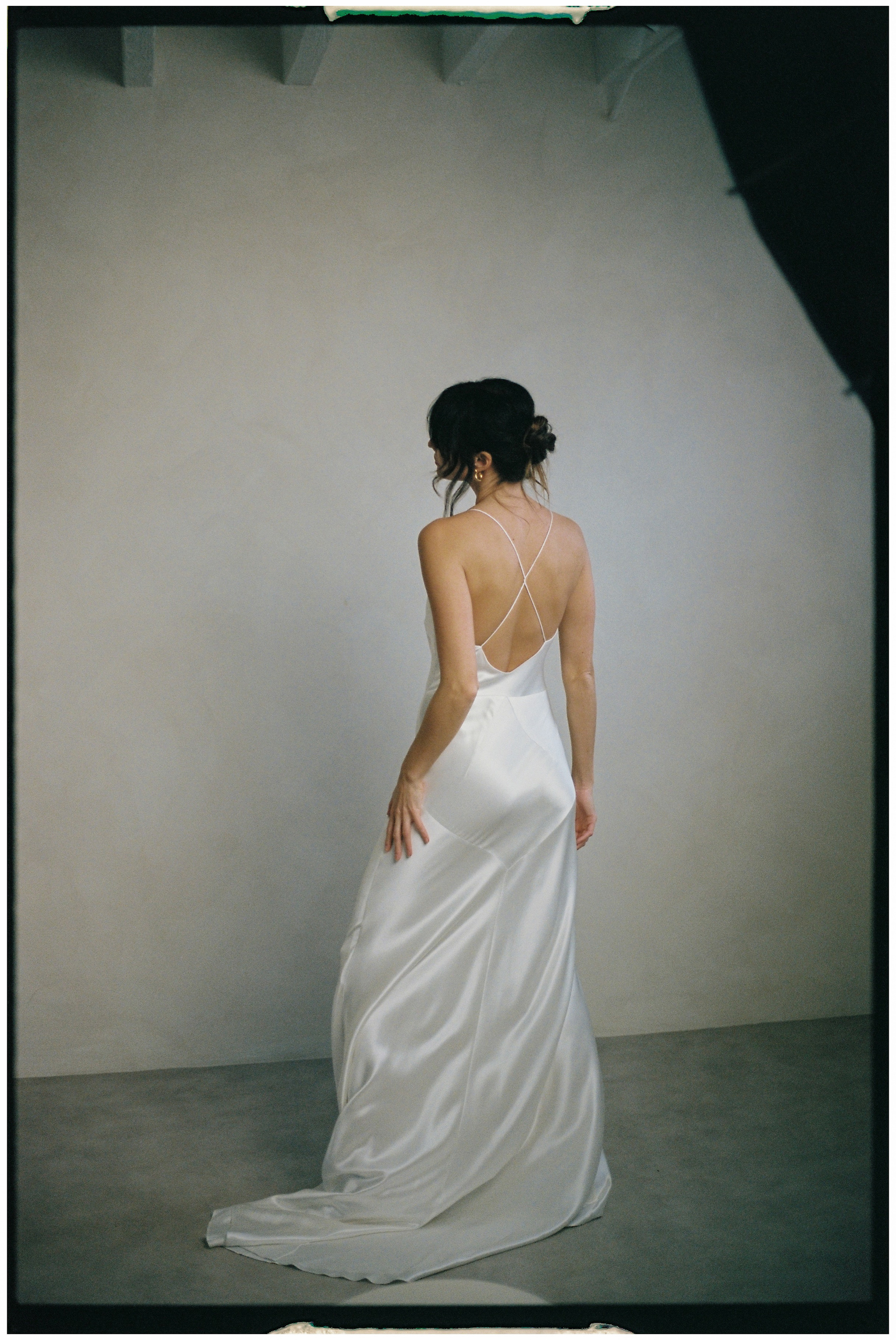
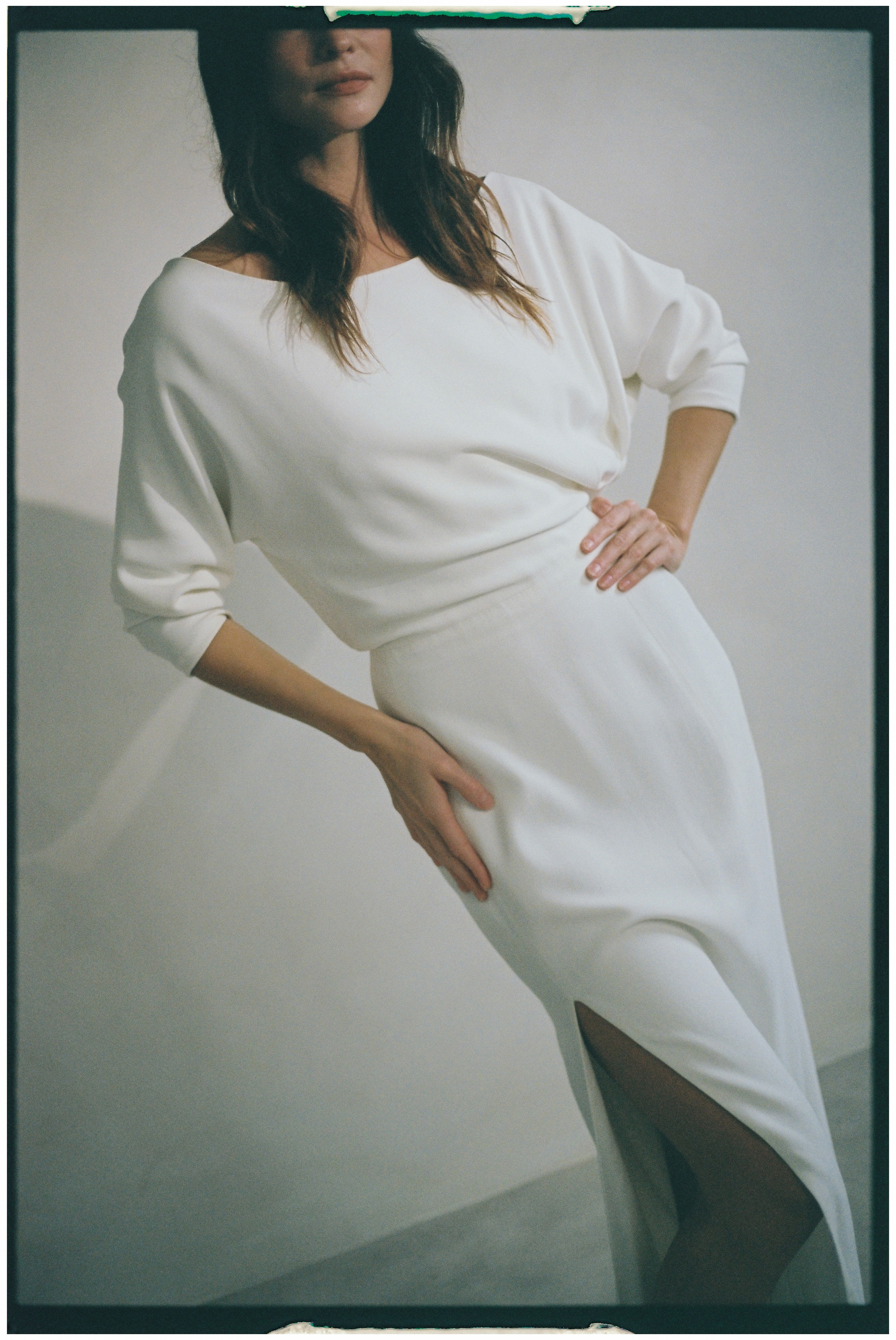
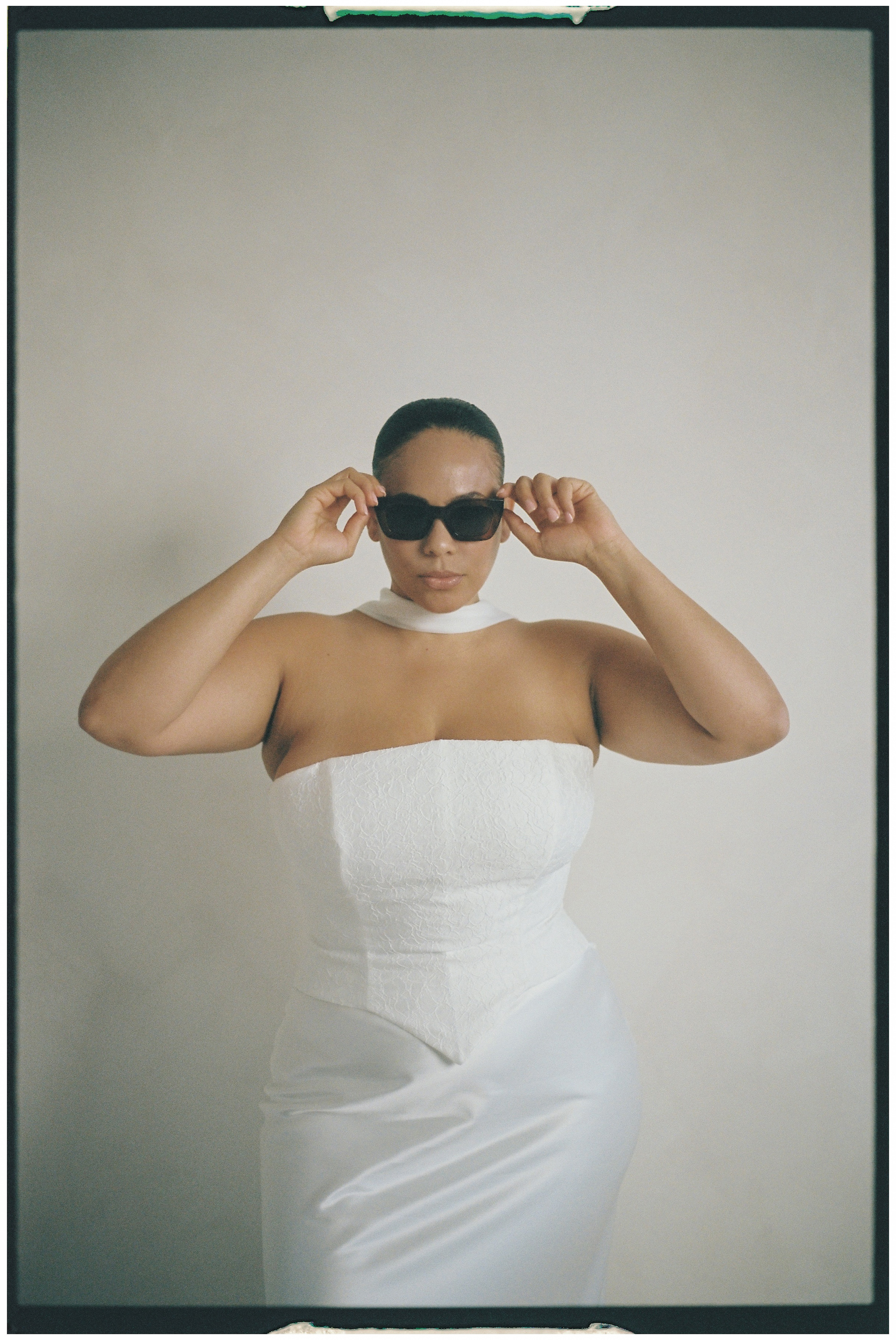
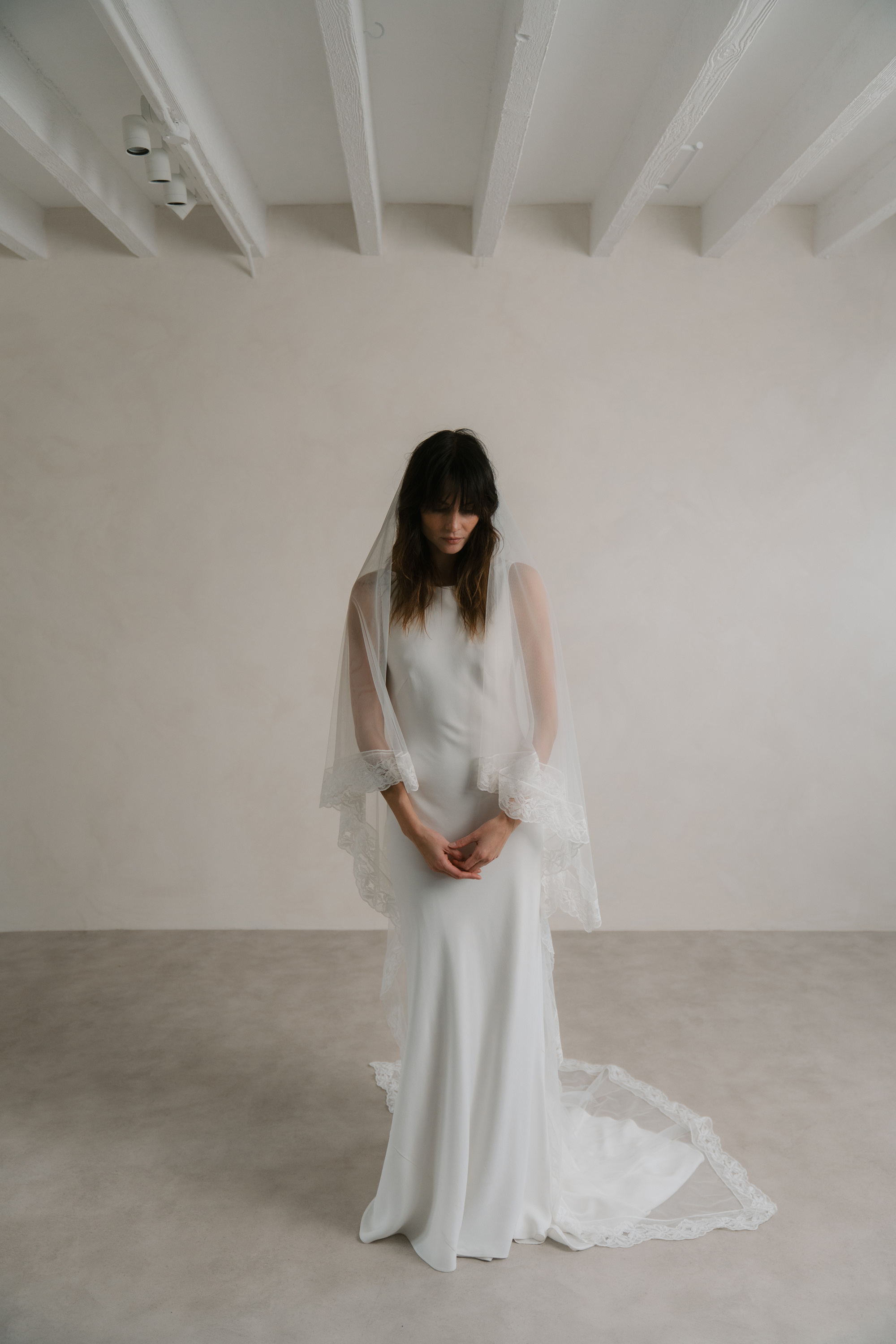
For this editorial, I wanted to do a sort of intentionally quiet, considered shoot. I think as wedding professionals and as brides as well, you know, in the industry, you sort of feel a bit of pressure sometimes to do too much and tick every box and have a dress and the accessories and the hair and everything else all at once, when actually sometimes aesthetically the best thing is to do is to keep it simple and really let the dresses speak for themselves and the models.
Keeping it stripped back and intentionally simple was the aim of the game.
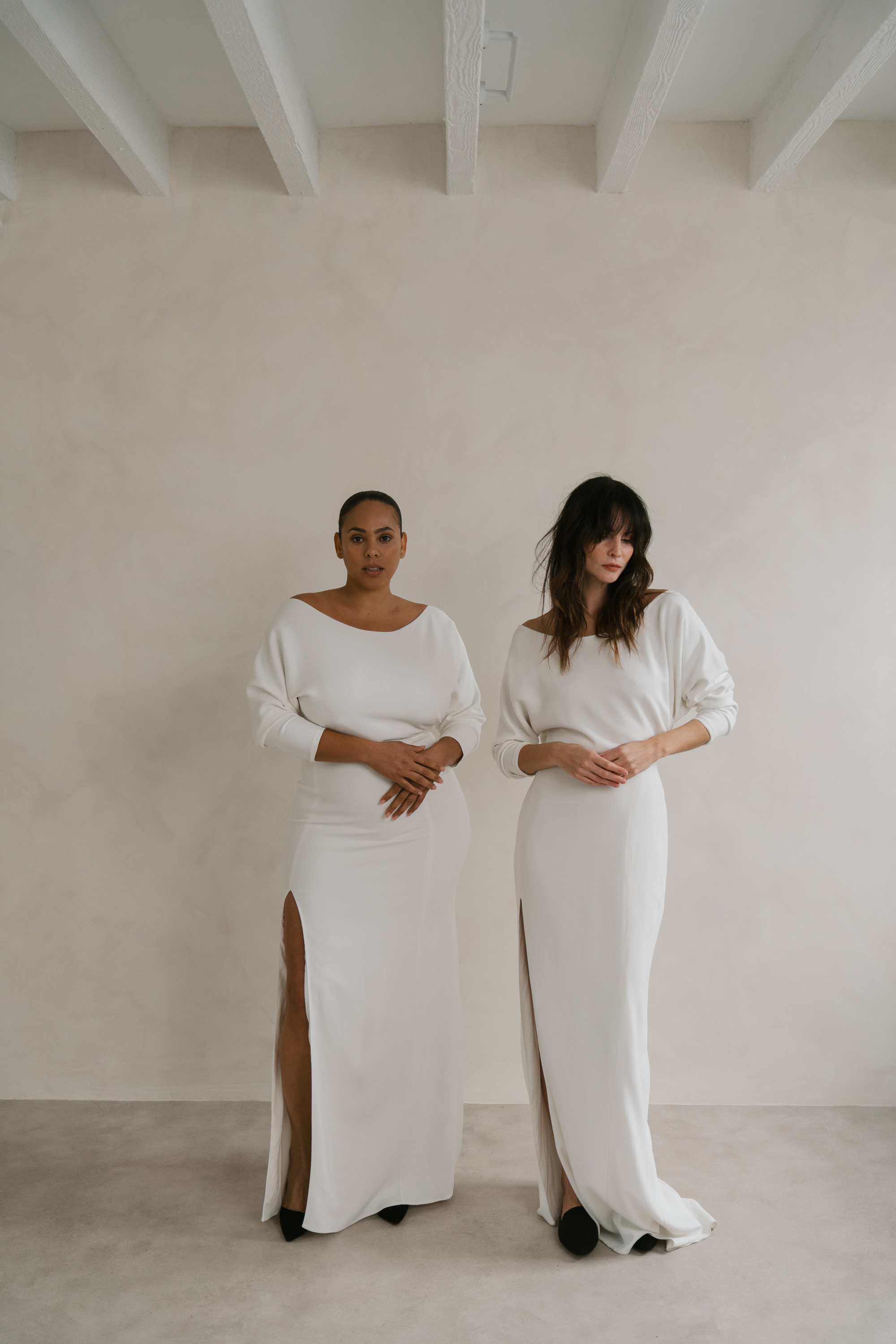
Designing for real bodies has always mattered to you. How does that influence the way you design your dresses and the way you choose to present them?
It’s really important to me – designing for real women and real people is kind of the most important thing. You know, it’s not about trying to be awarded the coolest wedding dress, or getting the most high-end magazine cover. It’s about making real people happy on their actual wedding day. So, yeah it’s always been really important to me to focus on that.
I hate the idea of doing a token one off plus size and just thinking we’d tick the box. It’s not the way we want to do things. All sizes should be considered at every step of the process as far as I’m concerned.
Our entire bridal wardrobe is available in any size, with bespoke changes and split sizing offered for a flawless fit.
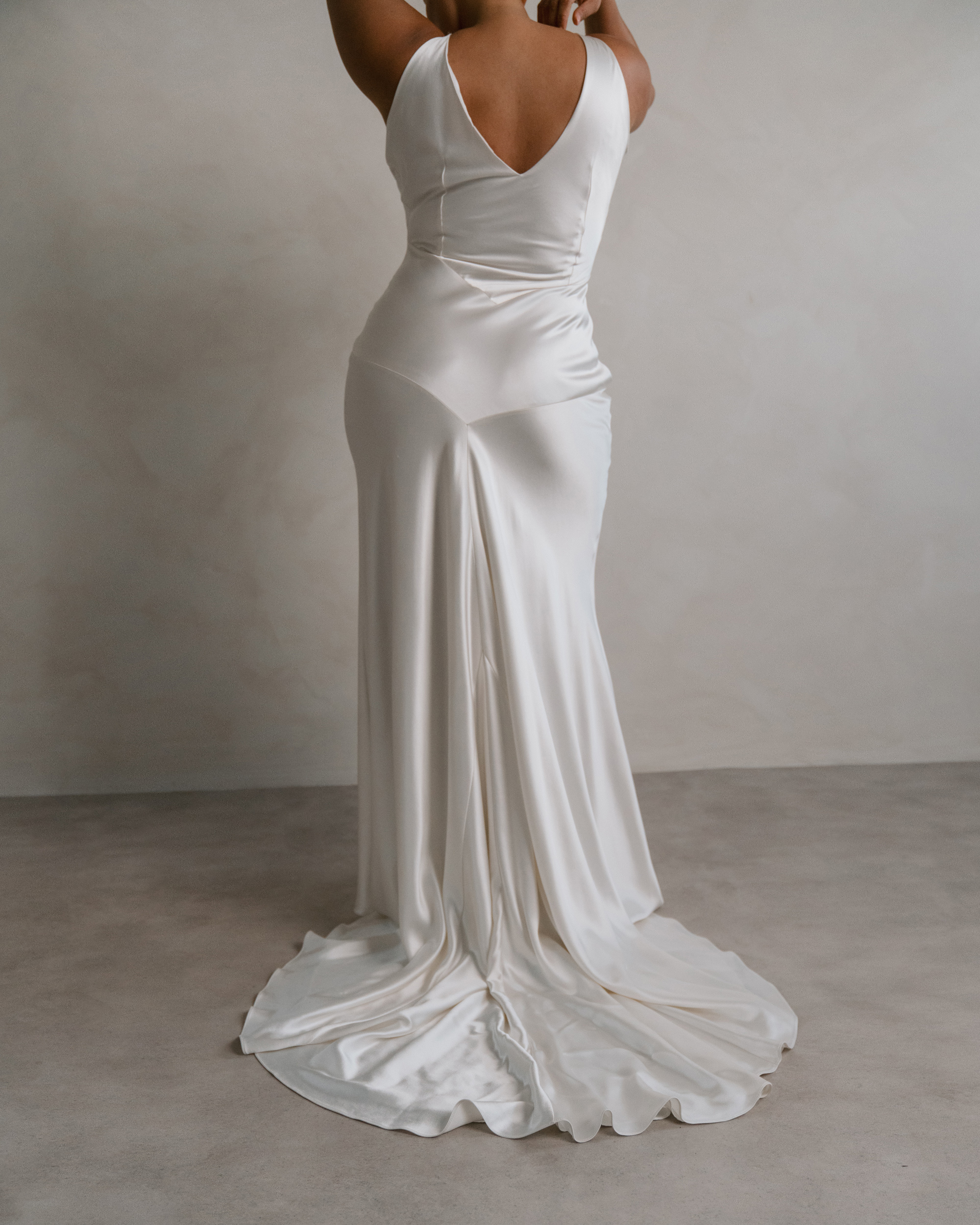
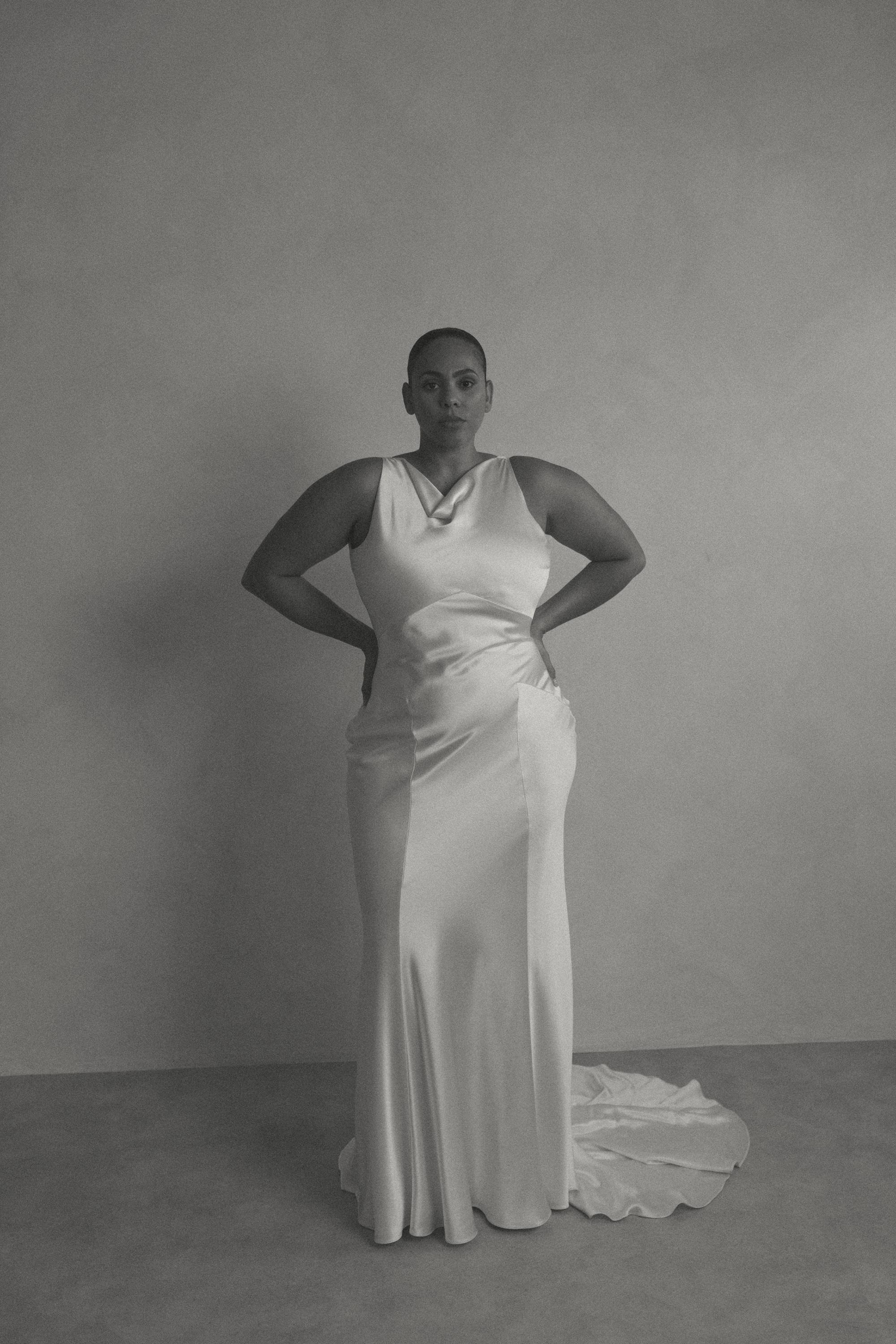
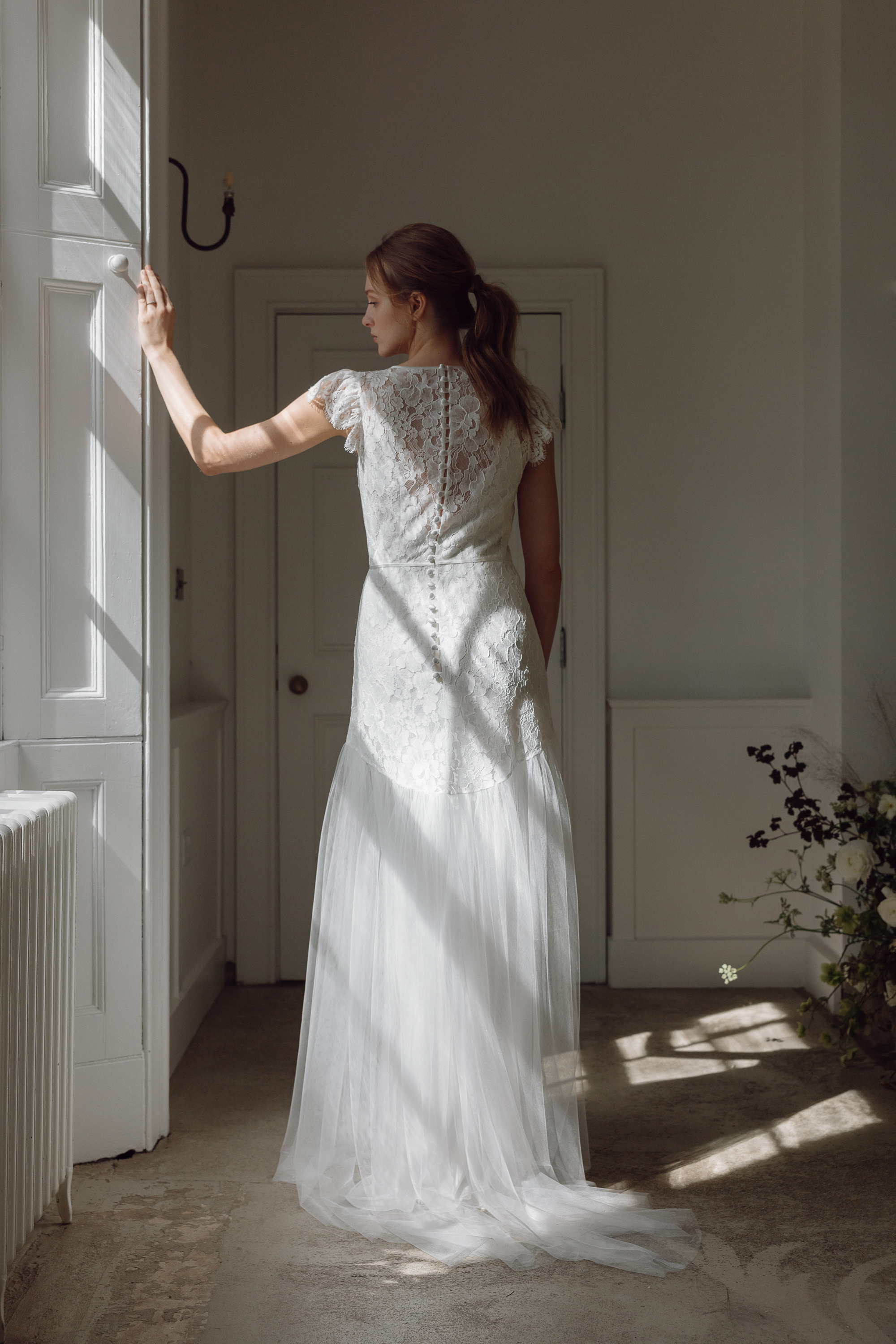
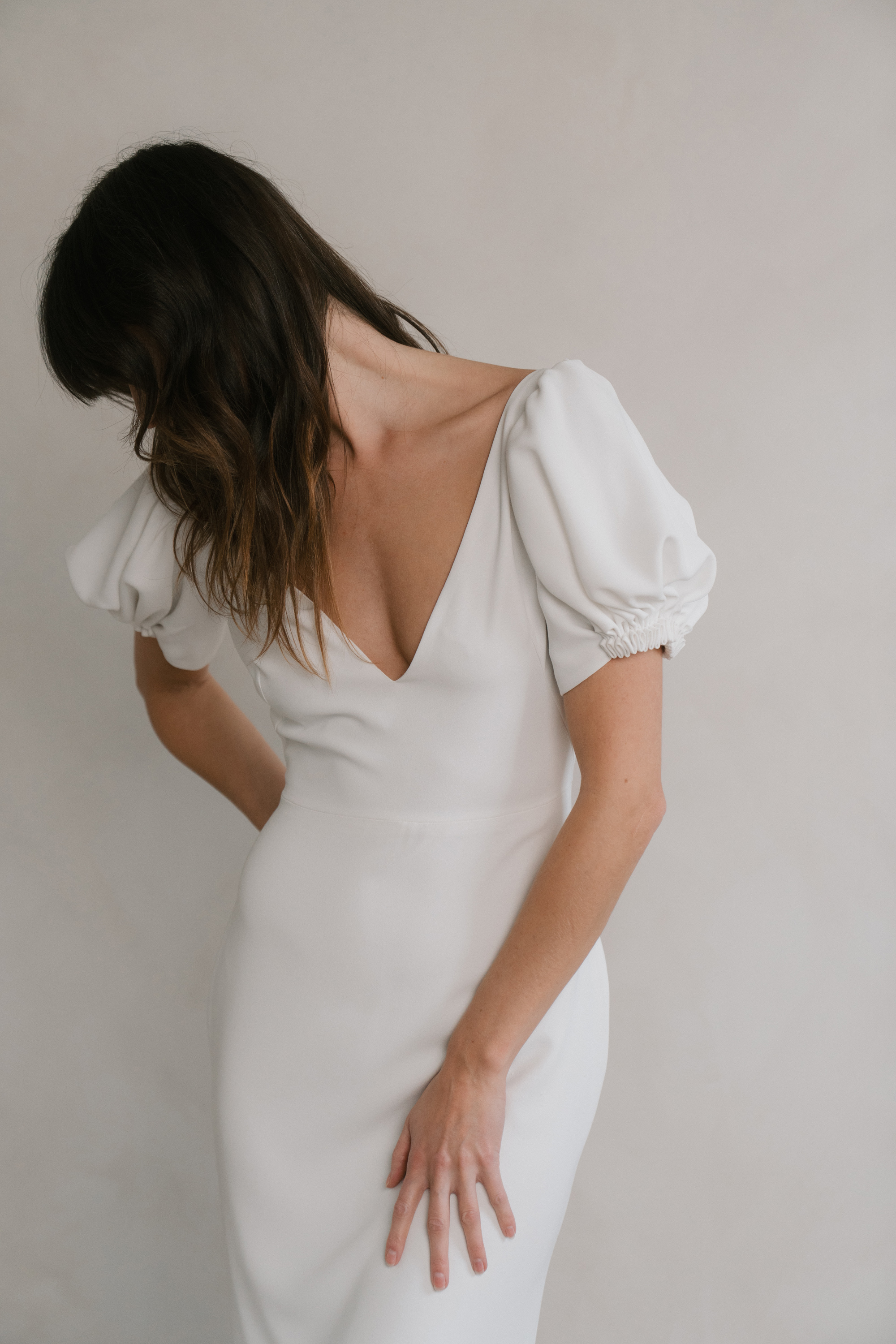
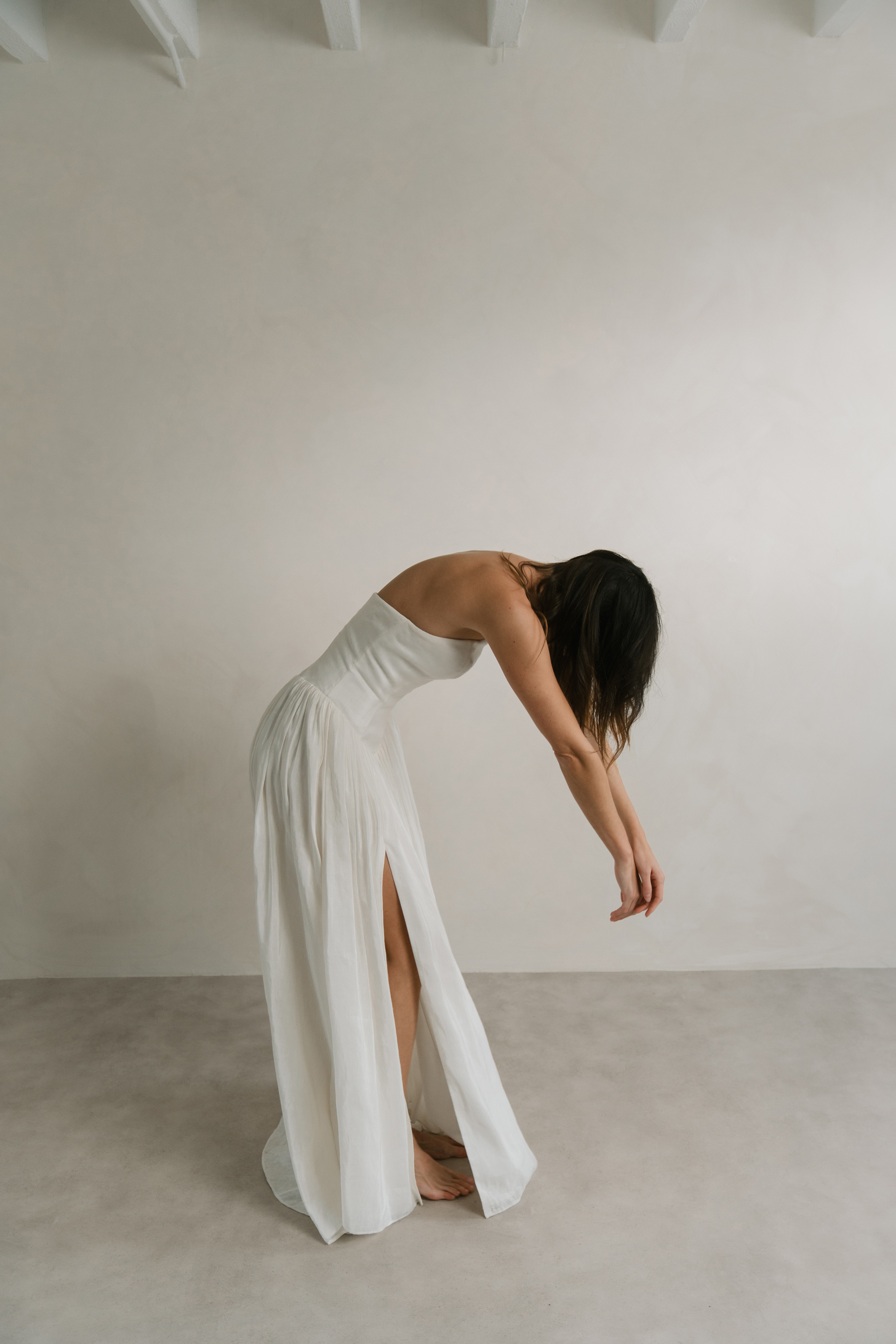
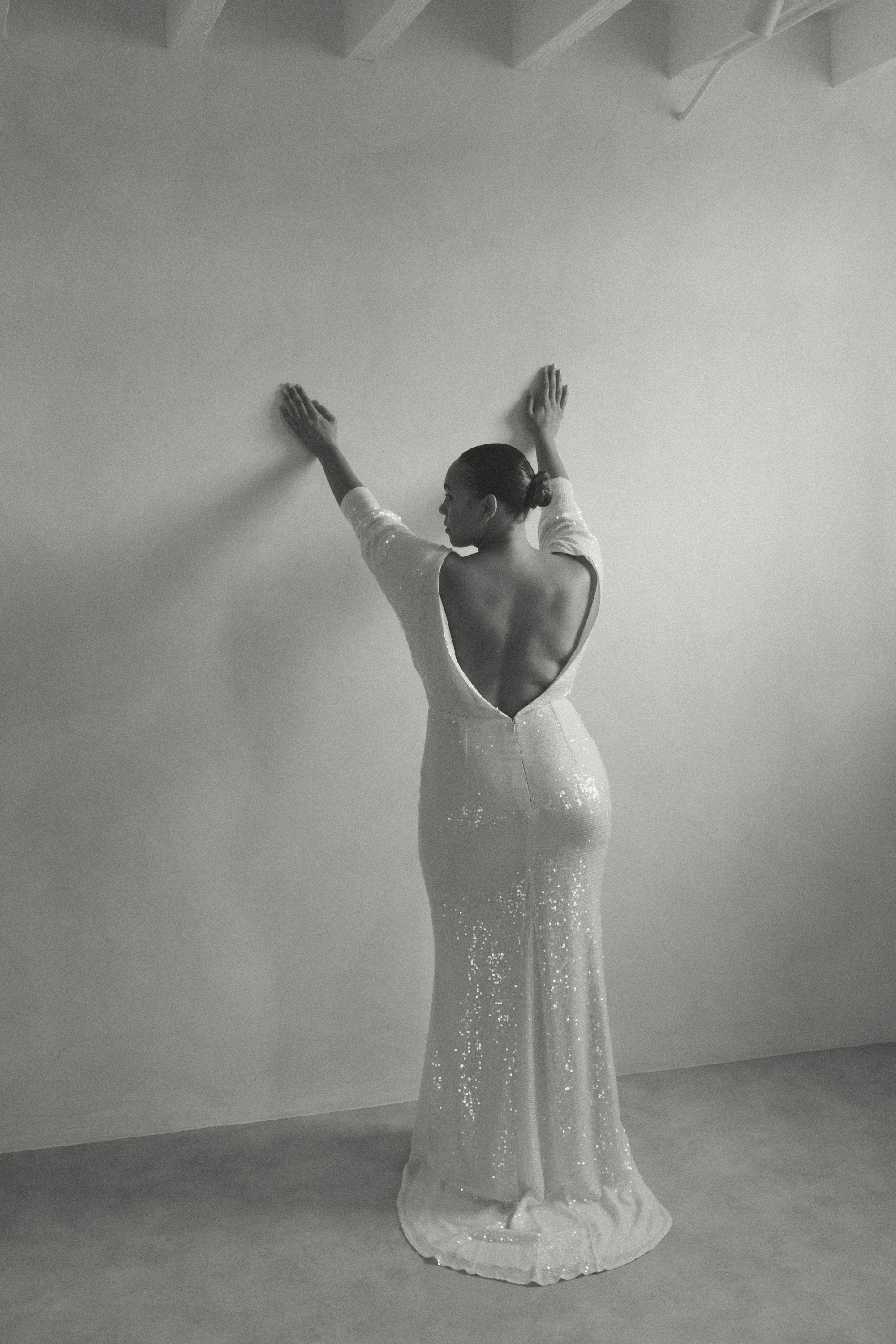
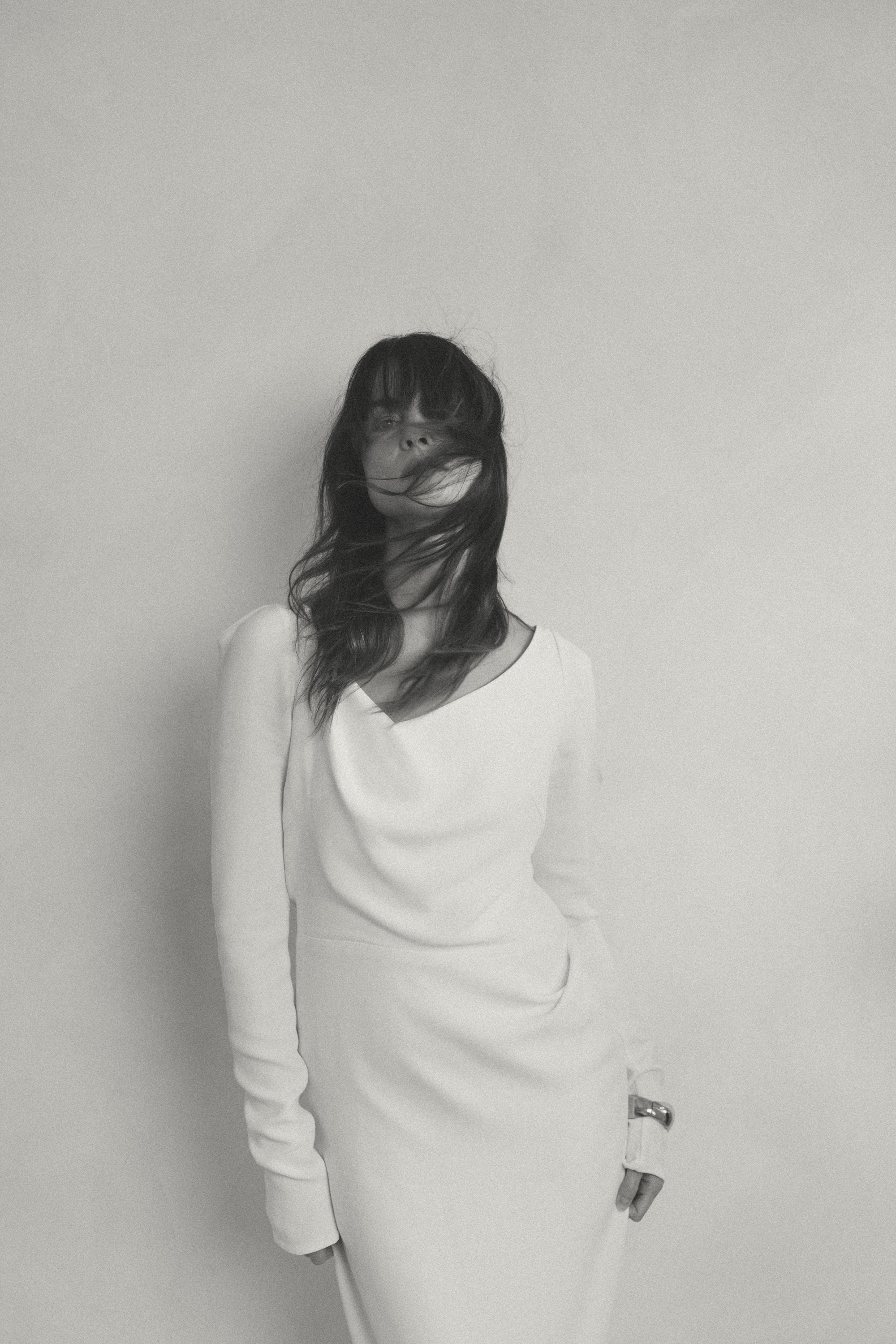
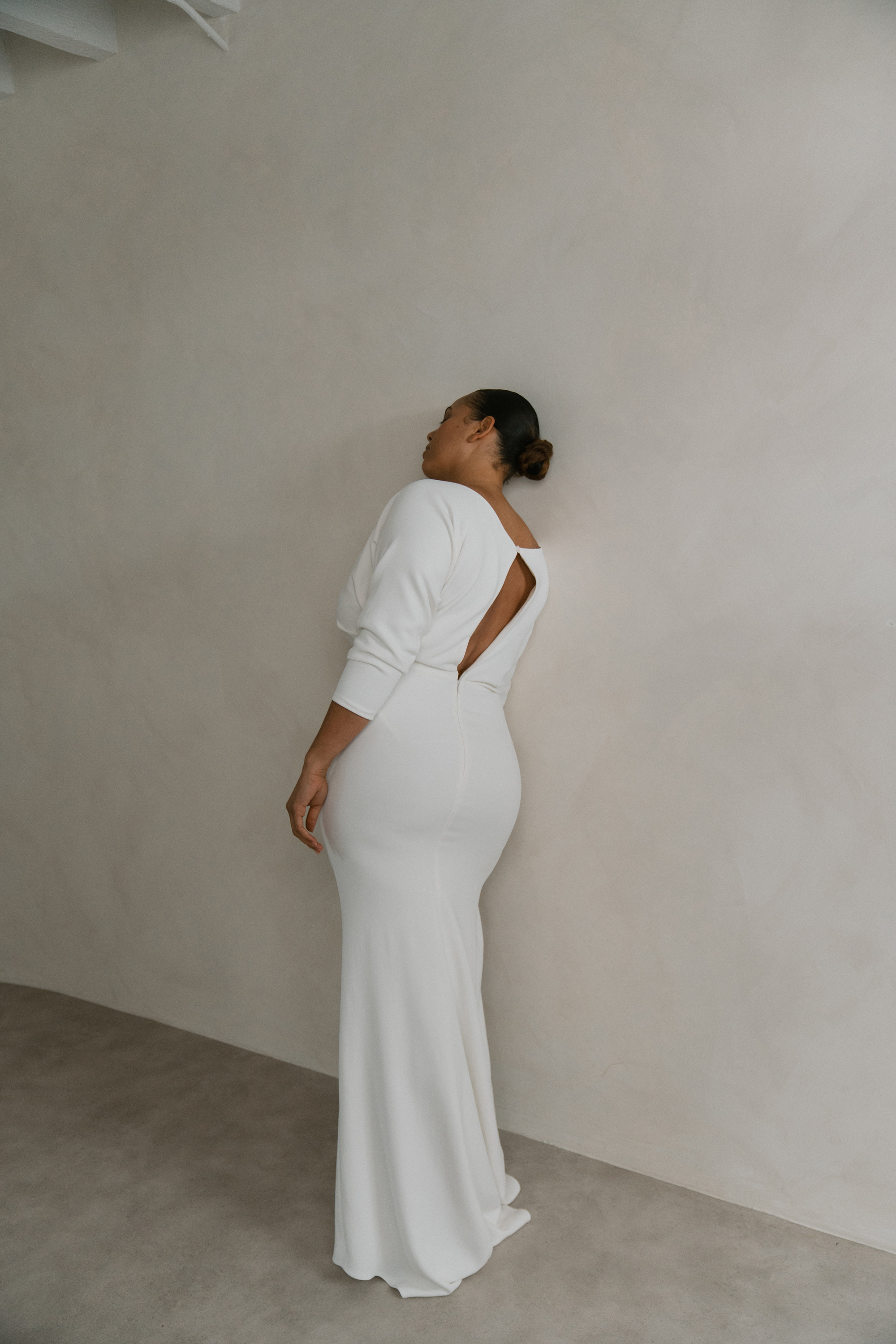
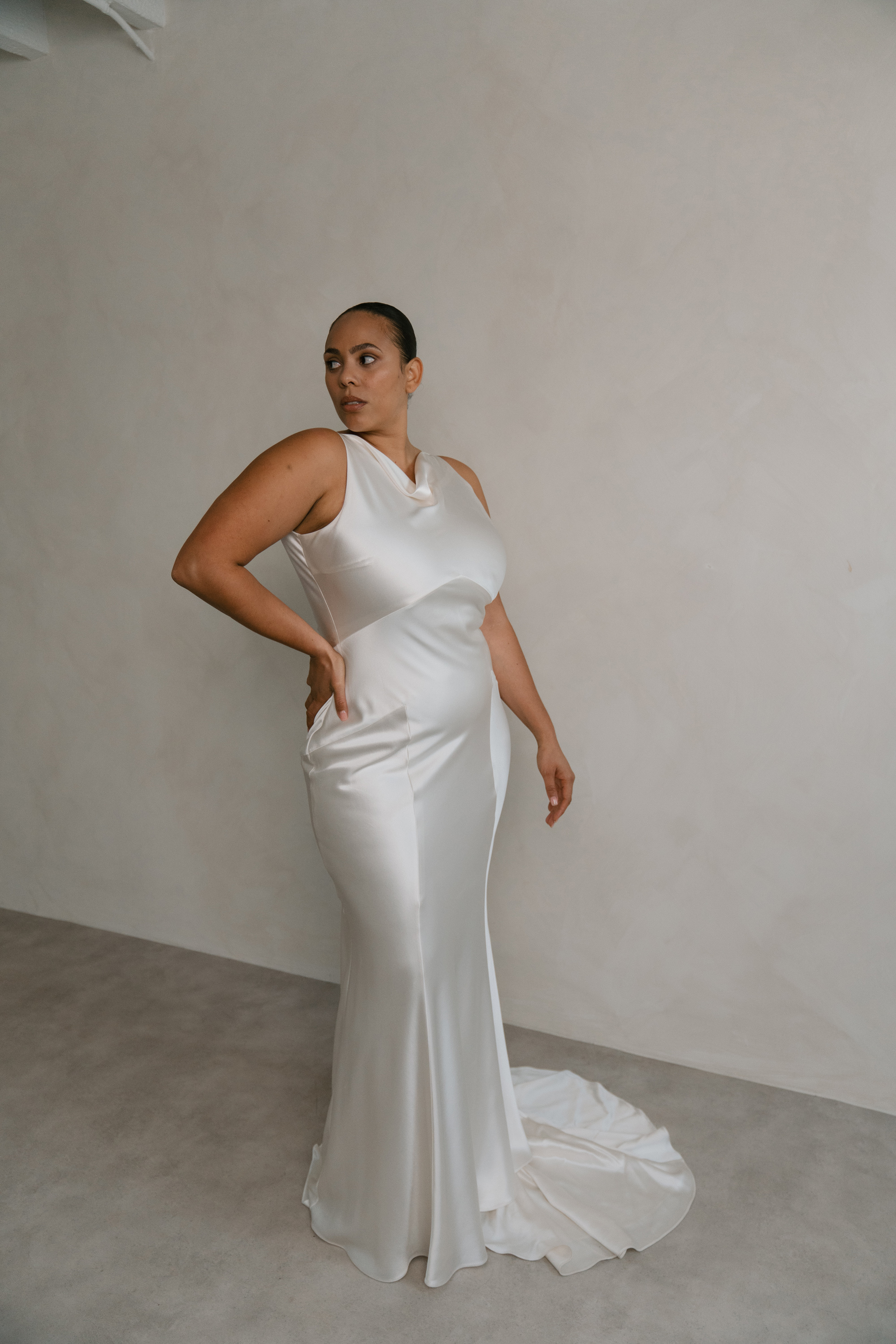
A few years ago, I spent a stupid amount of time teaching myself how to draft patterns digitally, which means that you can easily switch between all the different sizes and check that it’s going to work for all those different sizes, which is very labour intensive to do on paper.
So I can have a design, be drafting the pattern for it and toggle between a size six and a size 24 and double check that it’s going to look great in those different dimensions. It’s something that I do think about all the way through the process, not just for the photo shoot and make sure that the cuts and shapes that I’m creating are going to hopefully work for as many different people as possible.
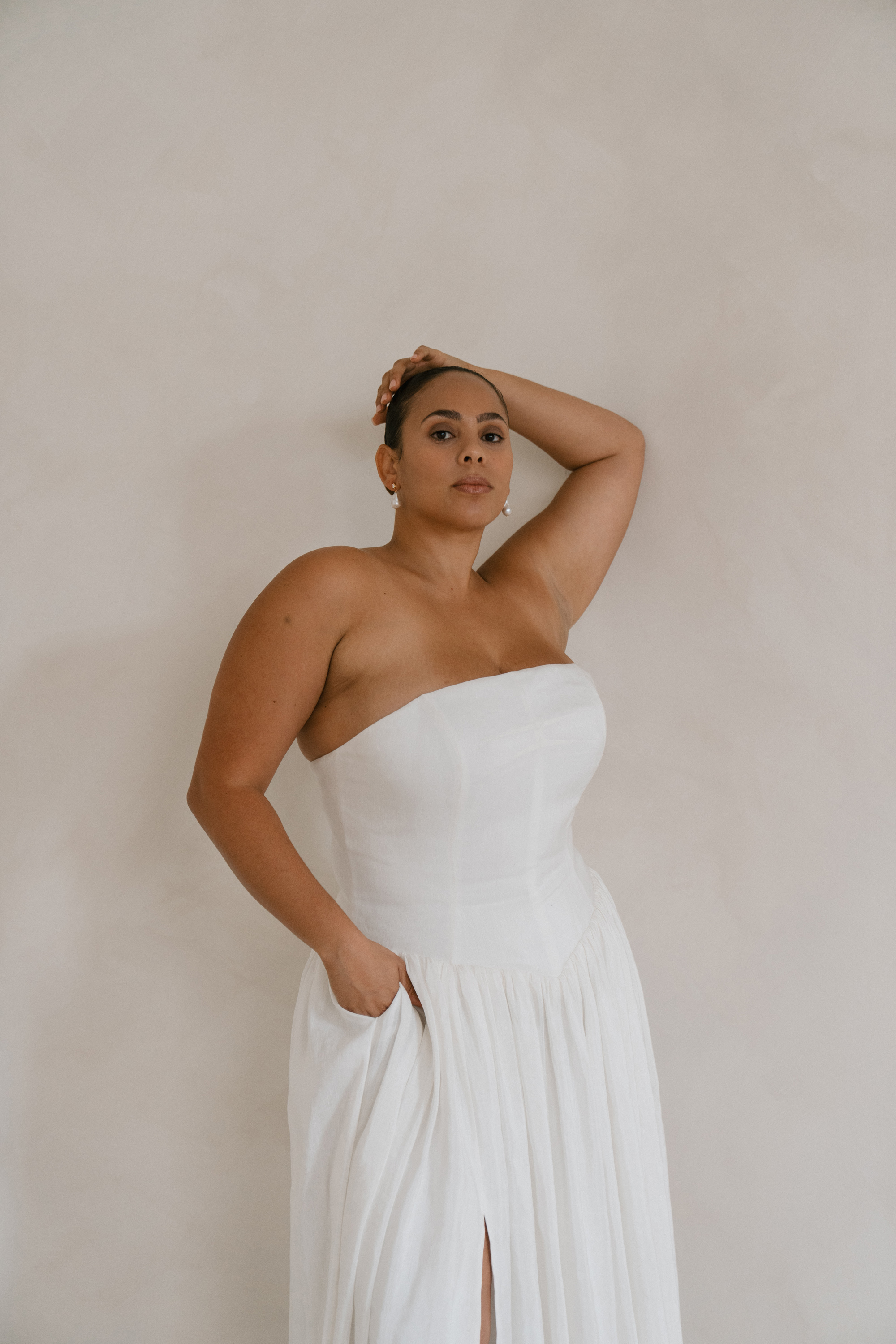
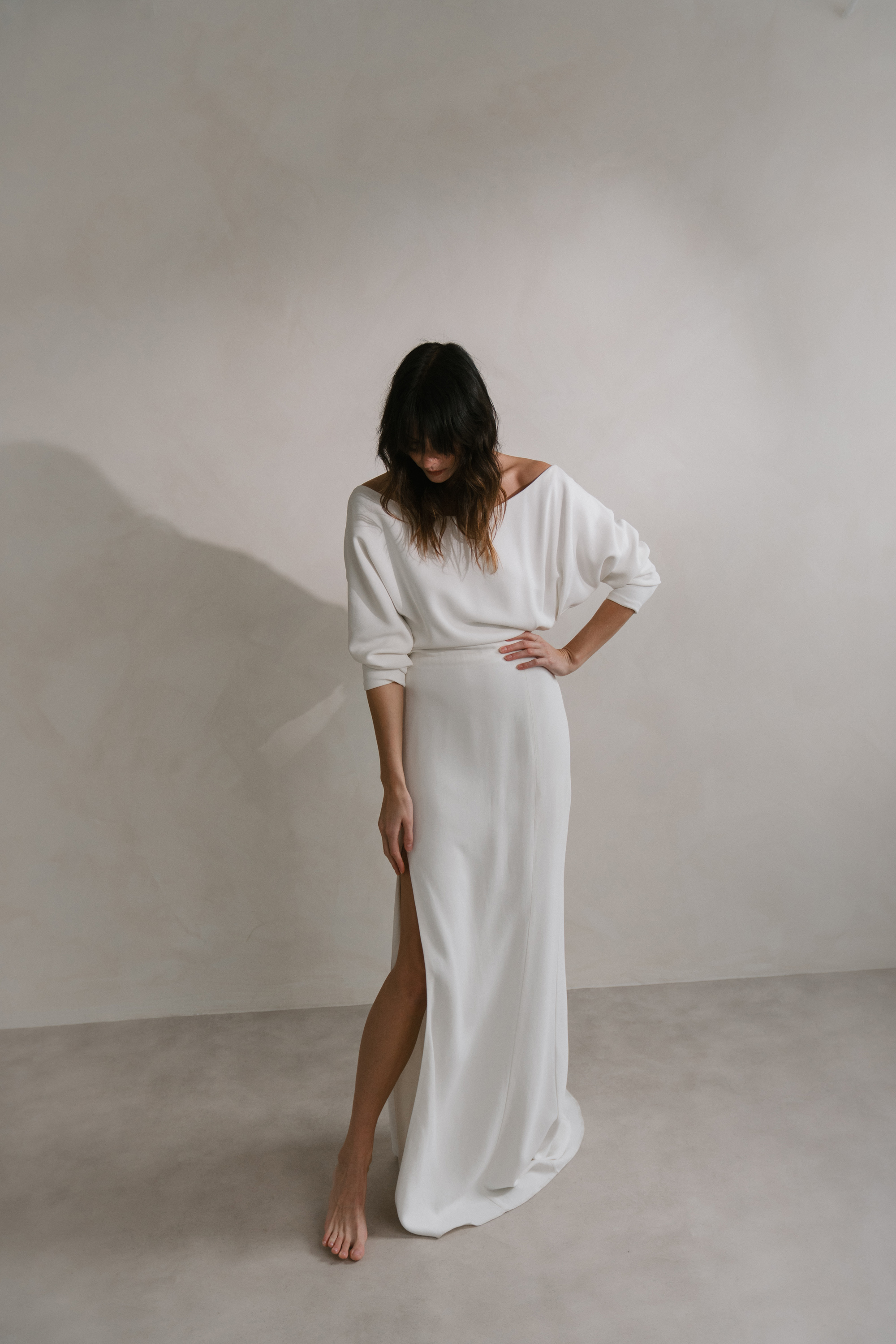
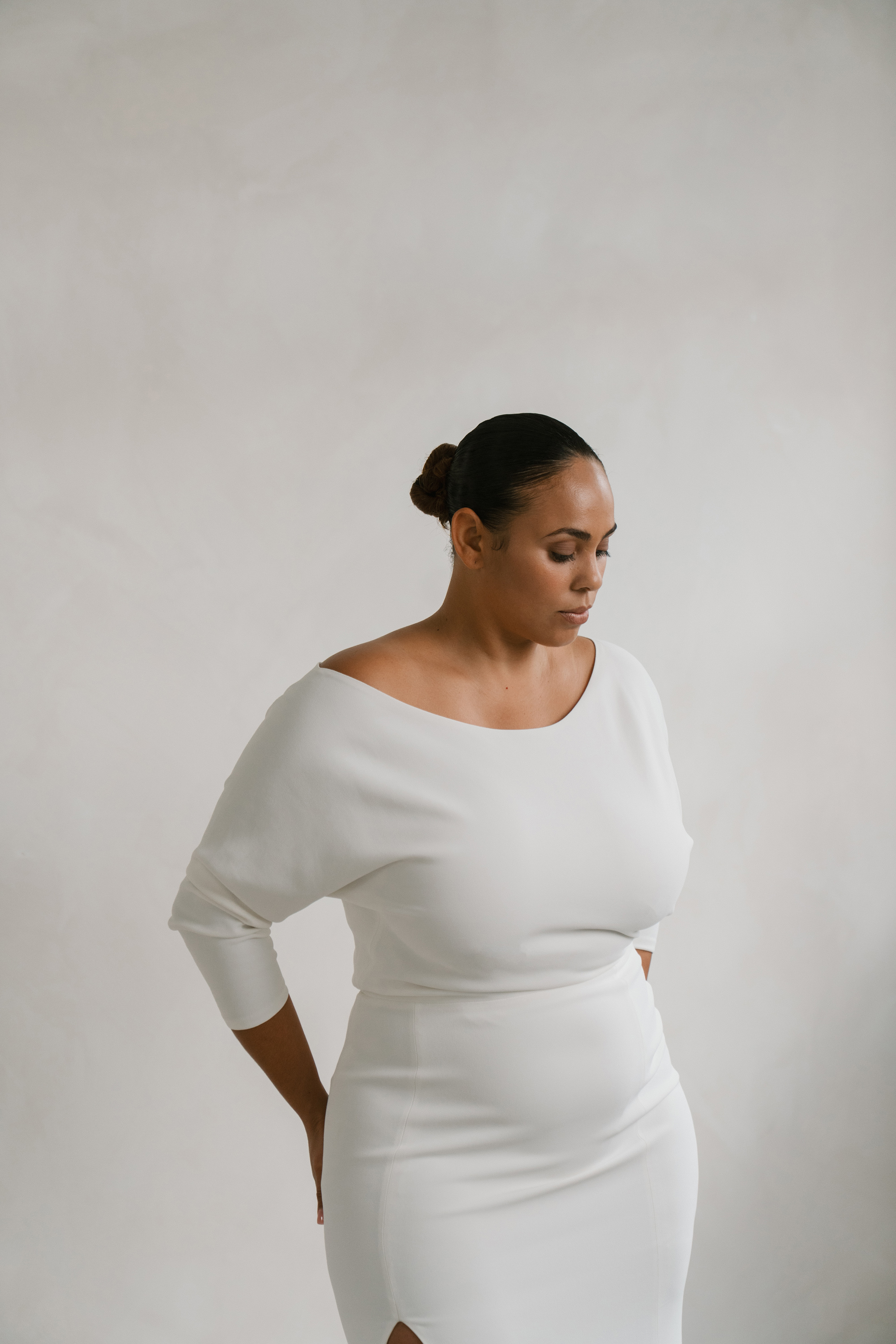
Your work has a confidence that doesn’t rely on trends or excess. How has your understanding of beauty in bridal fashion changed since you first started?
We’ve never really chased trends or go for fashion for fashion’s sake, if you see what I mean, and I wonder if that comes from my costume design background.
I studied costume design at university instead of fashion and I’ve always been more interested in communicating personalities and telling stories rather than just trying to be fashionable, so I guess that’s probably where that comes from.
And I’m just not too keen on the idea of chasing every trend and trying to be someone else on your wedding day. So authentic beauty is what we’re going for.
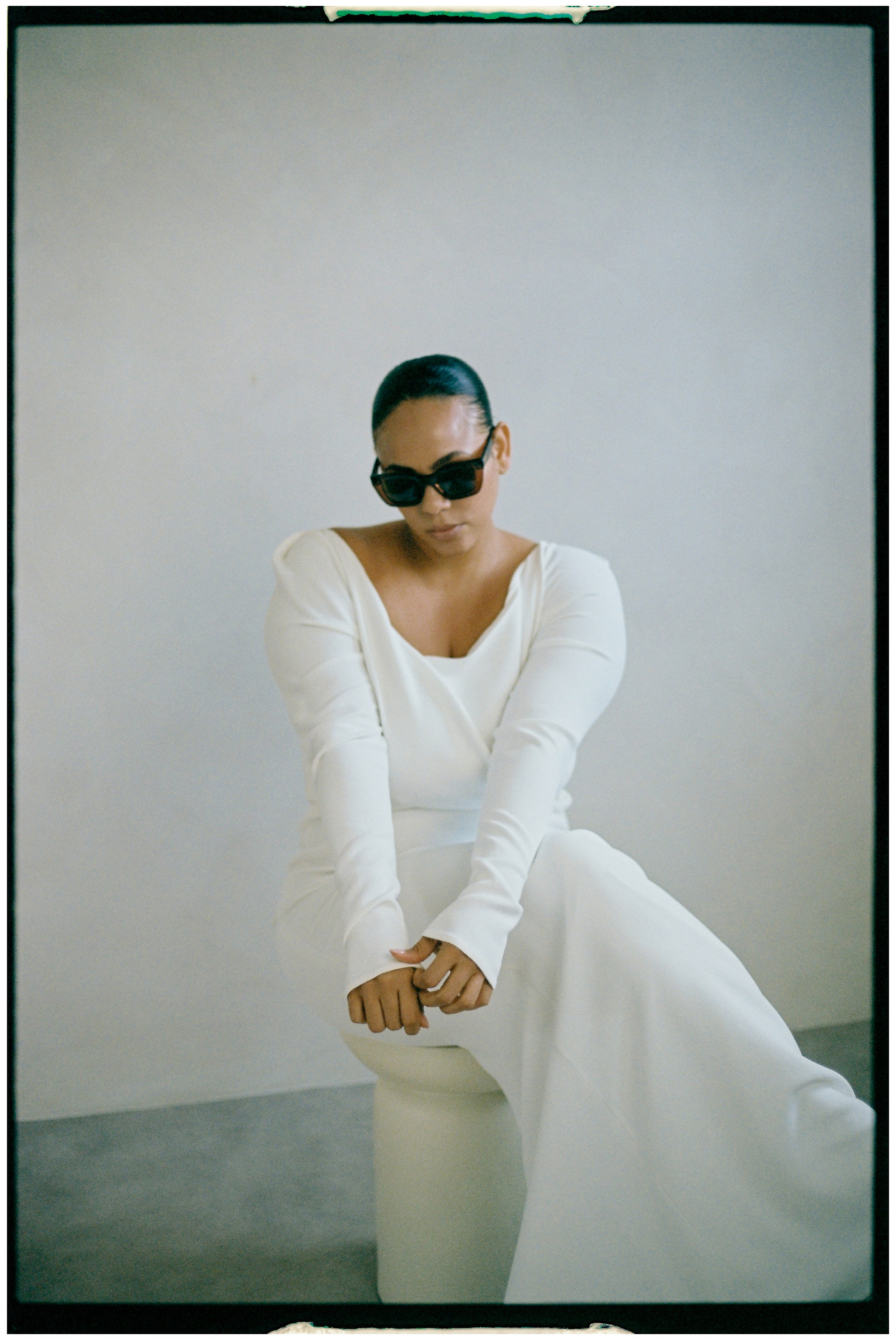
When you think of your design process, from first idea to finished gown, which parts of that journey still excite you most?
I still love it all every single aspect. I’m really lucky to be able to do it the way I want to do it because with a small independent company, we can literally choose to do things the way we want to do it. And because we’re so small and hands on, I get to do all the different steps in the process, which I just love.; from the research to the fabric sourcing to the actual design sketches and the drafting of the patterns – and making the physical things as well.
I love it all and I feel very lucky to be doing it. I spend a silly amount of time just sitting at my laptop, but when I get a chance to get my scissors and my needle and thread out and actually make stuff, it’s a joy.
You work very hands-on in your York based atelier. How important is it to you that brides understand where and how their dress is made?
It’s so important to us. I think it’s very unusual these days for people to know the exact background of any of their possessions, you know, in this tidal wave of globalisation and consumerism that we live in, it’s a treat to know who made you your clothes and it’s really important for me to communicate that.
I’m so proud that we’re supporting traditional crafts and British workmanship. There’s such a value to knowing that and I like brides to be able to feel good about it. It’s really nice to know that your money is well spent and that your dress is made by somebody who looked after it and who loves their job.
There’s a sense that the wedding industry is moving away from constant noise and overproduction. Are you feeling that shift too, and has it changed how you approach your business?
Yeah, we definitely feel that too. I think obviously, that social media has just sped things up so much and things have got very overblown and very overwhelming for people, both wedding professionals and brides, so it’s nice to hear more and more people talking about being more considered and a slower. A gentler approach to things is nice.
I don’t think it’s changed too much the way we do things here, because that’s the way I’ve always done things actually.
Since my first collection, I decided I was never going to churn out a new collection every season. It just goes really against the grain for me and feels a bit wasteful and you don’t want to release collections until you feel like it’s the right time, just for the sake of it. Maybe that’s for my own mental health more than anything else because producing a collection is so labour intense and quite exhausting.
But also, you don’t want to bring out new things and make old designs obsolete, when actually, they’re still really popular and, you know, people might still want them.
Love what you see?
Book your Rolling in Roses Appointment
For brides discovering Rolling In Roses for the first time, what do you hope they understand about you and your work beyond the dresses themselves?
Apart from our actual designs, the backbone of what we offer as a whole brand, is fundamentally made up of things like celebrating and supporting British craftsmanship, which people might not know about, and ethical manufacturing. Also inclusive sizing, body positivity and a welcoming environment.
I hope our website as well as our physical environment, communicates that to people – that we don’t want to cater for a specific type of bride, we want to be as welcoming and inclusive as possible in every way that that intends. That’s something that I hope people get that vibe from us, as well as the sustainable fabrics in the ethical practices that we try and do as well.
Looking ahead, what feels most important to you creatively right now, and what would you love to explore more of next?
I think the drive towards more authentic weddings is really important for people to think about. And I hope that we can help people with that and having a genuine real life experience that is authentic to yourself and your partner and what your wedding is going to be rather than just trends or trying to have this weird aspirational wedding that doesn’t really come naturally.
I would say that’s something that I hope to be able to facilitate for people with what we offer as well.