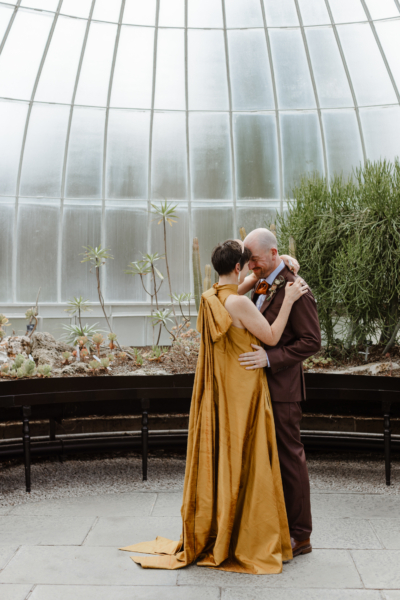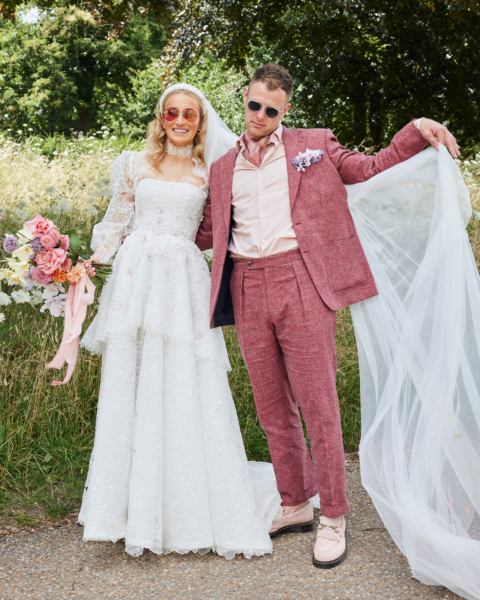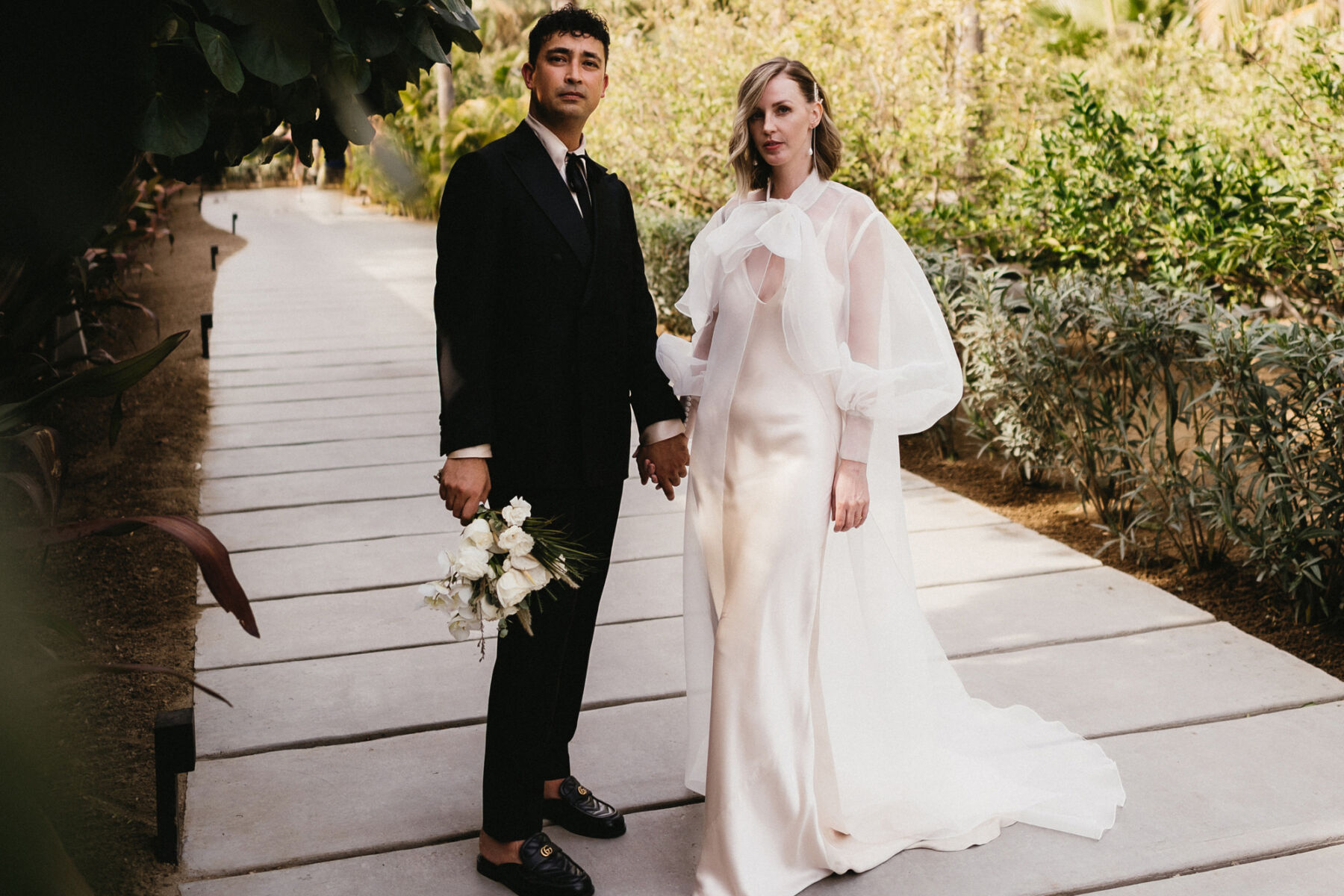


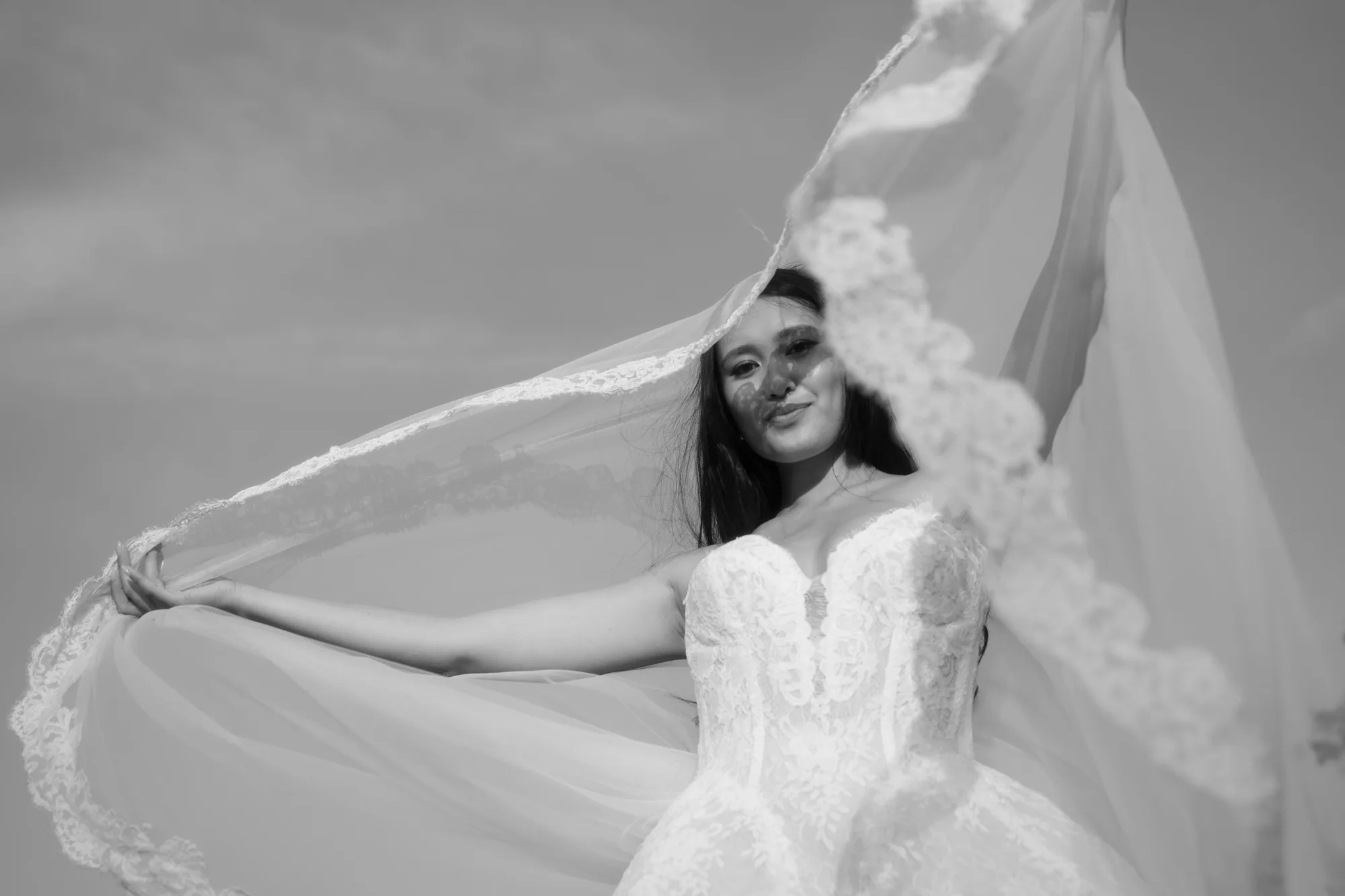
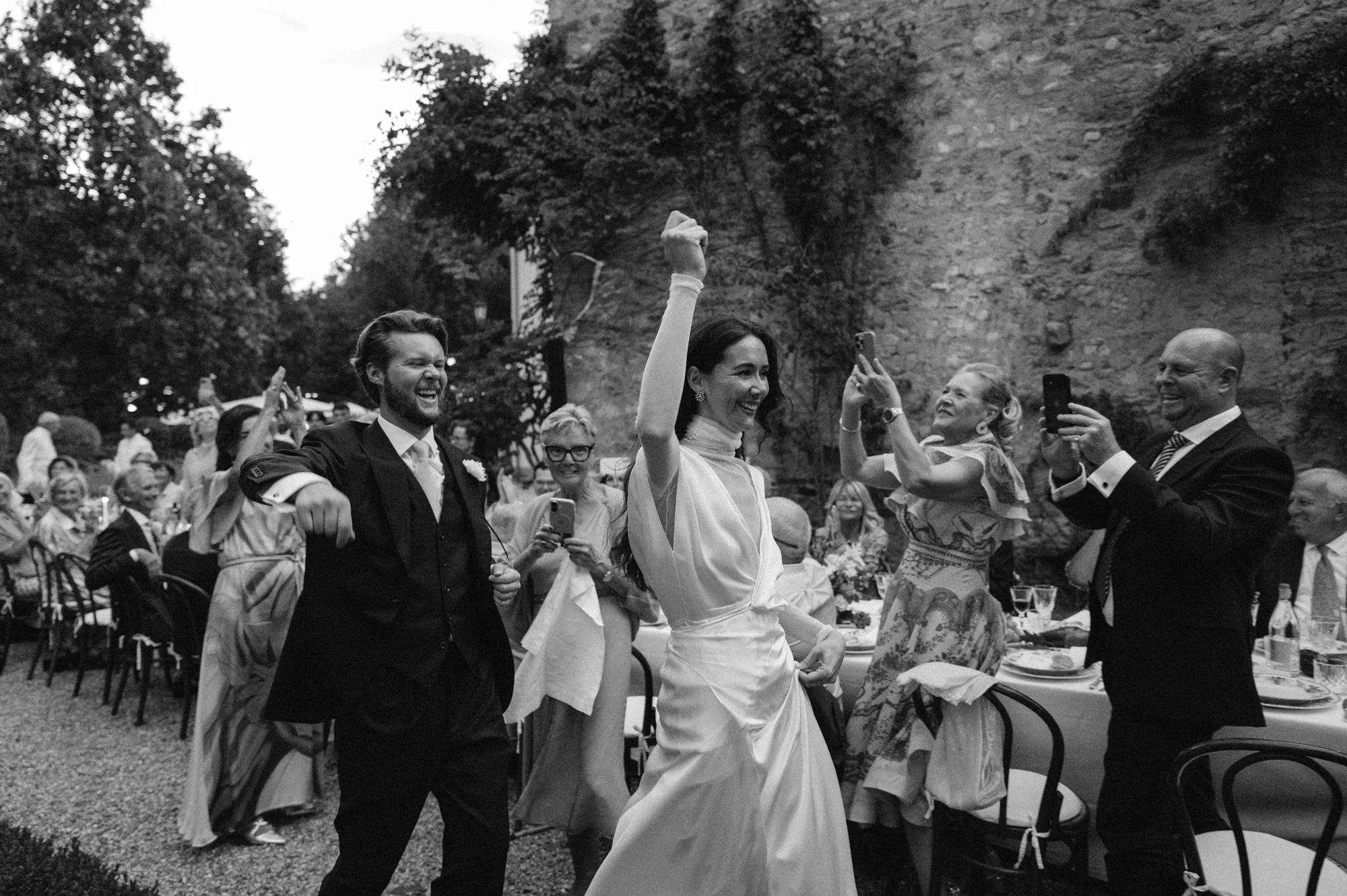
How did we all end up looking at the same idea of what’s meant to make a wedding tasteful, interesting and acceptable? I’ve been down a deep rabbit hole thinking about this since watching two reels this week respond to some of the same disruptive bridal fashion and campaign imagery in very different ways.
Two Reels With Two Different Readings of Bridal Culture
In one, the brilliant @chelsea_eileen_jackson, who has been writing extensively on the changing culture of bridal identity and imagery, muses on the “death of the bridal persona”, suggesting that “marriage no longer requires a costume”, that “this is about identity surviving marriage” and that “the biggest bridal trend of 2026 isn’t about a dress, it’s about women refusing to become someone else, just because they’re getting married.”
In another, @lenselworld opens over some of the same imagery Chelsea references with the words, “You know the wedding industry is cooked when this becomes wedding inspiration.” The reel goes on to name some of the forces reshaping wedding photography this year, before ending somewhere more generous, with the thought that perhaps the industry isn’t cooked at all. Perhaps it’s simply getting interesting again.
Both reels are making observations rather than telling anybody what their wedding should look like, but placed alongside each other, they raise an issue that I cannot stop thinking about.
How Wedding Media Rewards a Particular Aesthetic
If, collectively, wedding media has spent years promoting model-like couples, direct flash, editorial posing, luxury settings and edgy fashion as the visual proof of what’s interesting, tasteful and acceptable, what happens when creatives learn that code and push it harder in order to get noticed?
Is the imagery now being criticised really evidence that the industry is cooked, or is it the code we wrote into the imagery we share, coming back to us?
We are a creative industry and of course creatives push. Making work that surprises people is how this industry has always moved forward, but you can only push against what already exists and what already exists is the same thing we’ve spent years putting in front of everyone.
Work that unsettles people gets examined closely, questioned, picked apart and held up as evidence that something has gone wrong or that taste is slipping. Meanwhile, the aesthetic it departs from carries on unremarked, so familiar by now that nobody thinks to ask where it came from, who decided it or how narrow it has become.
As one photographer put it in response to the @lenselworld reel, if publications repeatedly favour a particular kind of couple, body, styling and photographic language, then of course people hoping to be noticed will take those ideas and push them further.
And this goes beyond one reel or one platform.
Are Weddings Really All Starting to Look the Same?
When people say that weddings are all starting to feel the same, I’m not convinced they’re always talking about weddings themselves. I think they’re often reacting to the version of weddings they keep being shown, a narrow slice of the industry circulated so often and with such confidence that it begins to look like the whole picture.
This is where those of us who publish need to examine our own habits. Algorithms may decide how widely an image travels, but we still decide what enters the feed in the first place.
We choose what gets framed as current, desirable, elevated or worth paying attention to. That doesn’t make publishers the sole authors of wedding culture, but it does mean we can’t pretend we’re only observing it. Love My Dress included.
The Coded Messages Hidden Within Wedding Imagery
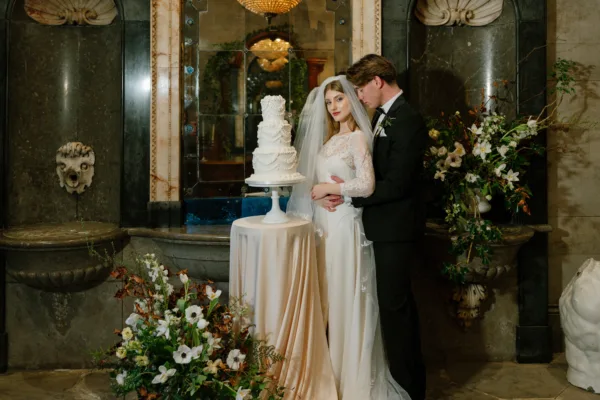
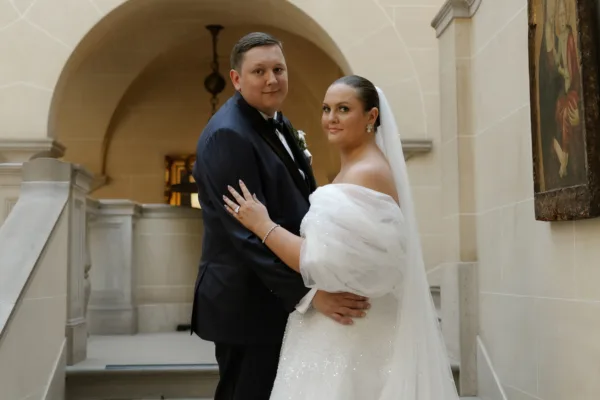
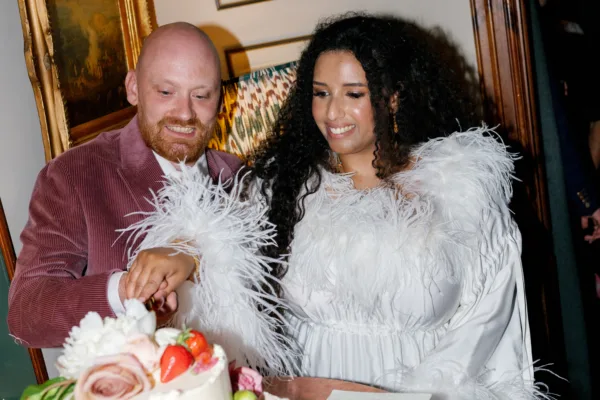
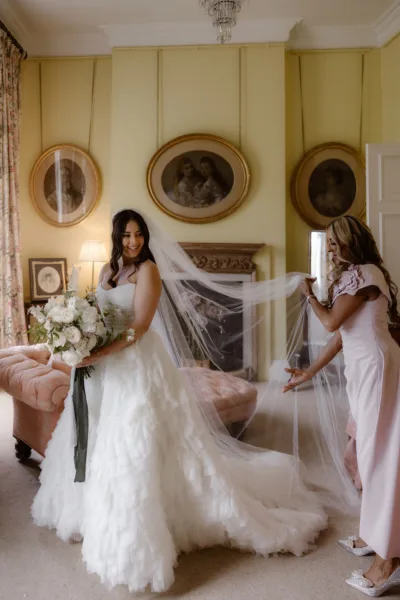
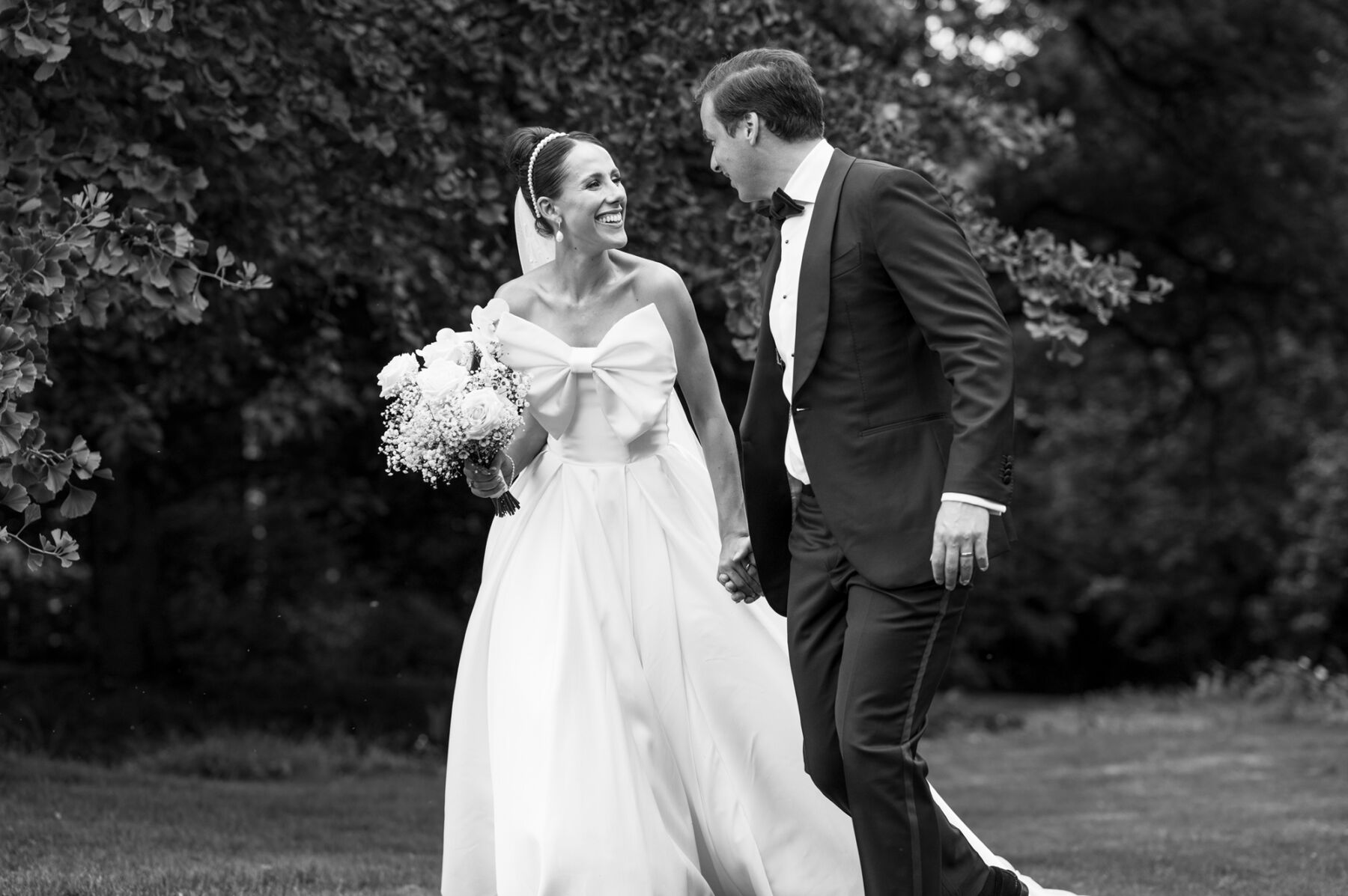
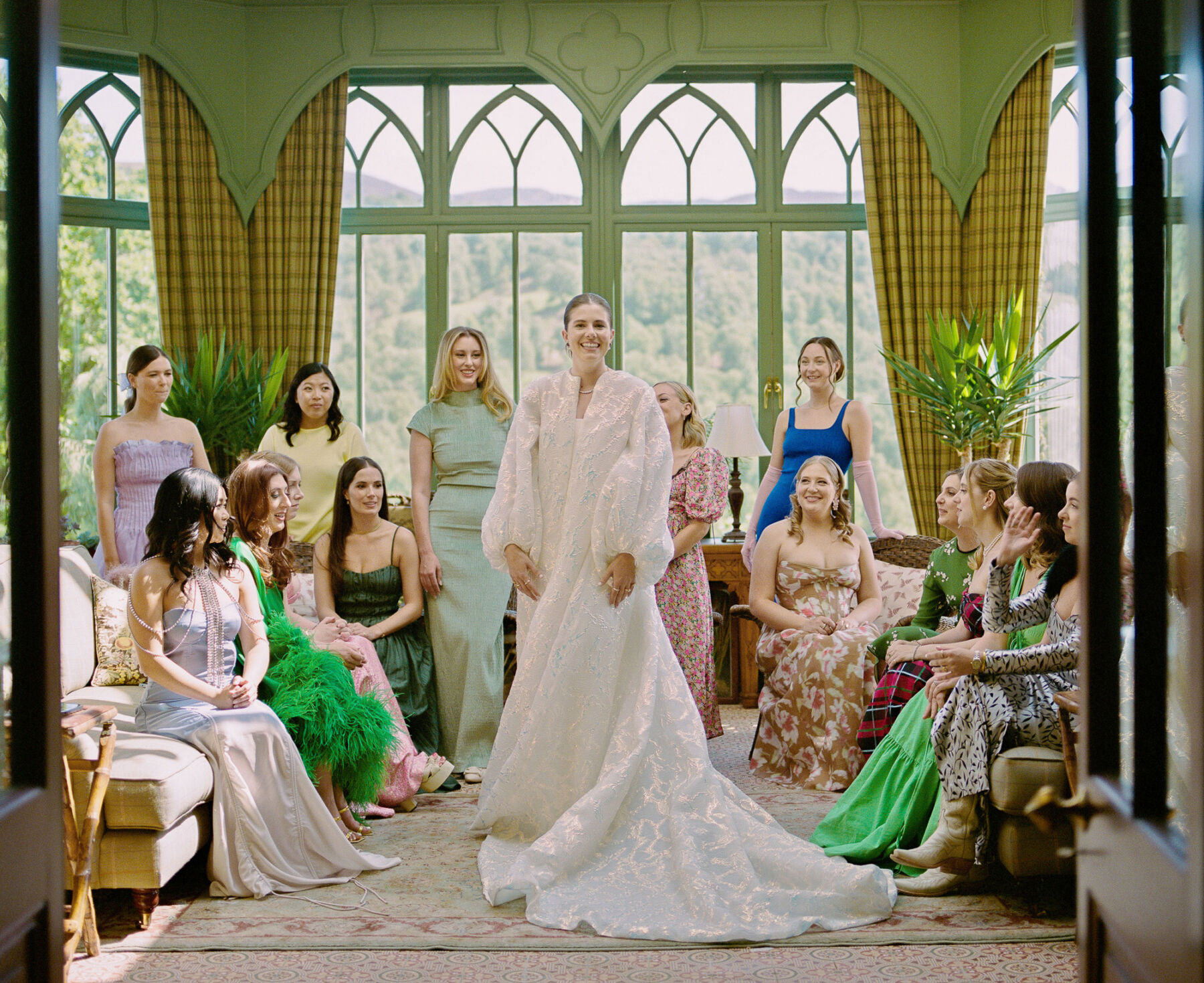
Meanwhile, the same imagery keeps circulating. The same bodies, the same venues, the same styling, the same photography and the same idea of who gets to embody what’s deemed tasteful and interesting in bridal fashion, as well as who or what gets presented as aspirational.
Repeated often enough, the message becomes clear even when nobody says it aloud, because the images are coded with the same messages:
This is what a modern bride looks like.
This is what a stylish couple looks like.
This is what good taste looks like.
This is what you should look like if you want to belong in the picture.
Who Keeps Getting Left Out of the Picture?
Some of this needs naming plainly. The picture we have built is overwhelmingly white, overwhelmingly thin, overwhelmingly able-bodied and overwhelmingly wealthy.
Black and Asian creatives in this industry have been saying so for years, often at professional cost to themselves and too often to a silent response.
We like to think taste is entirely personal, but none of us develops it in isolation. Algorithms reward what performs and publications follow what audiences respond to. Creatives see what gets published and adjust, couples absorb the results and then the cycle begins again, until one particular aesthetic stops looking like one possible expression of taste and starts looking like taste itself.
Which brings me to Freddie, from a wedding we shared a couple of weeks ago…
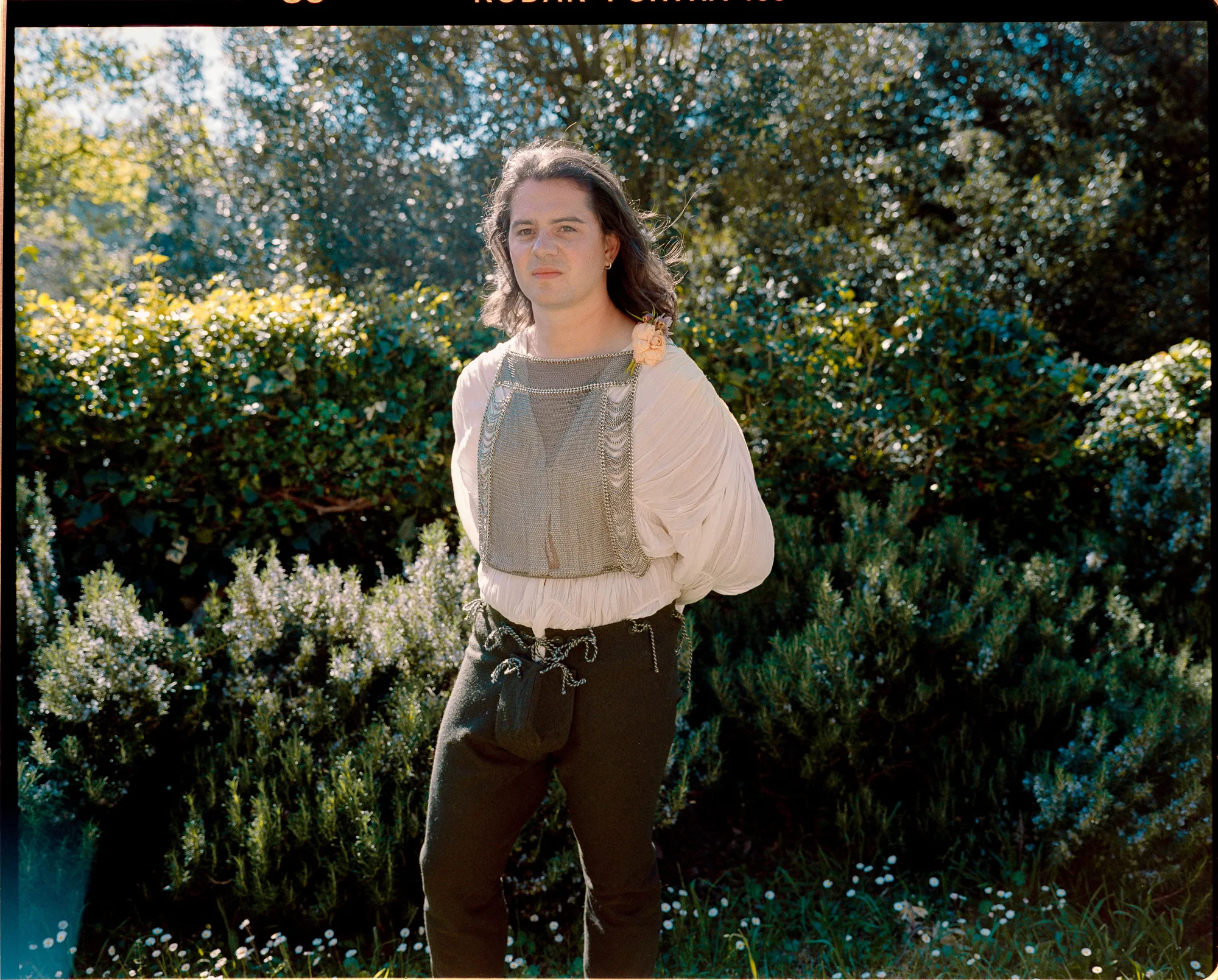
Image by the amazing Stefano Santucci
Freddie, who is non-binary, wore a custom chainmail chestpiece by @falconiereshop with handmade wool trousers, reflecting the Renaissance and medieval style they and their wife are already into.
This portrait is among my favourite images ever shared on Love My Dress. Instead of choosing the suit or tuxedo wedding culture might have expected them to wear, they chose clothes that already belonged to their world and revealed more of who they are. They didn’t need to dress to meet a convention or become somebody else for the day.
And please may I take a brief moment to acknowledge the absolute perfection of that peachy buttonhole.
Making Room for More Than One Version of Wedding Taste
Does this mean the death of the wedding dress, tradition or ritual? No, no, no. I hope it never does.
It means making room for more than one idea of what somebody can look like when they marry. More skin tones, more body types, more identities, more faiths and cultures, more clothes, more kinds of beauty, more photographic approaches and more versions of good taste.
Not everything outside the familiar is automatically distasteful and not everything traditional is tired. What matters is whether it was chosen or simply inherited, and both can be true of a veil or a chainmail chestpiece.
Something can only look radical against a visual culture that has already taught us what “normal” should look like.
Perhaps the question for 2026 isn’t whether weddings get interesting again. It’s what we’re prepared to let “interesting”, “tasteful” and “acceptable” mean, and how much more inspiration there is to show once we widen the picture.
The picture widens the moment we stop publishing from the same small handful of references. Nobody else is going to do that for us.
What Do You Think?
Is wedding media too narrow?
Who or what is shaping wedding taste, and does that feel right to you?
What belongs in the picture that isn’t in it yet?
Join the conversation via this post on our Instagram account.